Yumms BBQ Basting Brushes: My Review After Years of Use
Disclaimer: I received this item for free or at a discounted price in exchange for my honest, unbiased review. All opinions are my own. I originally reviewed these brushes when they were new. This post has since been updated to include how they held up after years of use.
I loved my Yumms BBQ basting brushes when I first got them. They were one of those simple kitchen tools that I reached for again and again, whether I was brushing barbecue sauce onto meat, adding butter to bread, glazing something I was baking, or working with oil and marinades.
And I want to be fair about that: I really did love them.
However, one of the advantages of keeping an old review online for years is that I can tell you something I could not possibly have known when I first opened the package. After a few years of use, the silicone bristles began falling off.
That changes my long-term opinion of the product.
I don't think it makes my original review dishonest. The brushes worked well when they were new, and I enjoyed using them for quite a while. But if I were shopping for basting brushes today, durability would be much higher on my list of things to check. I would specifically look for a design that reduces the possibility of individual silicone bristles loosening with age.

In This Article
My Long-Term Experience With the Yumms BBQ Basting Brushes
Product reviews are usually written when something is brand new. That can tell you whether a product is comfortable to use, whether it performs the job it was designed to do, and whether there are obvious problems right out of the package. What it cannot tell you is what that product will be like several years later.
When these Yumms brushes were new, I liked them enough that I would have readily recommended them. The silicone bristles worked well for spreading sauces and liquids, they were easier to clean than traditional natural-bristle pastry brushes, and having basting brushes around was genuinely useful in my kitchen.
Over time, though, the bristles started coming off. Once I noticed that happening, I was no longer comfortable using the brushes around food. I don't want to have to inspect dinner for a stray piece of silicone before serving it.
So my updated verdict is a little more nuanced than either "these are wonderful" or "these are terrible." They were wonderful to use for quite a while, but they did not have the long-term durability I had hoped for.
The specific Yumms brushes I reviewed are no longer available anyway, but my experience with them taught me what I would look for the next time I buy this type of kitchen tool.
Why I Still Keep Basting Brushes in My Homestead Kitchen
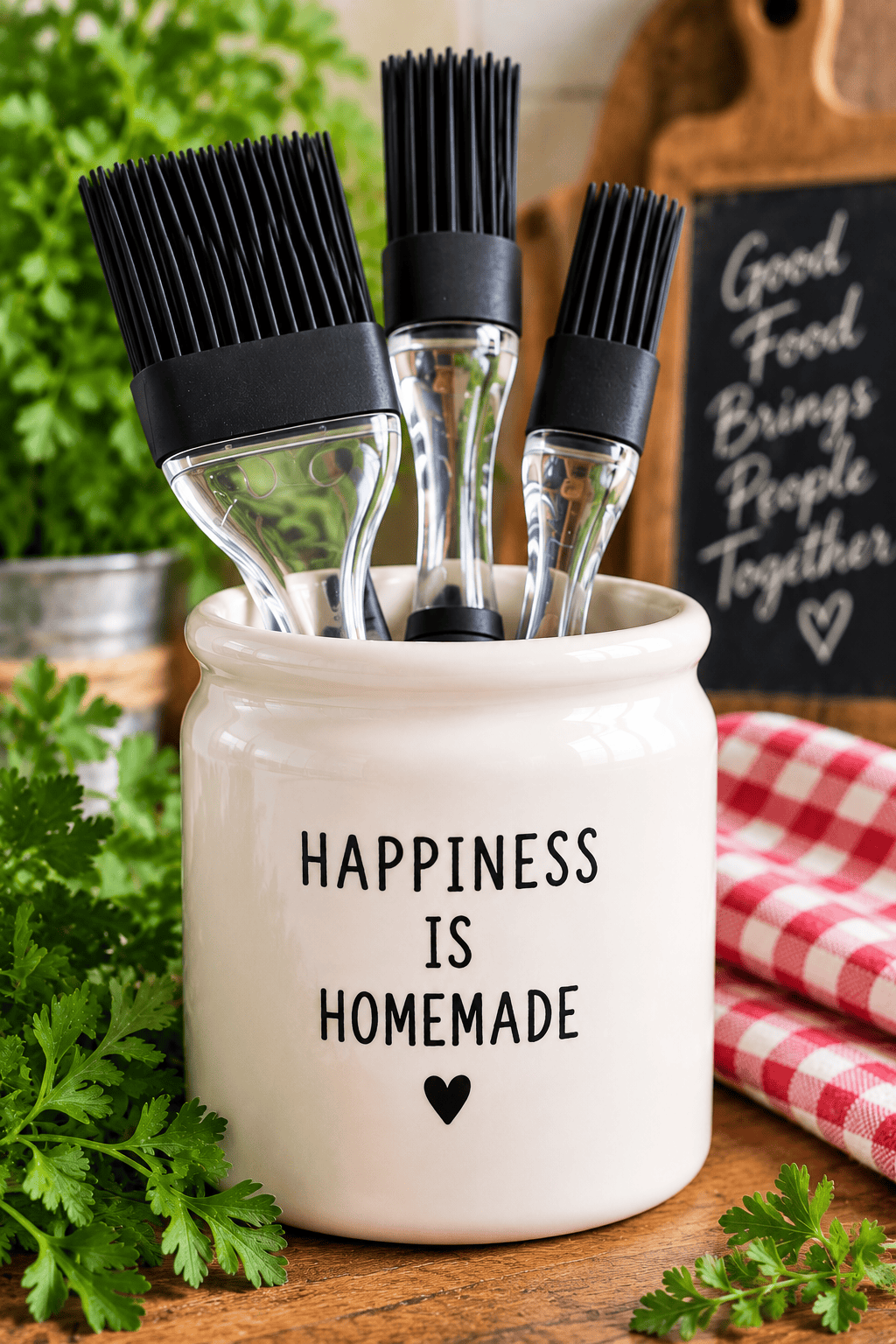
The failure of one set of brushes hasn't changed my opinion about the usefulness of the tool itself. A good basting or pastry brush is incredibly handy when you cook from scratch.
On a homestead, cooking isn't always a neatly planned recipe with every ingredient purchased specifically for that meal. Sometimes dinner is meat from the freezer, vegetables from the garden or pantry, a loaf of homemade bread, and whatever sauce, herb mixture, butter, or glaze sounds good that evening.
A brush makes it easy to put a thin, even coating exactly where you want it without pouring on far more than you need.
I use this type of tool for jobs such as:
- Brushing barbecue sauce onto meat while grilling or roasting.
- Spreading marinades and seasoned oils over meat.
- Brushing melted butter onto homemade breads, rolls, biscuits, or crusts.
- Applying egg wash to dough before baking.
- Brushing oil onto vegetables before roasting or grilling.
- Adding glazes to baked goods.
- Coating pizza crust edges with oil, butter, garlic butter, or seasonings.
- Brushing a light coating of oil onto pans or cooking surfaces when appropriate.
Those are ordinary jobs, but ordinary jobs are exactly where a good kitchen tool proves its value. I don't need a basting brush to be fancy. I need it to spread what I'm using, clean up easily, tolerate the heat it's exposed to, and stay together.
Silicone Versus Traditional Bristle Basting Brushes
I still understand why silicone basting brushes became so popular. Traditional pastry brushes can work beautifully, but their fine bristles can hold onto grease and sauces and may be harder to clean thoroughly. Individual bristles can also shed.
Silicone looked like a good answer to several of those problems. The wider silicone bristles don't absorb sauce in the same way, they're generally easy to wash, and many silicone brushes tolerate fairly high cooking temperatures.
But my experience with the Yumms set reminded me that silicone does not automatically mean indestructible. The material can be perfectly fine while the way the brush is manufactured eventually becomes the weak point.
If individual silicone bristles are attached in a way that allows them to loosen over time, you're back to the same basic problem you were trying to avoid: pieces of the brush ending up where they don't belong.
What I Would Look for in a New Basting Brush
If I were replacing these today, I wouldn't simply search for another brush that looks exactly like them. I'd pay much more attention to construction.
A One-Piece or Securely Molded Silicone Head
This would be high on my list after what happened with the Yumms brushes. I would look for a design where the head and bristles are molded together securely, with as few separate pieces and failure points as possible.
I would also periodically flex the bristles and inspect the base. If anything begins cracking, splitting, loosening, or pulling away, I would retire the brush from food use.
A Handle That Gives Me Enough Reach
A short pastry brush may be fine at the kitchen counter, but grilling is different. I want enough distance between my hand and a hot grill, skillet, roasting pan, or Dutch oven to use the brush comfortably.
At the same time, an extremely long handle can feel awkward when I'm doing more precise baking work. This is one reason having two sizes can make sense if you actually use them regularly.
Heat Resistance Appropriate for How I Cook
I wouldn't rely on the word "silicone" alone. I'd check the manufacturer's stated temperature rating and use the brush within those limits.
I'd also keep it away from direct flame and avoid leaving it resting against an extremely hot pan or grill surface. Heat-resistant doesn't mean it should be treated like a piece of cast iron.
Easy Cleaning
Barbecue sauce, butter, oil, honey-based glazes, and marinades can work their way into all the little spaces around a brush head. I want to be able to see that the brush is actually clean.
A dishwasher-safe brush can be convenient, but I still like a design without inaccessible seams where food can accumulate. Simple construction is often better construction in a working homestead kitchen.
A Head That Holds Enough Liquid to Be Useful
There's a balance here. I don't want a brush that dumps a puddle of sauce onto the food, but I also don't want to dip it into the bowl after every two-inch swipe.
For barbecue sauce and thicker glazes, wider bristles with some texture can help hold onto the sauce long enough to transfer it to the food.
Using a Basting Brush for Grilling
Grilling is probably the use most people think of first, and it's certainly one of the reasons I like having these brushes.
A basting brush gives you much more control over barbecue sauce than simply pouring it over meat. That's especially helpful with sauces containing sugar because you may want to add them later in the cooking process rather than having that sugar exposed to high heat for the entire cook.
I also like the control for herb oils and marinades. You can brush on a little more where the food needs it instead of drowning everything.
If you're growing culinary herbs, this is an easy place to use them. Garlic, rosemary, thyme, sage, oregano, basil, and other herbs can be worked into oils, butters, marinades, and sauces that go directly onto grilled food. My article on outdoor grilling with herbs from the garden goes further into that connection.
Basting Brushes Aren't Just for the BBQ Grill
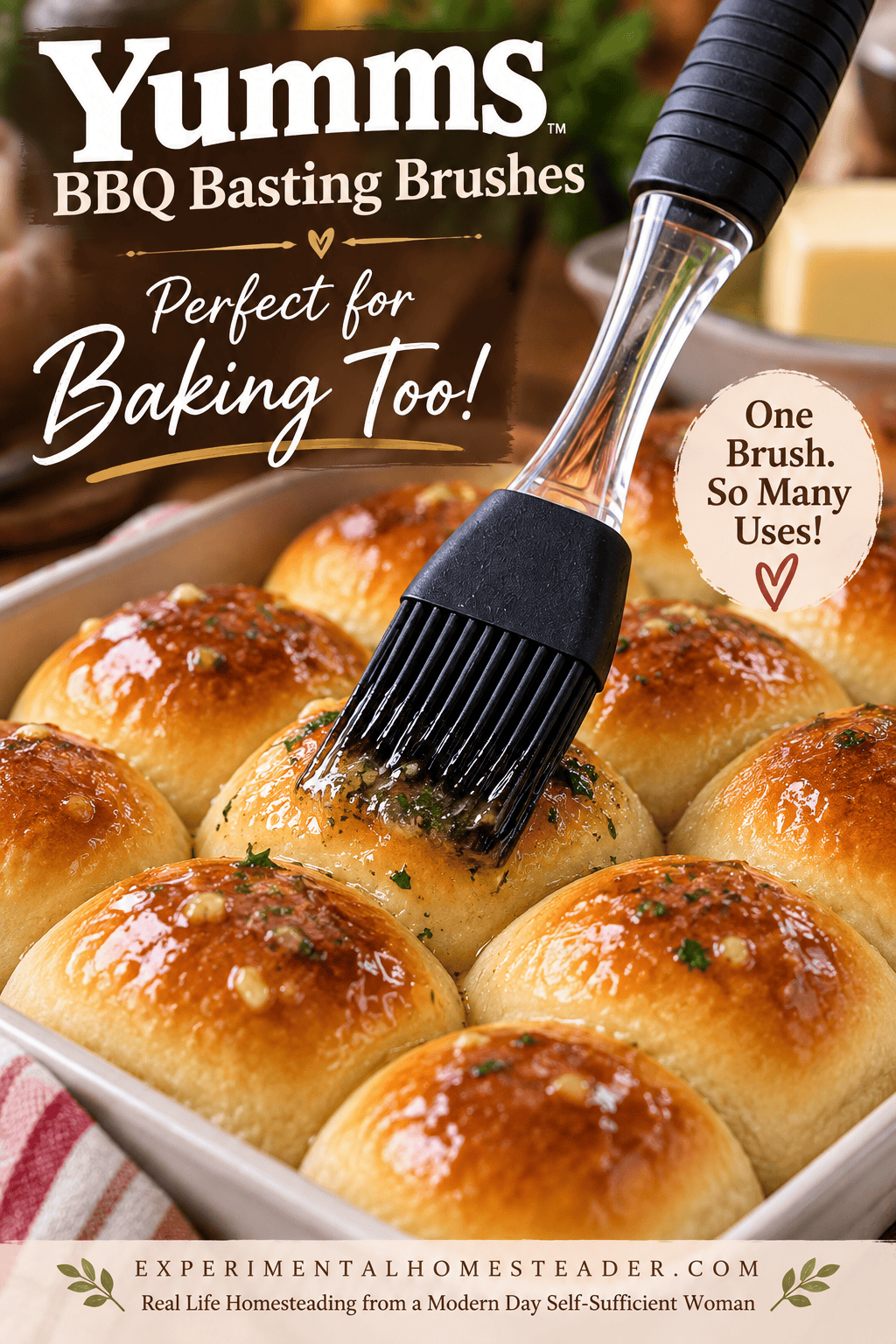
I think calling them "BBQ brushes" undersells them. I use the same basic tool indoors for baking and everyday cooking.
When I'm making bread or rolls, a little melted butter brushed across the top gives me much more control than trying to pour it. The same applies to an egg wash on pastry or dough.
They're useful for homemade pizza too. A little seasoned oil or garlic butter around the edge of a crust is easy to apply with a brush, and it doesn't take much. When you make a lot of food from scratch, small multipurpose tools are far more useful to me than gadgets that can only perform one very specific job.
Keep Food Brushes Separate From Homestead Project Brushes
One thing I want to correct from the older version of this article is the suggestion that a kitchen basting brush could also be used for things such as glue, paint, garden-tool treatments, or livestock ointments.
Technically, a brush can spread all of those things. But I would not use the same brush for food afterward.
If an old food brush is still physically sound and you want to retire it to a non-food job, clearly mark it and keep it with the appropriate supplies. Once I've used a brush for paint, glue, tool oil, animal treatments, or another non-food material, it is no longer a kitchen utensil.
That distinction matters on a homestead because we tend to find multiple uses for everything. Reusing tools is sensible. Cross-using them between food and non-food applications is not.
When Should You Replace a Silicone Basting Brush?
I didn't have a problem with my Yumms brushes immediately. The shedding happened after years of use, which is exactly why I think occasionally inspecting small kitchen tools is worthwhile.
I would replace a silicone brush if:
- Individual bristles begin coming loose.
- The silicone develops cracks or splits.
- The head starts separating from the handle.
- The handle becomes damaged from heat.
- There are seams or damaged areas you can no longer clean thoroughly.
- The brush retains an odor even after proper washing.
Kitchen tools don't have to last forever to have been useful, but they do need to remain safe and functional for as long as we continue using them.
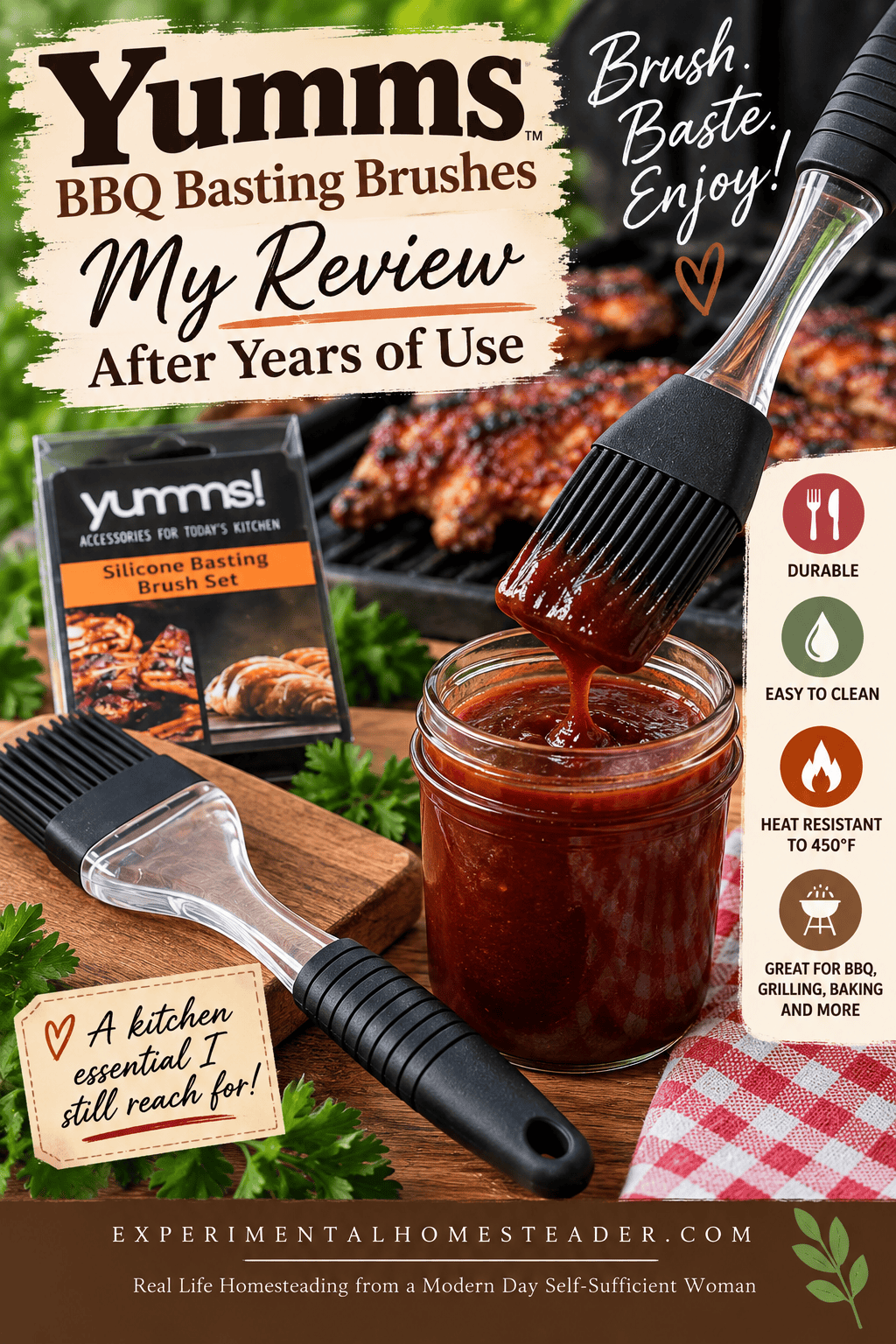
Would I Recommend the Yumms BBQ Basting Brushes Now?
If you had asked me when I first received them, my answer would have been yes. I enjoyed them and used them.
After living with them for several years, I have more information.
I would not seek out this particular set again because the bristles eventually began falling off. That doesn't erase the years when the brushes worked well, and it doesn't mean I regret having them. It simply means they didn't hold up well enough for me to recommend them as a long-term purchase today.
That's also why I don't want to replace this old review with a glowing recommendation for some other brand I haven't personally used. There are plenty of silicone basting brushes available, but I'd rather tell you what I learned and give you the information to evaluate one than pretend I know how an untested replacement will perform five years from now.
If you're buying one, look closely at how the bristles and head are constructed. Think about how you actually cook. Choose a size you'll reach for, make sure it's rated for the temperatures you'll use, and inspect it periodically as it ages.
And if you find a good one, a basting brush is absolutely worth having. I still love the usefulness of the tool. I just learned that the particular set I loved at first wasn't a forever tool.