Ceremonial Matcha Green Tea in a Homestead Kitchen
Disclaimer: I received this item for free or at a reduced price in exchange for my honest, unbiased review. All opinions are my own.
When I first reviewed Midori Spring Ceremonial Matcha Green Tea, I had a hard time figuring out where it fit on a homesteading website. Matcha is not something most of us are going to grow and process on a Midwestern homestead, and I don't want to force every food or drink into a self-sufficiency box where it doesn't belong.
But I do think it can have a place in a homestead kitchen.
Homesteading does not mean every single thing you eat or drink has to come from your own land. For me, it is much more about being thoughtful about what I buy, learning how to use ingredients well, making what I reasonably can at home, and avoiding waste. A specialty pantry ingredient can fit into that just fine.
This matcha was very nicely packaged and had a smooth flavor, although anyone trying matcha for the first time should know that it does not taste like ordinary black tea. To me, the flavor was distinctly green and vegetal. That is part of what makes matcha matcha.
In This Article
What Matcha Actually Is
Matcha is powdered green tea made from Camellia sinensis leaves. Unlike an ordinary cup of tea where the leaves are steeped and removed, matcha is whisked into the water and consumed as part of the drink. Because you are consuming the powdered leaf, it is a more concentrated way of drinking green tea.
Matcha naturally contains caffeine along with plant compounds such as catechins and other polyphenols. Those compounds are one reason green tea and matcha have attracted so much interest in nutrition research.
What About the Health Benefits of Matcha?
The original version of this article repeated some very broad health claims that were common in product marketing at the time. I would word that much more carefully today.
Matcha does contain antioxidants, including catechins, and it also contains the amino acid L-theanine and caffeine. Research on green tea and matcha suggests these compounds may have useful effects related to alertness, concentration and cardiovascular health, but matcha is not a medicine and I would not describe it as a detox, immune booster or treatment for inflammation.
It also contains caffeine, sometimes more than people expect from a tea. That can be a benefit if you are looking for a caffeinated morning drink, but it is still worth paying attention to how much you use and how your body responds.
Why Ceremonial Matcha Is Different
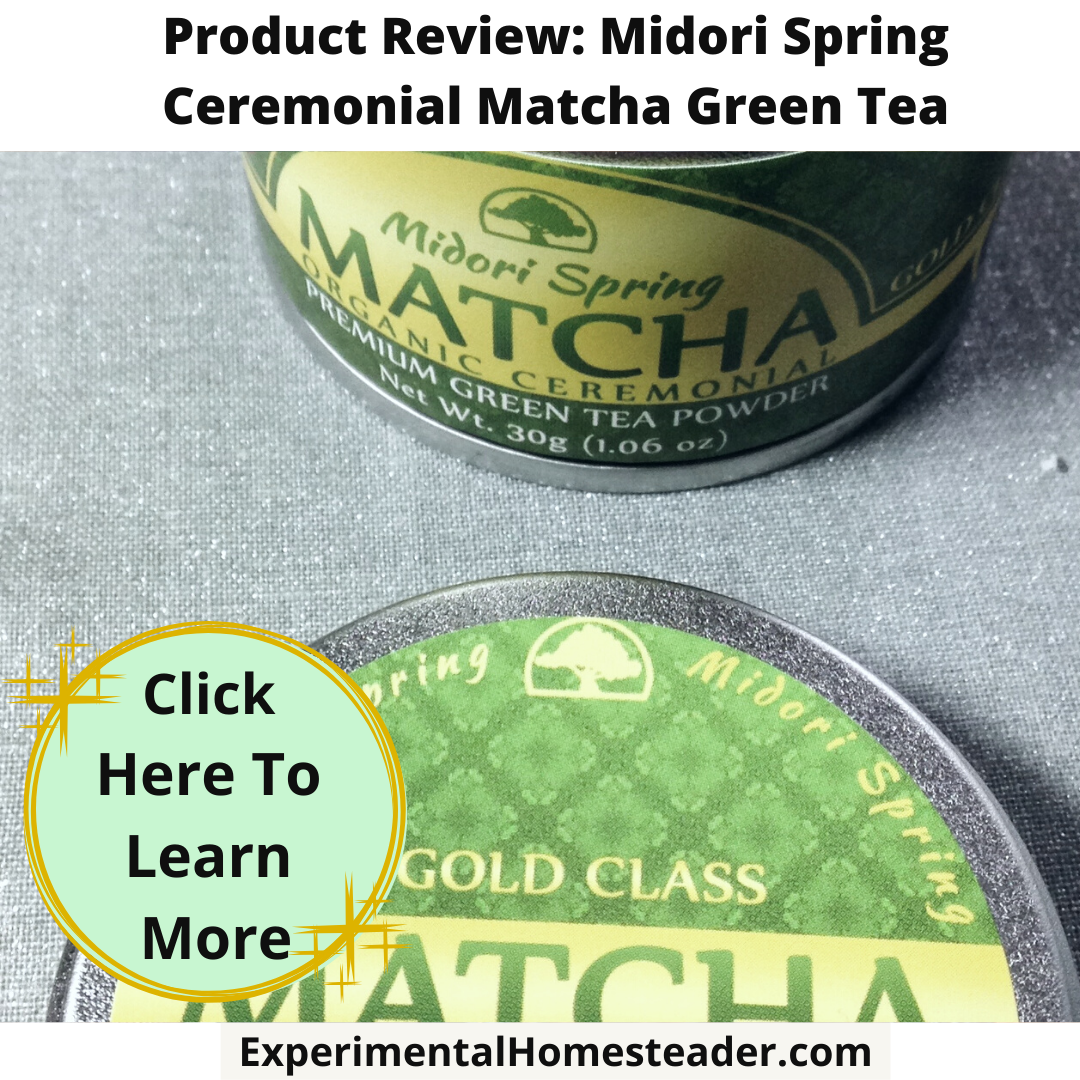
The original Midori Spring product I reviewed was sold as ceremonial grade matcha. The tin itself was sturdy and well designed, with a pop-top inner seal and screw-on lid that helped protect the powder from air and moisture.
Ceremonial matcha is generally intended for drinking rather than baking. It tends to have a smoother flavor and brighter color than lower-cost culinary matcha, and that distinction matters because using an expensive ceremonial powder in cookies, cakes or other strongly flavored foods can be a waste of money.
If I were buying matcha specifically for recipes, I would look at culinary-grade matcha instead. If I wanted to whisk it into water and drink it on its own, that is when I would be more interested in a better drinking-grade powder.
How Matcha Can Fit a Homestead Kitchen
I finally realized that the answer is not to pretend matcha is a homestead staple. It is to use it in the same practical way I use other purchased ingredients that earn their place in the pantry.
- A different morning drink: If you want a change from coffee, matcha gives you another caffeinated option.
- A way to use your own dairy: A matcha latte can be made with milk from your own dairy animals if you have them, or with whatever milk you normally keep.
- A place for your own sweeteners: Honey, maple syrup or another sweetener can soften the grassy flavor if you prefer a sweeter cup.
- Baking and candy making: Matcha can add color and flavor to cookies, cakes, frostings, candies and other homemade treats. For that, I would use a culinary grade instead of spending extra for ceremonial matcha.
- A shelf-stable specialty ingredient: A small amount goes a long way, which makes it easy to keep on hand without dedicating much pantry space to it.
That is the homesteading connection for me. It is not about producing the tea myself. It is about knowing what I am buying, using it deliberately and combining it with ingredients I may already produce at home.
How I Prepared It
Matcha needs to be whisked into the liquid rather than steeped like loose-leaf tea. A small whisk works, and a traditional bamboo matcha whisk works even better if you make it often. The important part is breaking up the powder so you do not end up with dry clumps floating in the cup.
I like tea on the sweeter side, so adding a little honey or another sweetener made the flavor more appealing to me. If you have your own honey, that is an easy way to make the drink feel much more connected to your own kitchen.
The Midori Spring powder I reviewed was an especially bright green. I would still keep that original observation because appearance is useful when comparing matcha, but color alone does not tell you everything about quality.
Other Ways to Use Matcha
If drinking a straight bowl of matcha is not your thing, you do not have to give up on the ingredient. It can be used in homemade foods where the earthy green-tea flavor becomes part of the recipe rather than the whole experience.
Ideas include matcha lattes, shortbread, sugar cookies, cheesecake, white-chocolate candy, frosting, homemade ice cream, smoothies and even a small amount blended into vanilla-based baked goods. That is where culinary matcha is especially useful.
I would not use an expensive ceremonial matcha every time I wanted green cookies or candy. Save the better powder for drinking and keep a less-expensive culinary matcha for recipes.
My Updated Take
This is one of those old reviews that needed context more than hype. I liked the Midori Spring matcha itself, but I struggled at the time to explain why it belonged on Experimental Homesteader.
Now I think the answer is simple: not every useful ingredient has to originate on the homestead. Matcha can be one of those specialty foods you buy intentionally and then use alongside your own milk, honey and homemade foods.
I also would not repeat sweeping health promises just because they appeared in old marketing. Matcha does contain caffeine, catechins, L-theanine and other plant compounds that researchers continue to study, but the most sensible reason to keep it in the kitchen is because you enjoy it and will actually use it.
If you like its grassy flavor, want a different caffeinated drink, or enjoy experimenting with specialty ingredients in homemade food, matcha can earn a place in the pantry. If you do not like the taste, there is no homesteading rule that says you need it.