Fresh Spices for a Homestead Pantry: My RawSpiceBar Review
Disclaimer: I received a sample product at a reduced price or for free in exchange for my honest review. All opinions are my own.
I love spices, and I grow a lot of my own herbs. But no matter how much you grow on a homestead, you are not going to grow everything you want to cook with. That was what originally interested me in RawSpiceBar.
What I remember most clearly all these years later is how fresh the spices were. They were already ground and ready to use, but when I opened the packages I could immediately smell the difference. If you have ever harvested and dried your own herbs or ground whole spices yourself, you know how noticeable that freshness can be.
I loved that about them.
I also think that is the real homestead lesson in this old review. Growing your own herbs and buying good spices are not competing ideas. They can work together. I grow what makes sense for me to grow, preserve what I can, and buy the ingredients that don't make sense-or simply aren't possible-for me to produce here.
In This Article
Why Purchased Spices Belong in a Homestead Pantry
There is sometimes an unrealistic picture of self-sufficiency where we are supposed to grow, raise, harvest, grind and preserve every ingredient we use. That is not how I look at homesteading.
I can grow many culinary herbs, but some spices come from tropical plants, trees, shrubs or crops that need growing conditions most of us simply do not have. Even when a plant can technically be grown, that doesn't automatically make it a sensible use of your time, space or money.
A practical homestead pantry combines what you can produce well with carefully chosen things you purchase. Spices are one of the best examples of that.
Freshness Matters More Than Having a Huge Spice Collection
One reason the RawSpiceBar package impressed me was that I could smell the freshness as soon as I began opening the spices. The original package included several blends, and they had the kind of aroma I associate with ingredients that have not been sitting forgotten in the back of a cupboard for years.
That matters because spices are supposed to add flavor. A cabinet containing dozens of jars isn't especially useful if half of them have lost most of their aroma. I would rather have a smaller working collection of spices that I actually use and replace as needed.
Pre-Ground Spices Can Be a Practical Choice
I appreciate whole spices and freshly ground ingredients, but I also appreciated that these were pre-ground and ready to use.
There is value in convenience when the convenience item is something you will actually use. On a busy homestead, dinner still has to happen after the animals are cared for, garden work is finished, food is preserved and everything else that fills the day.
Having a good ground spice or spice blend ready to reach for can be the difference between adding real flavor to a quick meal and deciding you don't have time to bother.
Grow What Makes Sense and Buy What Doesn't
For herbs that grow well for you and that you use frequently, growing your own can make a lot of sense. Fresh herbs can go directly into meals during the growing season, and extras can be dried, frozen or otherwise preserved for later.
But I don't think the goal should be to replace every purchased seasoning. A better question is: Which herbs and seasonings give me the best return for the space and effort I put into them?
If your family uses a lot of basil, grow basil. If you constantly reach for thyme or sage, those deserve garden space. If a spice comes from a plant that won't reasonably grow in your climate, buy it and move on. That is still self-sufficient thinking because you are making an intentional decision about where your resources are best spent.
Specialty Spices Keep Pantry Food Interesting
This is where spices become particularly valuable for homesteaders and preppers. A pantry full of basic ingredients gives you security, but eating the same foods prepared the same way gets boring quickly. Seasonings allow you to take familiar ingredients and send them in completely different directions.
Beans, rice, potatoes, chicken, pork, beef, soups, stews and roasted vegetables can all become very different meals depending on the seasonings you use. That matters when you are cooking from the freezer, pantry or food-storage supply instead of shopping specifically for each recipe.
For preparedness, I would stock the seasonings my household actually uses and rotate them through everyday cooking so they stay reasonably fresh.

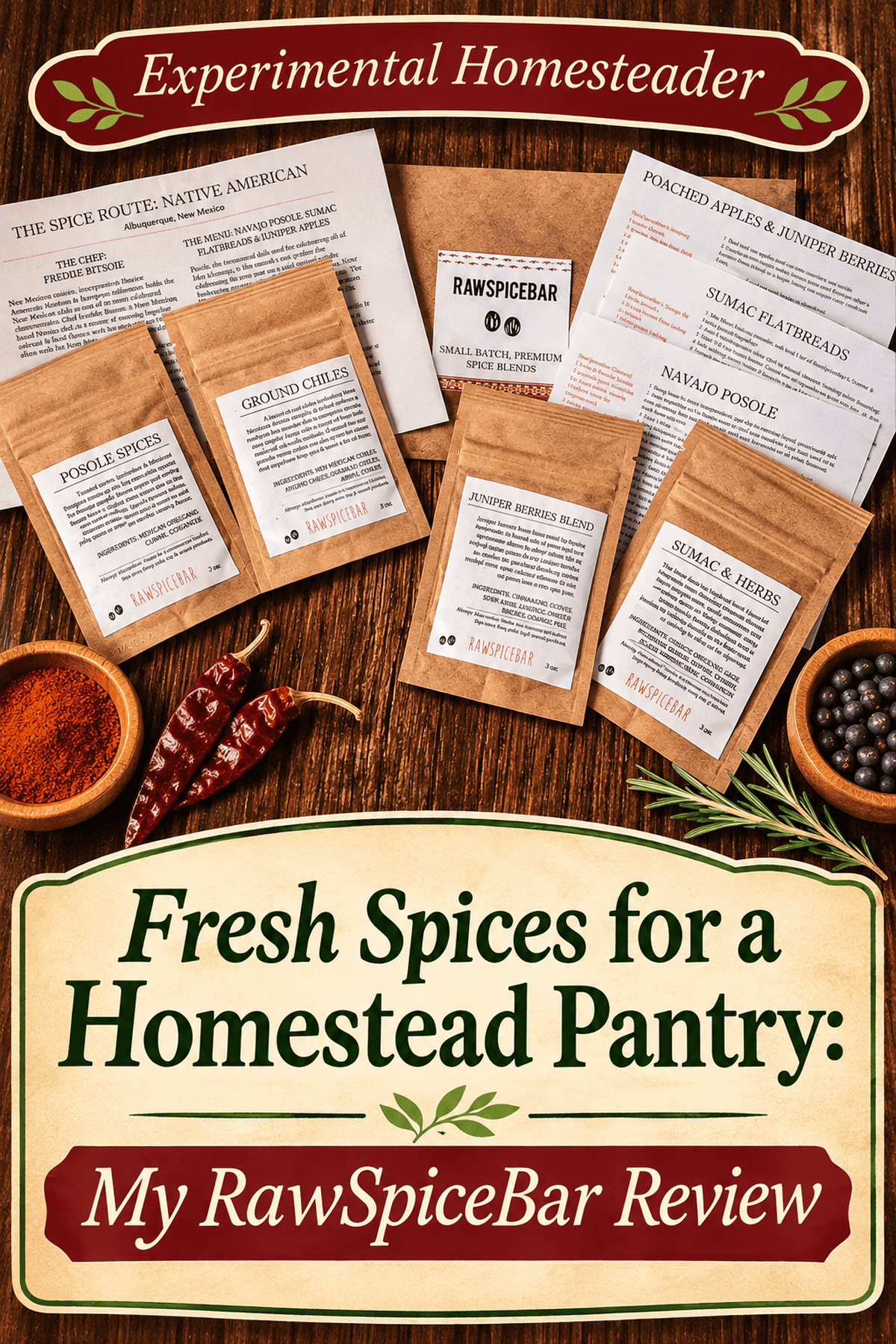
I received the January package. They worked with Chef Freddie Bitsoie from Albuquerque, New Mexico. Chef Freddie Bitsoie is redefining Native American cuisine. The recipes they sent were Navajo Posole, Sumac Flatbreads and Juniper Apples. I received 4 spice blends - RawSpiceBar's Sumac & Herbs Pouch, RawSpiceBar's Juniper Berries Blend, RawSpiceBar's Ground Chilies and RasSpiceBar's Posole Spices.
As soon as I started to open the spices I could smell the freshness. Anyone who has ground their own herbs and spices can quickly tell if what the spices they are using are fresh or not. These were very fresh. I loved the flavors - and even used some of the ground chiles and posole spices on pork chops. They were delicious.

Use Spice Blends as Inspiration
I didn't limit the spices to the recipes that came with the package. I used some of the ground chilies and posole spices on pork chops and thought they were delicious. That is another thing I like about a good spice blend: you don't have to use it for only one specific recipe.
An unfamiliar blend can also teach you something. If you like the flavor, look at what is in it. You may decide to keep buying something similar, or you may eventually create your own version using homegrown dried herbs combined with purchased spices.
How I Would Shop for Spices Now
I would focus less on buying a huge assortment and more on freshness, realistic quantities and versatility. I want spices with noticeable aroma and flavor, and I would rather buy an amount I can actually use than a giant container that sits for years.
I also want to know what is in a blend. A seasoning I can use on several foods earns pantry space more easily than one I will use for a single recipe. And I don't need to pay a premium for a blend that is mostly herbs I already grow and dry myself.
For the things I cannot or do not want to grow, however, I am happy to buy good-quality spices.
Fresh Spices Make a Useful Food Gift
I originally thought the RawSpiceBar subscription made a great gift, and I still like the general idea of giving someone a carefully chosen assortment of fresh spices. It works especially well for someone who likes to cook but doesn't need more kitchen gadgets.
Spices get used up, encourage experimentation and don't become another object that needs permanent storage. A spice assortment could also be paired with homemade gifts from the homestead such as dried herbs, a handwritten recipe, homemade seasoning salt, preserves or another pantry item.
My Takeaway After All These Years
What stayed with me from RawSpiceBar wasn't the old subscription price or the novelty of receiving a box in the mail. It was opening those packages and immediately noticing how fresh the spices smelled.
I loved having fresh, pre-ground seasonings that let me experiment with flavors I wasn't producing myself.
That still fits the way I think a homestead kitchen should work: grow what makes sense, preserve what you can, buy good versions of the things you can't reasonably produce, and then actually use all of it.
You don't become less of a homesteader because a spice came from somewhere else. The skill is in knowing how to combine the things you grow with the things you buy so the food coming out of your kitchen is varied, flavorful and worth eating.