Are Silicone Baking Mats Worth It? My Experience Using Them for Baking
Disclaimer: I received this item for free or at a reduced price in exchange for my honest, unbiased review. All opinions are my own.
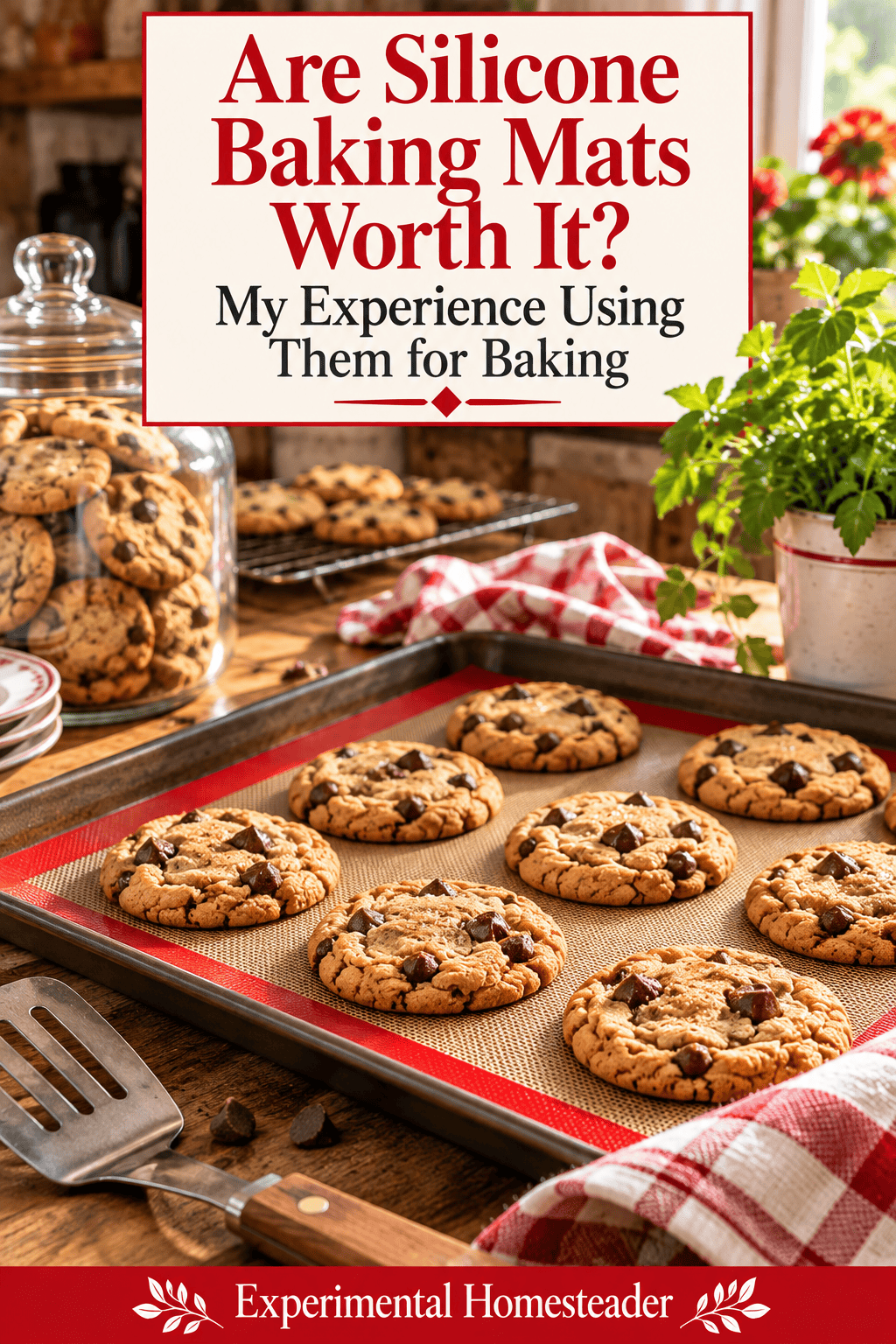
I still have the Culinary Couture silicone baking mats I reviewed years ago, and I still use them. That says more to me now than it did when they were brand new. They have discolored with age and use, which is not especially surprising for silicone that has spent years around heat, butter, sugar, dough, and baked-on splatters. Other than the discoloration, mine are still in good shape and still useful.
What I like most is the same thing I liked in the beginning: they make everyday baking easier. I can line a baking sheet with a reusable mat instead of automatically reaching for parchment paper or greasing the pan. That cuts down on disposable supplies and usually makes cleanup easier too.
For a homestead kitchen, especially one where you bake often, reusable tools earn their keep when they save both money and cleanup time. A silicone mat is simple, but simple is exactly why I keep using mine.
In This Article
Video: Silicone Baking Mat Sheet Set of Two
This video shows one of the silicone baking mat sets I have used. It provides a closer look at the product before I compare my experience with different sets and explain what to consider when buying and using silicone baking mats.
Two Different Silicone Baking Mat Sets I Tried
The Culinary Couture mats discussed in this article are the set I have kept and used for years. I also made a video about a separate YoYo Moon silicone baking mat set of two. They are different products, so the video should not be mistaken for footage of the Culinary Couture mats. Looking at both experiences is useful when deciding whether reusable baking mats belong in your kitchen, but my comments about long-term discoloration and durability refer specifically to my Culinary Couture set.
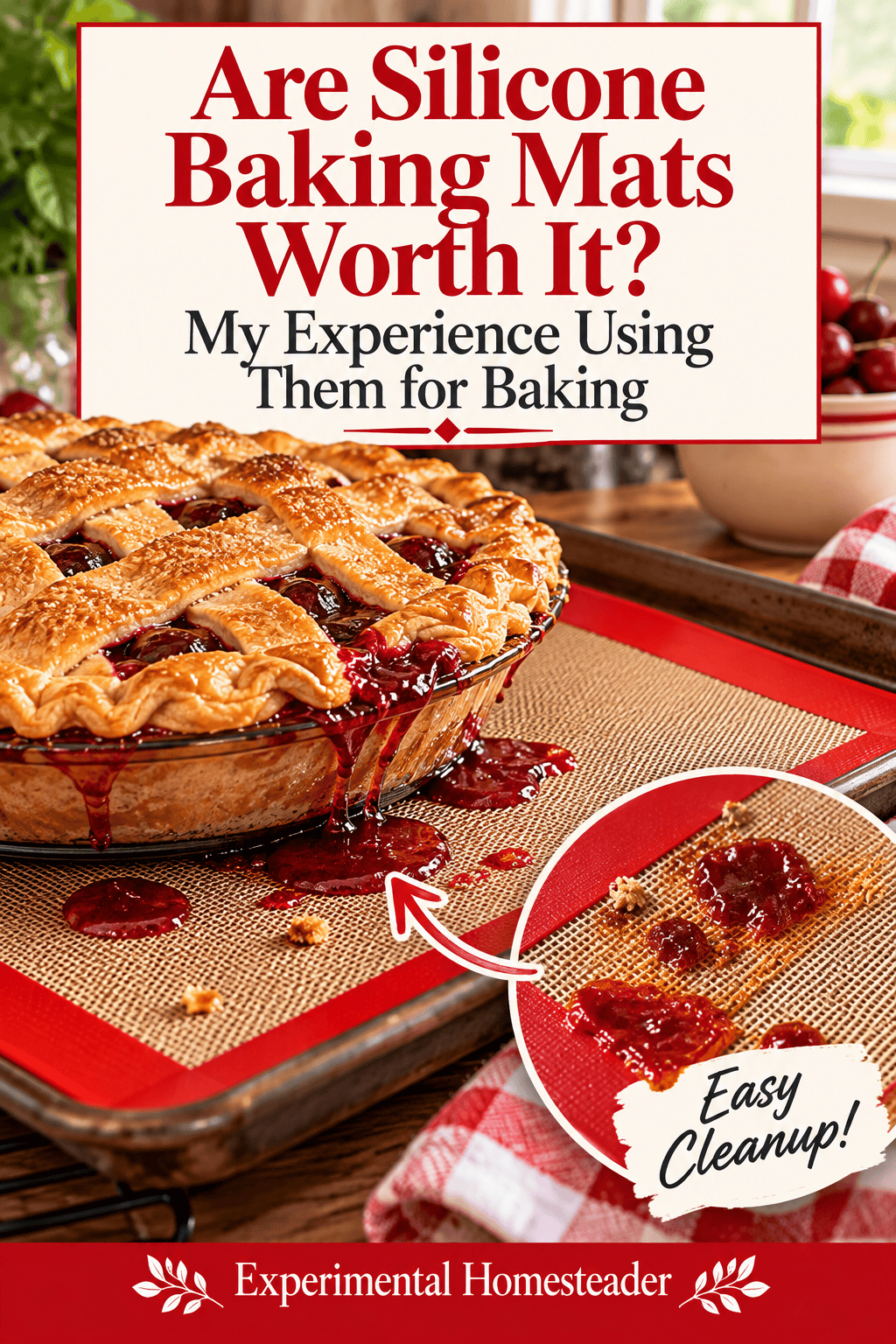
The YoYo Moon video shows the mats in use during baking, including a pie in the oven and a closer look at the mat afterward. That gives you another view of how a silicone liner can fit into ordinary oven work, without suggesting the two brands are interchangeable or that I have the same long-term results with both.
What to Check Before Buying Silicone Baking Mats
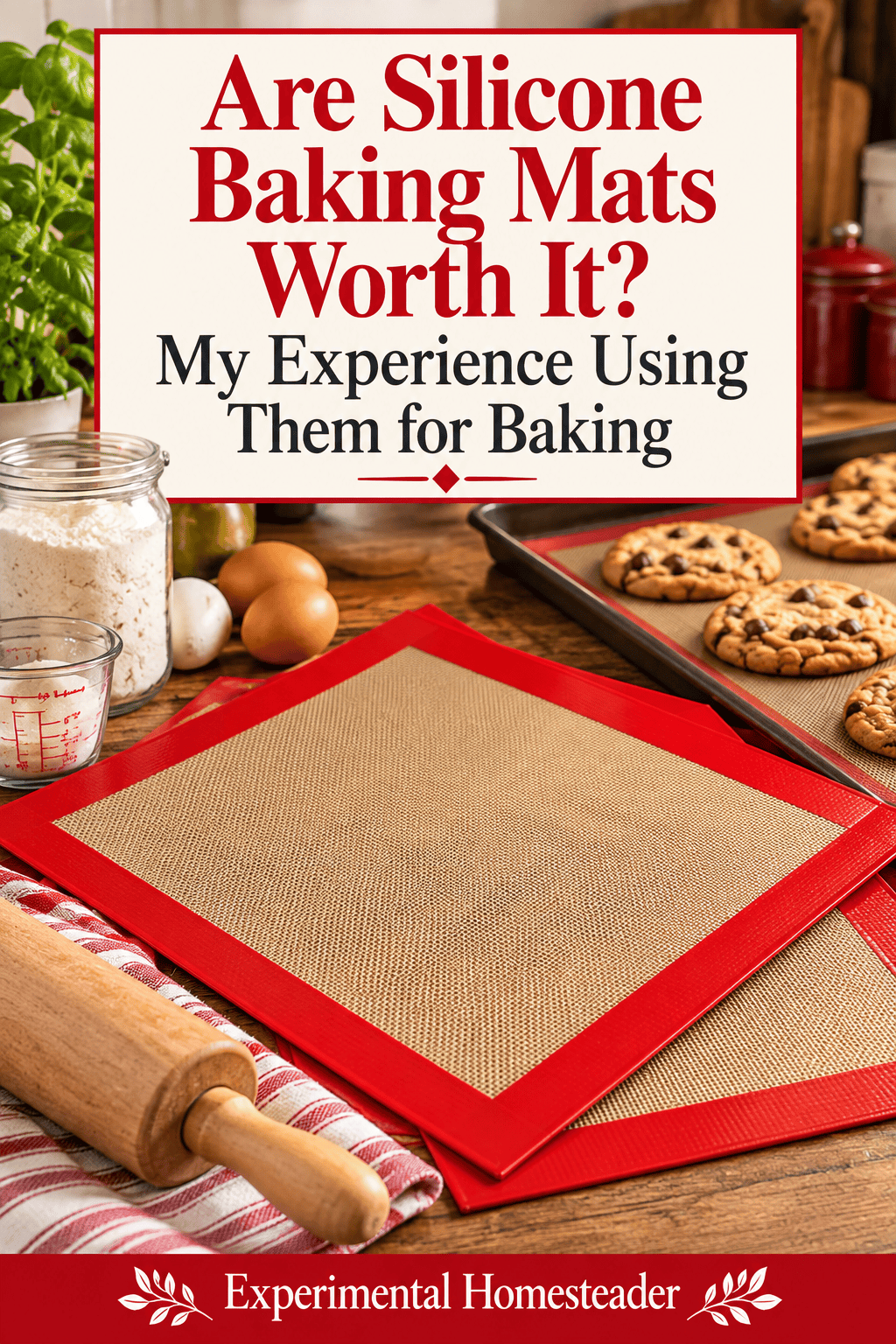
Measure the flat inside surface of the baking sheets you already own before ordering a mat. A liner that curls up the sides or does not sit flat can be frustrating, particularly when you are spacing cookies or working with delicate pastry. Check the manufacturer's temperature rating, whether the mat is intended for oven use, and the cleaning directions. A silicone baking mat is not the same thing as a silicone pastry board, and a mat intended for countertop dough work may not be designed for the same temperatures.
Think about what you bake most often. Reusable liners make the most sense when you repeatedly prepare foods that benefit from a nonstick baking-sheet surface. They are not a universal replacement for parchment paper, greasing pans, or the bare metal surface a particular recipe may need for browning and crispness. Avoid putting a mat under a broiler or directly on a heating element unless its manufacturer specifically permits that use, and never cut baked goods directly on the silicone.
How I Still Use Silicone Baking Mats
I reach for these mats when I am baking something that benefits from a reusable nonstick surface and a simpler cleanup afterward. Cookies and biscuits are two practical examples, while pastry and some bread projects also benefit from having a prepared baking sheet ready to go. I do not assume every recipe needs a silicone mat. If I am looking for a particular browned or crisp bottom, I pay attention to the recipe and how the pan behaves rather than treating the liner as an automatic choice. For a related project that puts dough handling into practice, see my homemade lavender bread recipe.
One thing I noticed early on was that the mats seemed to help protect the bottoms of biscuits and other foods in my oven. That does not mean a mat guarantees even baking or prevents burning in every oven, but it gives me another option when a bare baking sheet produces more browning than I want. I still check the bottoms of baked goods rather than relying on the mat alone, and I adjust baking time when a recipe behaves differently on a lined pan.
The Discoloration Does Not Bother Me
Mine are no longer pretty and new-looking. They have discolored over years of use, but the change in appearance has not stopped me from baking with them. That distinction matters in a long-term review because staining and actual damage are not the same thing. I judge my own Culinary Couture mats by whether they remain intact, lie properly on the baking sheet, and continue to work as intended rather than by whether they still look new in a photograph.
I would be much more concerned about cracks, tears, peeling, sticky deterioration, or damaged edges than I am about staining or discoloration. If a silicone baking mat starts physically breaking down, that is when I would replace it.
Why They Fit a Homestead Kitchen
In a kitchen where I bake regularly, the value of a reusable mat adds up over repeated batches. I still keep parchment paper on hand for recipes that call for it, but I appreciate having a washable liner ready when it suits the job.
Silicone baking mats can also be useful if you are trying to reduce how often you buy parchment paper or aluminum foil. I would not say they replace every possible liner for every recipe, but they handle a lot of ordinary baking jobs very well.
Using Them for Dough and Sugar Work
Beyond lining baking sheets, I have used silicone surfaces for rolling pastry and for some sugar work. The advantage is having a washable area to work on instead of putting sticky ingredients directly onto the countertop. I still distinguish between an oven-safe baking mat and a larger countertop pastry mat, since their size, intended use, and heat limits may differ. If you are working with pastry, my homemade pie recipes and desserts collection offers more ideas for putting those tools to work.
As with any silicone product, I would stay within the manufacturer's temperature limits and avoid cutting directly on the mat with knives or other sharp tools that could damage it.
Cleaning and Caring for Silicone Baking Mats
Cleanup is one of the biggest reasons I keep using them. I wash mine with warm, soapy water and let them dry completely before putting them away. Greasy residue can cling to silicone, so if a mat still feels oily after a quick rinse, it needs a more thorough wash rather than being stored that way.
For storage, I keep the mats flat or gently rolled rather than folding them into sharp creases. That helps preserve the baking surface between uses.
Would I Buy Silicone Baking Mats Again?
Yes, I would buy silicone baking mats again, and my reason is based on years of actual use rather than the excitement of trying something new. I still have the Culinary Couture set I originally reviewed. The mats have discolored, but I continue to use them for routine baking and appreciate the easier cleanup. That is a stronger endorsement of their usefulness in my kitchen than an impression formed after only a few baking sessions.
I would not promise that every silicone baking mat will last this long because quality varies from one brand to another. I can only speak for the Culinary Couture set I received. Mine have discolored, but they remain usable and in good condition otherwise.
If you bake often, I think a reusable silicone mat is a practical piece of equipment rather than a novelty. It can be especially worthwhile for a home baker, homesteader, or anyone trying to reduce disposable kitchen supplies.
They Still Make a Practical Gift
I originally thought silicone baking mats would make a practical gift, and I still do, especially for someone setting up a first kitchen or baking regularly. The useful part is not the novelty of receiving another kitchen gadget. It is having a liner that can be washed and reused for the kinds of baking the recipient already does. I would check the size of their baking sheets first, though, because a mat that does not fit their pans is not nearly as helpful.
They are not exciting in the way a new mixer or fancy baking pan might be, but useful kitchen gifts often end up being the things people reach for year after year. In my case, these mats have earned their space because I am still using them.
Frequently Asked Questions About Silicone Baking Mats
Do silicone baking mats replace parchment paper? Not for every job. I use them for many routine baking tasks, but a recipe may call for parchment, a greased pan, or direct contact with the baking sheet for a particular result. I choose the surface based on what I am making rather than assuming one liner is best for everything.
Is discoloration a reason to throw a silicone mat away? My Culinary Couture mats have discolored over time and are still in use. I pay more attention to physical damage, deterioration, and whether the surface remains intact. If a mat is torn, peeling, cracking, or otherwise breaking down, I would replace it instead of continuing to bake on it.
Can silicone baking mats go directly on an oven rack? I use mine as liners on baking sheets, following the intended use of the product. Check the manufacturer's instructions before trying a different setup, and do not put a mat against a heating element or under a broiler unless the manufacturer explicitly approves it.
What should I check before buying a set? Start with the flat dimensions of your baking sheets, the manufacturer's oven-temperature limit, and the care instructions. Then consider whether you bake often enough to benefit from a washable liner. If you enjoy other practical kitchen tools, my Chefcoo cooking tool set review explains what I learned from using and eventually passing along another kitchen gadget.