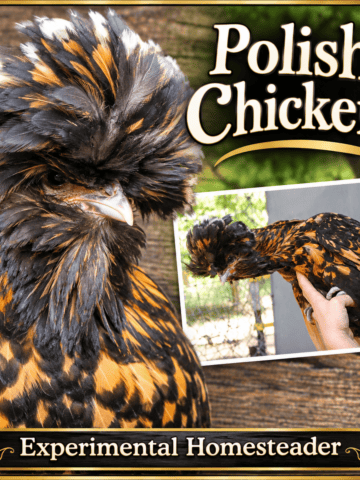
The Ultimate Guide To Keeping Chickens At Home
Learn everything you need to know to start keeping chickens at home.
Chickens are intelligent, entertaining birds that make great pets.
They also lay eggs and give us meat - if we choose to butcher them.
I really enjoy my backyard chickens and have for years.

In This Article
Are Chickens Easy To Keep?
Chickens are one of the easiest livestock to keep.
They are entertaining and they can even be taught tricks.
As an added benefit you get fresh eggs - and if you choose, meat.

Do Chickens Need To Free Roam?
No, chickens do not need to free range.
In fact chickens can be kept in a cage or a chicken run.
The reason many people allow their chickens to free range is because the eggs they produce are healthier and it costs less to feed them since they can eat bugs, grass or whatever else they desire.
The reason the eggs are healthier is because studies have shown free range eggs have less bad cholesterol and more good cholesterol compared to eggs from chickens raised in cages.

Can You Keep A Chicken As A House Pet?
While it is not a good idea to keep a chicken confined in your house because of contamination risks, it is possible to bring a chicken indoors once in a while.
Most people raise their baby chicks indoors and some put their older chickens in diapers so they can some indoors without making a mess.
However what you need to understand is cleanliness is important when dealing with chickens as they can carry salmonella and Campylobacter, which is harmful to humans.
If you do bring them indoors, keep them away from any rooms where food is prepared and always wash your hands throughly after handling them.

Our New Chicks and Their DIY Brooder
This video shows an update on our new chicks and the homemade brooder we used for them. It gives you a look at one real setup before the beginner care advice below, including the practical work involved in keeping young chickens comfortable and safe.
How Do You Take Care Of A Chicken For Beginners?
As mentioned above, caring for chickens is relatively easy.
Here is what you need to do:
- Feed twice a day.
- Water daily.
- Make sure the water stays feces free and if it gets contaminated, dump the water and throughly wash the container before refilling it with fresh water.
- Collect eggs.
- Protect your chickens from predators by making sure they have a predator proof chicken coop.

Do Chickens Attract Rats?
Rats - and mice - are not attracted to chickens.
They will come for the chicken feed however, which is why it is best to keep it in a metal can with a lid that mice and rats cannot get into.
Rats will also steal fresh chicken eggs.
As for mice, chickens will eat them if given a chance.
Are Chickens Noisy At Night?
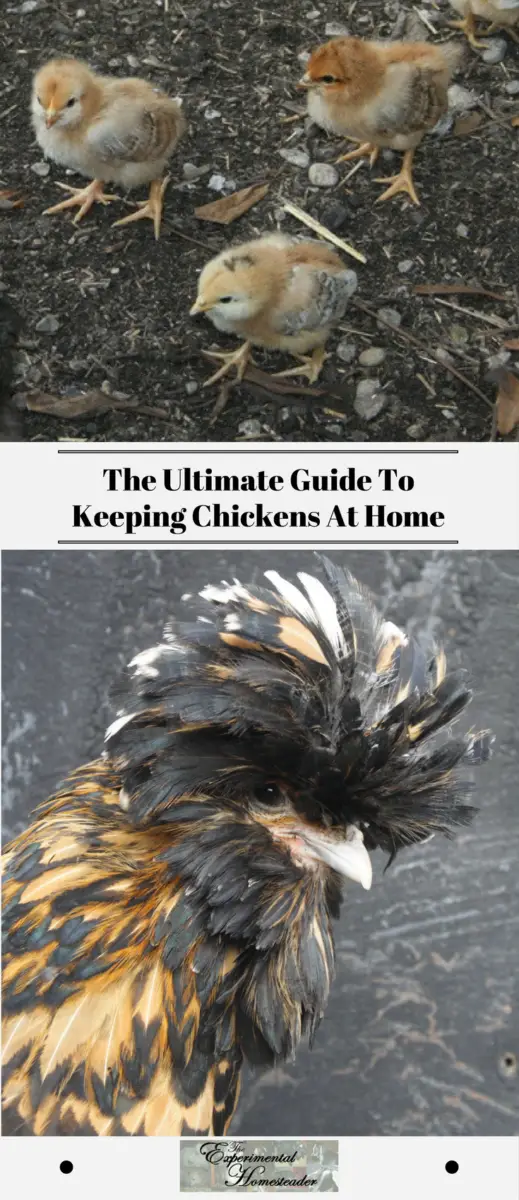
- Chickens sleep at night, so they are not noisy.
- Hens are generally pretty quiet, but will make noise when they are laying eggs.
- Roosters however will crow early in the morning as the sun is coming up and periodically throughout the day.
- If you do not want crowing, avoid keeping a rooster.
- Hens will lay eggs without a rooster present, however the eggs will not be viable, so you cannot hatch them.
What Can I Do With Chicken Poop?
Chicken poop and chicken feathers make a wonderful fertilizer!
It does need to be aged or composted however as chicken poop is "hot" in its fresh state and will burn a garden or plant up.
Composting chicken poop makes it safe to use around people, plants and pets because, as long as it is done properly, the process of composting destroys the disease-causing organisms that naturally occur in chicken poop.
Raising Chicks and Starting a Backyard Flock
Starting with chicks takes more than choosing a few appealing breeds. You need a clean, draft-protected brooder with an appropriate heat source, safe bedding, clean drinking water and a complete chick starter feed suitable for their age. Chicks must be able to move away from the heat when they are warm enough, and the brooder should be checked frequently rather than left unattended. Water containers should be designed to prevent young chicks from falling into them or becoming soaked.
If you want the full skill of hatching eggs rather than purchasing chicks, read How To Hatch Eggs In An Incubator. For the choices you'll face once chicks grow, Beginner's Guide to Raising Chickens for Eggs covers the practical needs of a laying flock. Raising chicks for meat is a different plan, and What Raising Cornish Cross Chickens Taught Me describes that experience.

Choosing and Maintaining a Safe Chicken Coop
A chicken coop needs dry shelter, ventilation without cold drafts across resting birds, appropriate perches and nesting space, and protection from predators. A structure that looks attractive in a photograph isn't necessarily suitable for your climate or the number of birds you keep. Plan how you'll clean it, reach water and feed during winter, collect eggs, and keep the interior from becoming damp. Secure hardware cloth and properly fitted doors may be more important than decorative features.
Chicken runs and yards also need thoughtful fencing and predator management. Free-ranging can be useful for some flocks, but it increases exposure to predators and requires suitable supervision and shelter. Read 6 Things You Need To Know Before Raising Backyard Chickens for additional considerations before you invest in equipment. Good coop design should fit the flock's changing needs as chicks become adults.

Daily Chicken Care and Common Beginner Questions
Routine care includes clean fresh water, feed formulated for the bird's age and purpose, ventilation, suitable shelter, and regular checks for unusual behavior, injury or illness. Learn the differences between a healthy active bird and one that is lethargic, isolated, struggling to breathe or not eating. Those changes deserve prompt attention, often with veterinary guidance. A natural or homemade remedy is not automatically a safe substitute for proper poultry treatment.
Manure management is another part of a healthy chicken setup. Chicken manure can be valuable in compost, but raw manure may contain disease-causing organisms and should not be applied indiscriminately to edible crops. Follow research-based composting and garden application intervals rather than assuming that a pile is sanitized simply because it has aged. For the complete beginner overview, see Raising Chickens for Eggs and Important Things To Know Before Raising Backyard Chickens.
Feeding Backyard Chickens

Raise Happy, Healthy Backyard Chickens With Purina® Organic Poultry Feed
Raising chickens in your backyard is fun plus you get fresh eggs. When it comes to feeding backyard chickens I believe organic feed is best.

Sprouting Peaceful Valley Omega-3 Chicken Forage Blend For Chickens
Sprouting Peaceful Valley Omega-3 Chicken Forage Blend For Chickens is a great way to offer fresh greens all winter long.
Frequently Asked Questions About Chickens
Q: Is it OK to leave chickens in a chicken coop all day long?
A: Yes, it is. Not all chickens free range, however chickens left in a chicken coop all day need adequate light, water and food.
Q: How many chickens should a beginner start with?
A: Three
- Three chickens are a good starting point for a small family.
- Larger families should start with five or six hens.
Q: Is it necessary to lock chickens up at night?
A: Yes, for their safety. Predators come out at dusk and chickens are a tasty dinner. This is why having a predator proof chicken coop is essential.
Q: How often does a chicken coop need cleaned?
A: That depends on what you are cleaning.
- Removing any chicken poop or soiled feed or water dishes daily is the best practice.
- Bedding in the nest boxes is ideally cleaned out and replaced once a week.
- Bedding in the chicken coop itself is generally completely removed in the spring and again in the fall.
Q: Do chickens like wind chimes?
A: As a matter of fact they do. Chickens love shiny objects and once they get used to the sound, it no longer scares them off.
Q: What are some healthy treats for chickens?
A: While it is ok to give your chicken treats, too much of a good thing can ruin their diet, so moderation is the key. Here are some healthy treats they will love:
- Lettuce
- Beets
- Broccoli
- Carrots
- Kale
- Swiss chard
- Squash
- Pumpkins
- Cucumbers.
- Lavender
- Mint
- Oregano
- Parsley
- Cilantro
- Thyme
- Basil
Q: Can chickens eat canned corn?
A: Yes, they can, but be aware the salt in canned corn can cause problems for your chickens, so give it in moderation.