Homemade Apple Pie with Swerve Sweetener: A No-Added-Sugar Recipe
Disclaimer: The reviewer has received the product/service at a reduced price or for free. I am being compensated to participate in #Switch2Swerve challenge through the Bookieboo Influencer Network . I did switch out my regular sweetener for the Swerve from November 18, 2013 through December 20, 2013. All opinions are my own and are my honest opinions based on my own experience with the product.
Apple pie is one of those desserts that can make an ordinary fall afternoon feel like something worth celebrating. You cut into a golden crust, find tender apples tucked beneath it, and get that wonderful combination of fruit and warm spices in every bite. It is the sort of pie I want cooling in my kitchen when the weather turns crisp, especially when the apples come from a harvest I have grown or preserved myself.
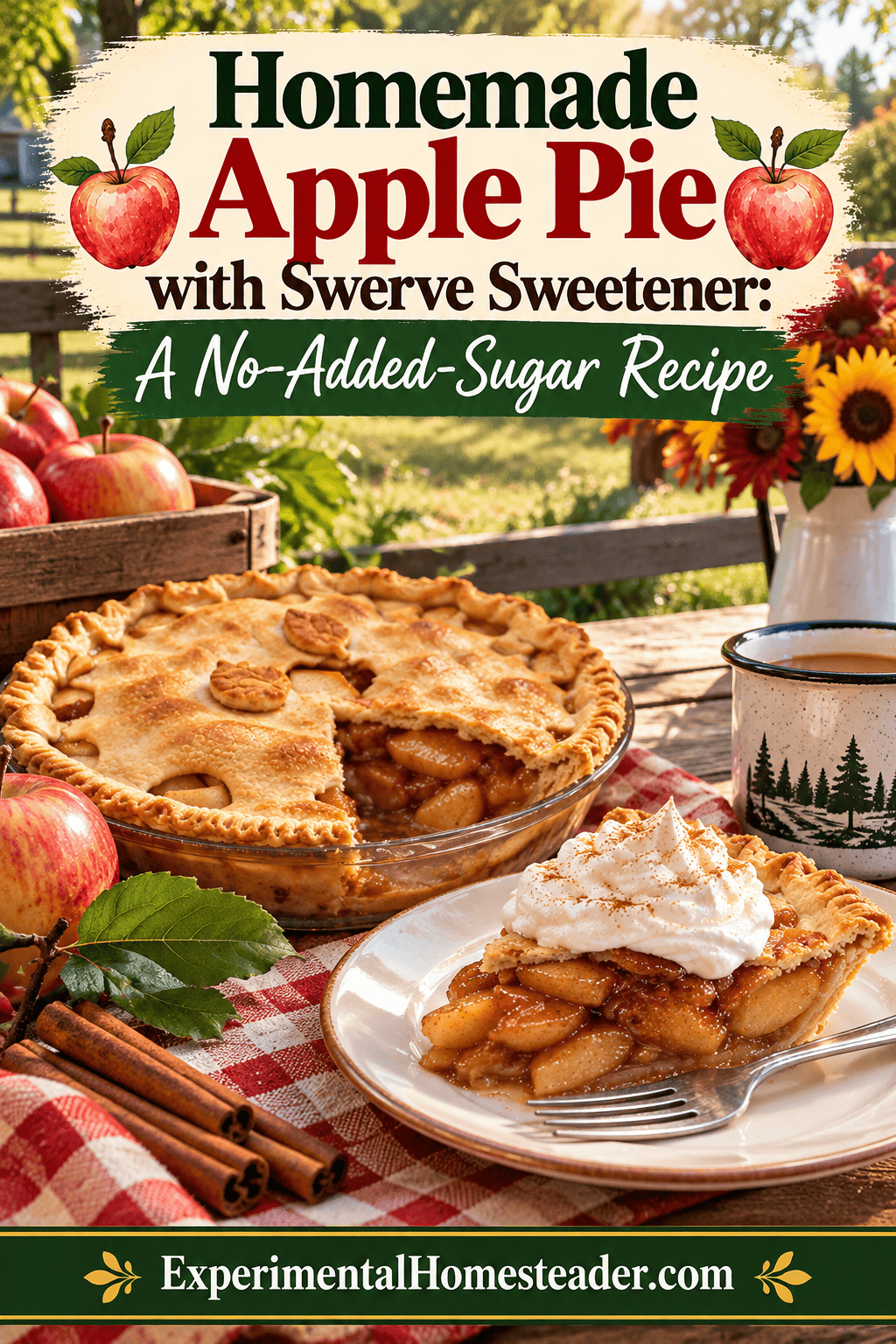
For this particular homemade apple pie, I tried something different with the filling. I baked it with Swerve instead of the sugar made from cane I normally use, because I wanted to know whether a sugar alternative could still give me the apple pie I enjoyed. I had made the same recipe with sugar made from cane before, so I could compare the results. The Swerve version came out beautifully, and I was pleased with both its flavor and appearance. I even made Swerve-sweetened whipped cream to serve with it.
In that original 2013 experiment, I loved the result. My everyday preference has changed since then, but this pie still shows what the sweetener could do in a familiar homemade dessert. The apples and pastry contribute carbohydrates even without added sugar in the filling, so it is not a carbohydrate-free pie.
In This Article
How the Swerve Apple Pie Experiment Turned Out
I have never been particularly fond of artificial sweeteners, so when I first heard about Swerve, I was curious but not ready to assume it would work in a pie. The original product description caught my attention, but what mattered to me was how it would perform in my own kitchen. I had already baked this apple pie using cane sugar, which gave me something familiar to compare it with. Would the apples taste right? Would the filling look the way I expected? Most importantly, would I actually want another slice?
The answer surprised me. The pie turned out well, and I enjoyed the flavor enough to make whipped cream sweetened with Swerve to go with it. That was the experience behind my original positive review, and I do not want to rewrite history by pretending I disliked it from the beginning. Later, after using Swerve for a while, I noticed an aftertaste and returned to cane sugar for everyday baking. If I needed to choose an alternative sweetener, however, Swerve would still be my first choice.
There is also an important distinction between changing the sweetener and changing the nutritional makeup of the whole dessert. Swerve is designed as a one-to-one sugar substitute by volume and is marketed as a zero-calorie sugar replacement, but the apples and pastry still contribute carbohydrates. Someone managing blood glucose needs to consider the full recipe and portion size, rather than treating any apple pie as automatically suitable simply because the filling has no added cane sugar. For me, the value of this experiment was discovering that a familiar homemade dessert could turn out well with a different sweetener.
The History of Apple Pies And How They Became Popular In America
Apples have a much longer history than their association with American pies might suggest. The domestic apple traces its origins to Central Asia, and generations of growers carried apples and their seeds into new regions. Over time, people selected trees for flavor, storage, cider making, and cooking. That history is part of why I find heirloom varieties so interesting: they remind us that apples were never meant to be just one uniform supermarket fruit.
Here in Indiana, Johnny Appleseed is more than a name from a schoolbook. Fort Wayne hosts the Johnny Appleseed Festival, and the story of the nurseryman John Chapman belongs to the wider history of apples spreading through the region. His plantings were often grown from seed, which meant the resulting trees could produce very different fruit. That variety is one reason the history of American apples is so much richer than a single familiar type.
Recipes for apple pie appeared in medieval England, including a recorded recipe from 1381. Those early pies were not quite the desserts we recognize today. Ingredients, pastry, and expectations about sweetness were different, and the dish continued to evolve as cooks adapted it to the fruit and supplies available to them. Apple pies were being made in colonial America, long before the dessert became a patriotic symbol.
Early recipes could combine apples with pears, figs, raisins, and saffron. Sugar was not necessarily part of the mixture, and some medieval pastry cases served a different purpose from the tender crust we expect to eat today. I find that especially interesting when thinking about a modern pie made with a sugar alternative. The idea that an apple dessert must taste exactly one way is relatively recent compared with the long history of cooks working with what they had.
By the early twentieth century, apple pie was already being described as a distinctly American dessert. A 1924 newspaper advertisement used the familiar comparison, an example noted by Smithsonian Magazine. The association developed over time rather than beginning with any one advertisement.
By the twentieth century, apple pie had become strongly associated with American home life, and that association was especially visible during World War II. The history is more complicated than the familiar saying suggests, but that is part of its appeal to me. A dessert with roots far beyond America became something families made with apples from their own orchards and kitchens, adapting it as ingredients and tastes changed.

Heirloom, Non-GMO Apples Worth Baking into a Pie
When I think about fall on a homestead, apples are right up there with the cooler mornings, the work of putting up the harvest, and the smell of something good baking in the kitchen. I particularly enjoy heirloom, non-GMO apples, and one reason I enjoy older varieties is that they give you choices beyond the familiar apples lined up at the grocery store. Some are pleasantly tart, some have a rich, spicy flavor, and some turn soft enough to make a filling that almost melts into the crust. Choosing apples for pie is about more than choosing whichever ones happen to be available.
Northern Spy has a long reputation as a baking apple because of its bright flavor and firm flesh. Winesap is another old favorite, with a tart, aromatic character that can stand up to cinnamon and other spices. Jonathan apples bring a lively sweet-tart balance, while Gravenstein apples are prized for their fragrant flavor and tend to soften more as they cook. Availability varies by region and season, and not every heirloom variety is easy to find at a supermarket. An orchard, farm market, or your own trees may offer much more interesting choices.
One useful trick is to combine varieties rather than asking one apple to do everything. Firm slices can give a pie structure, while a softer, more aromatic apple can help create a luscious filling. When using home-canned apples, check whether they were packed in syrup or already seasoned, since that changes the sweetness of the filling.
Heirloom and non-GMO are not identical labels. Heirloom usually refers to an older variety preserved over generations, while non-GMO means the apple was not developed through genetic engineering. Most traditional apple varieties are not genetically engineered, but it is worth asking an orchard about the varieties it grows if that matters to you. For this pie, the real goal is finding apples you enjoy eating and baking with, whether they came from your own trees or a nearby grower.
A Good Pie Crust Makes the Apples Even Better
A flaky crust gives the tender apple filling a welcome contrast, and a properly baked bottom keeps each slice from becoming soggy. The filling can be wonderful and still disappoint if the bottom pastry is soggy or the top turns tough. Whether you roll out your own dough or use a prepared crust, handle it gently and pay attention to how much moisture goes into the pie.
If you make pastry from scratch, start with cold fat and add cold water gradually, using only enough to bring the dough together. Overworking the dough develops gluten and can make the crust tougher than you want. Letting it rest in the refrigerator makes it easier to roll and helps keep the fat cool. When you move the dough into the pie plate, ease it into the corners rather than stretching it, because stretched pastry is more likely to shrink as it bakes.
For an apple filling, moisture is often the biggest challenge. Use the thickener called for in your recipe, and avoid adding extra liquid simply because it tastes good. Follow the recipe's baking temperature and time, looking for a properly baked crust and bubbling filling rather than judging the pie only by its color. Once it comes out of the oven, allow it to cool enough for the filling to settle before slicing. A little patience makes the difference between a neat slice and a delicious puddle on the plate.
Print
Apple Pie Made With Swerve Sweetener
A homemade apple pie with cinnamon, vanilla, and Swerve sweetener in the apple filling, baked in a pie crust and served with whipped cream if desired.
- Total Time: 30 minutes
Ingredients
- 8 apples, cored and cut into wedges
- 1 ½ tablespoons vanilla bean paste
- 4 tablespoons real butter
- 6 Tablespoons new Swerve Sweetener
- 1 Tablespoon flour
- 2 teaspoons cinnamon
Instructions
- Melt the butter in a skillet.
- Stir in the vanilla bean paste, add the cinnamon and mix well.
- Add the apples to the pan, stirring as you go so they all get coated in the butter and vanilla mixture.
- Sprinkle the Swerve Sweetener and flour on top of the apples.
- Mix again and cook the apples over medium heat for five minutes.
- Remove the pan from the heat.
- Place the first pie crust in the bottom of the pie pan. Press the edges to the top of the pan. If you are using a pie crust that is pre-formed, you can skip this step.
- Scoop the filling into the pie crust. Determine if you intend to add a second pie crust or bake it like it is.
- Add the second crust to the top if desired and pinch the edges together. If you intend to bake it just like it is, remember you do need to cut a few slits in the top of the crust to vent it if you use a full pie crust on top. I chose to use miniature cookie cutters to cut shapes into the top of my pie crust dough, then used some of those shapes on top of the dough. A little water painted onto the back of the dough shapes with a food grade paintbrush helps them adhere to the crust. Another option is to make a lattice pie crust for the top.
- Cover the edges of the pie crust with a pie crust cover or foil so it doesn't burn while the rest of the pie is baking.
- Place the pie in the oven and bake it. I bake my apple pie at 400 degrees for 25 minutes. The amount of time can vary depending on where you live and your oven. Pre-cooking the apples as we did allowed for less time baking the pie because the apples are already soft.
- Remove from the oven when the pie is done. Allow it to cool. Slice and top with whipped cream.
Notes
Remember - Swerve measures out cup for cup just like sugar, so you don't have to worry about doing any crazy math to figure out how to use it in your recipes.
- Cook Time: 30

More Apple Recipes and Ways to Use the Harvest
If this pie has you thinking about what else to make with a basket of apples, there is plenty more to explore. My fresh apple recipe and preservation roundup gathers ideas for using the harvest, while how to preserve fall apples without canning is useful when you need to put fruit away for another day. For another dessert, try the Dutch oven apple crisp or the Instant Pot apple crisp. You can also explore my apple dessert recipes for more ways to make the most of the season.
Try another apple treat: Serve your pie with Swerve whipped cream or try my Instant Pot apple crisp next. Join my newsletter below for more from-scratch recipes and seasonal homesteading ideas.
For more baking ideas, explore Alternative Sweetener Recipes and Pies & Fruit Desserts. What apple variety do you like best in homemade pie? Share it in the comments.