Spooky & Sustainable Halloween Table Decorating with Oranges
Halloween table decorating does not have to mean buying another box of decorations that will spend eleven months of the year in storage. An orange can become part of the meal, part of the centerpiece and, when you are finished, leave very little behind that needs to go into the trash.
These orange peel luminaries are simple: carefully remove the fruit, carve the peel and place a tea light inside. The orange flesh stays in the kitchen instead of being wasted, while the peel gives you a naturally orange Halloween decoration that looks especially good once the lights are low.
For a homesteader or anyone trying to live a greener life, the useful part is what happens before and after the candle is lit. The fruit is food, not craft waste. The peel can serve as the luminary for Halloween night, and clean peel can still be useful afterward. You might dry it, use it in a household project or compost it where citrus is appropriate for your compost system. The point is not to invent work just to save an orange peel. It is to recognize that something we normally toss can still be useful.
There is one important choice to make before you begin: should you use a real candle flame or an LED candle? Both can create the effect, but they require very different levels of attention. I will walk you through that choice, the actual luminary project and several practical ways to use the rest of the orange.

In This Article
Real Candle or LED Tea Light?
A real tea light gives the orange peel a warm glow, but you are putting an open flame inside a small piece of plant material. That means the luminary needs to sit on a stable, heat-safe surface, away from curtains, dried arrangements, paper decorations and anything else that can catch fire. Never leave it unattended.
An LED tea light is the practical choice if the luminaries will be around children or pets, if you want to tuck them among other decorations, or if you simply do not want to supervise an open flame all evening. You lose the real flame, but you gain much more freedom in where and how you use the luminary.
If you use a real candle, make the opening at the top generous enough that heat is not trapped directly against the peel. If the peel begins drying, curling or scorching, extinguish the candle.
Why Use an Orange for Halloween Table Decorating?
An orange works especially well for this because the color already belongs on a Halloween table and the material itself is useful. You do not need to cover it with paint, glitter or plastic decorations to make it look seasonal. More importantly, the project starts with food rather than a craft supply. If you are buying oranges anyway, you can plan the menu and the centerpiece together instead of buying one item to eat and another item simply to decorate.
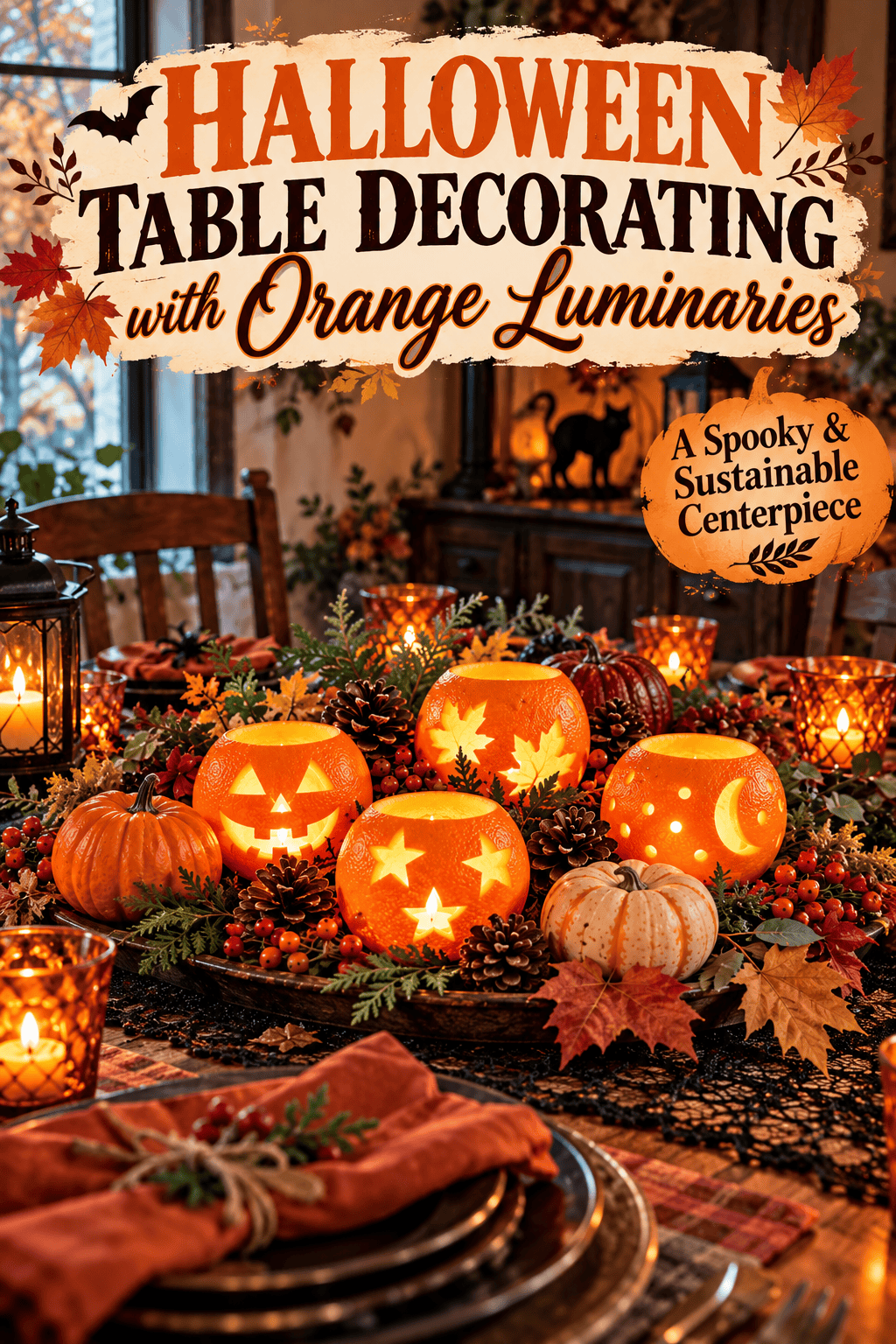
The peel also gives you several levels of effort. Leave it plain for a simple glowing orange, cut a jack-o'-lantern face for a Halloween table, or make small stars, moons or geometric openings if you want the light itself to create the pattern. Keep the cuts simple enough that the peel still has enough structure to hold its shape.
If you prefer a reusable luminary that can come back year after year, my glass pumpkin luminary project is the better choice. This orange version is for the night when you want the decoration itself to begin as food and finish with as little waste as possible.
Use the Whole Orange
Set a clean bowl beside you before you start cutting. As you hollow each orange, put the edible fruit directly into that bowl rather than onto the craft surface. Eat it as-is, refrigerate it for breakfast or fruit salad, blend it into a smoothie, or juice it. Separating the food at the beginning is much easier than deciding later whether fruit that has been sitting beside wax, carving tools and decorations is still something you want to eat.
Try to remove the fruit without shredding the peel. A spoon can help loosen the flesh after the initial cut. Leave enough of the white pith attached to give the peel some strength, especially if you plan to cut a face or design into the side. If the peel tears, use that orange for food and potpourri or cleaning peel instead of fighting with a collapsing luminary.
The peel itself has uses beyond this one evening too. Clean peel can be cut into smaller pieces and dried for projects such as homemade potpourri. Citrus peel can also be steeped in vinegar for a homemade citrus cleaning solution. If you want either of those later uses, reserve some clean peel before it becomes part of the candle project. Peel exposed to candle wax, soot, glue, paint or other craft materials should not go back into kitchen, cleaning or potpourri supplies.
You can also make several luminaries work as a real centerpiece instead of scattering them randomly. Use an odd-numbered group, vary the height with heat-safe dishes or stands, and fill the spaces with seasonal materials you already have. Small pumpkins, apples, pinecones, autumn leaves, herbs or flowers can carry the arrangement across the table without requiring a matching package of Halloween decorations. If you are using real candles, keep dried plant material well outside the flame and heat zone.
Now let's turn the intact peel into the luminary.

Halloween Table Decorating With Luminaries Made Out Of Oranges
Materials
- one orange
- a tea light candle (either a real candle or an LED tea light candle)
Tools
- lighter or matches (if you use a real candle)
- a small knife
Instructions
Gather all the things you need for this tutorial.
Create a horizontal cut around the orange by running a knife around the upper one-third portion of the orange.
Gently remove the orange peel making sure to preserve the shape of the peel since this will be used for this tutorial. We do not need the fruit, so you can set it aside to eat.
Cut a hole out of the top of the orange peel.
Cut out a design around the edges of the hole. In the orange in the photo, we created small triangle spikes. This upper part of the peel will serve as the cover of the luminary. The bottom section of the bottom orange peel will house the tea light candle.
Cut out more designs on the orange peel cover. The design of the cover will enhance the overall aesthetics of the luminary once the tea light candle is placed inside the orange peel.
Place the bottom of the orange peel where you want the luminary to be since moving it once the candle is inside of it is a bad idea.
Place the candle on the bottom of the orange peel. Light the candle with a lighter unless you are using an LED tea light candle, in which case you would just turn it on. Using a kitchen lighter is safer than a typical lighter for this luminary.
Place the orange peel cover on top of the orange peel body. Take your time and be careful when you do this since there is a possibility that the orange peel lining might get burned if the flame touches it and the overall look of the orange luminary would be ruined.
Sit back and enjoy your orange luminary.
Notes
Caution: Be careful if you use a real candle. Be sure to extinguish the flame if you leave the room and be sure to sit it someplace out of reach of children and pets.
More Ways to Use Oranges in Halloween Decor
Once you have made one luminary, you can carry the same orange-and-natural-material idea through the rest of the table without turning the project into a shopping list.
- Dried orange garland: Dry thin orange slices and string them for a garland that can work for Halloween, fall and even into the winter holidays if it is stored dry.
- Mini orange jack-o'-lanterns: Carve simple faces into intact peel halves and use LED tea lights for tiny place-setting decorations.
- Small orange vases: A carefully hollowed peel can hold a small amount of water and a few fresh flowers for the evening. Put it on a saucer in case the peel leaks.
- Dried peel and spice: Clean peel that never came in contact with wax or craft products can be dried and combined with spices for potpourri.
- Use the fruit: Plan the food use before you begin decorating. The orange sections or juice can go into breakfast, dessert, drinks or another recipe instead of becoming craft waste.
When Halloween Is Over
Before throwing anything away, sort the table back into food, reusable supplies, clean natural material and actual trash. That simple habit is what keeps a low-waste project from becoming ordinary garbage at the end of the night.
Save reusable LED tea lights and any washable dishes, trays or holders for another project. Clean orange peel that was kept free of wax, soot, glue and paint can be dried or composted where citrus is appropriate for your compost system. Anything contaminated by craft materials belongs in the trash rather than the compost pile.
What About Wax and Soot From Real Candles?
If you use a real tea light, assume the orange peel may no longer be something you want to reuse. Melted wax can drip or splash onto the inside of the peel, and the flame can leave soot on the peel above it. Once that happens, I would not dry the peel for potpourri, put it into a citrus-vinegar cleaner, use it around food or feed it to animals.
I would also keep waxy or heavily sooted peel out of the compost pile. A tiny accidental speck is different from deliberately composting a peel coated with candle residue, but there is no reason to make the compost pile the disposal route for craft contamination. Put contaminated peel in the trash.
If using every part of the orange afterward matters to you, choose an LED tea light. Better yet, reserve any peel you want for drying, cleaning projects or compost before assembling the luminary. That way the food and reusable peel stay separate from the decoration from the beginning.
The useful life of the orange does not have to end with the centerpiece. Fruit removed before decorating can be eaten. Reserved clean peel can become potpourri or go into a citrus-vinegar cleaner. Untreated plant material that is no longer useful can be composted where citrus fits your composting system. Reusable LED lights, trays and holders go back into storage for the next project. Only the material contaminated with wax, soot, glue, paint or other craft products needs to become trash.
If you want to keep building a Halloween table from things you already have or can reuse, my homesteading Halloween decorations guide is the next place I would go.

Orange Luminary FAQs
Q. Can I eat the oranges after hollowing them out for luminaries?
Yes. Remove the edible fruit into a clean bowl before the peel becomes a craft project. Refrigerate it promptly if you are not eating or using it right away. Once fruit has been left on the decorating table or exposed to candle wax, soot or other craft materials, do not try to rescue it for food.
Q. How long do the orange luminaries last when lit?
Plan on making fresh orange luminaries for the event rather than treating them as long-term decorations. A hollowed peel gradually dries, softens or curls depending on room conditions. With a real tea light, the candle's own burn time and the condition of the peel limit how long you should use it. Extinguish the candle if the peel begins scorching, collapsing or drying too close to the flame.
Q. Can I use orange luminaries as outdoor Halloween decorations?
Yes, but an LED tea light is the better choice outdoors. Wind can blow out a candle or push flame toward the peel and nearby decorations. Set the luminary on a stable surface where it cannot roll, tip or collect rainwater.
Q. Are there any fire safety precautions I should take when using traditional candles in orange luminaries?
Use a stable, heat-safe surface and keep the flame well away from dried leaves, paper, fabric, curtains and other decorations. Make a generous opening above the flame so heat can escape, and never leave a burning luminary unattended. If children, pets, wind or a crowded table make an open flame difficult to supervise, use an LED tea light instead.