15 Organic Cooking Tips for a Healthier, More Self-Sufficient Kitchen (Organic Cooking Tips Series – Part 1)
There are a lot of organic cooking tips floating around online, and if I'm being honest, many of them feel overwhelming, expensive, or completely disconnected from real life - especially homestead life.
Organic cooking is about so much more than just choosing organic food.
It's about how you cook.
It's about what you cook with - the oils, the butter, the cookware, even the way you store leftovers.
And it's about building habits that support your health without draining your budget or your energy.
This is Part 1 of a three-part Organic Cooking Tips series, and my goal with this series is simple: to help you make practical, realistic changes that actually stick - whether you're cooking from a farmhouse kitchen, a tiny apartment, or somewhere in between.
You'll also see links to products I genuinely use and recommend. I do have referral relationships with some companies, which means I may be compensated if you make a purchase - but I only recommend things I trust and would use in my own home.
Before we dive in, one important reminder:
Any lifestyle change should happen slowly.
Going all-in overnight can overwhelm your body, your family, and your budget. Moving slowly allows you to buy organic foods in season, shop sales, and adjust habits in a way that feels sustainable - not stressful.
Now let's talk about the everyday choices that quietly shape an organic kitchen.
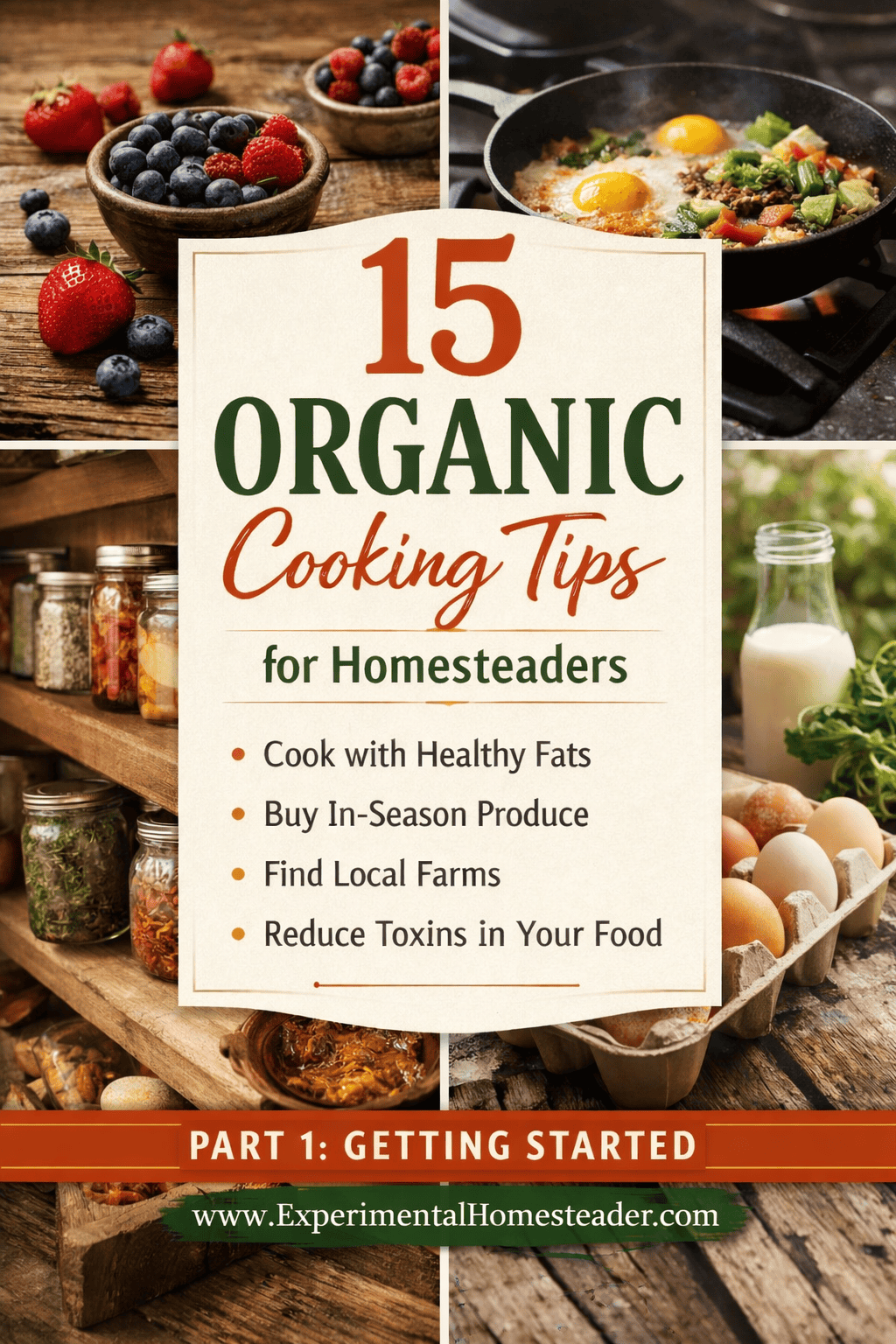
1. Choose Cooking Fats That Can Handle Heat
One of the biggest mistakes I see people make is using delicate oils for high-heat cooking.
Coconut oil is one of the best choices for sautéing, frying, and baking because it's stable at high temperatures and doesn't oxidize easily. Unlike many vegetable oils, it holds up well to heat and light.
Olive oil still has its place - just save it for low-heat cooking or finishing dishes, not frying.
This one simple switch can dramatically reduce the amount of damaged fats in your food.
2. Avoid Cheap Vegetable Oils - Completely
If there's one thing I'm firm about, it's this: cheap vegetable oils don't belong in a homestead kitchen.
Corn oil, soybean oil, canola oil, and similar highly processed oils are:
-
Extremely high in Omega-6 fatty acids
-
Often chemically extracted
-
Linked to inflammation when consumed in excess
Instead, focus on traditional fats:
-
Butter from grass-fed cows
-
Tallow or lard from trusted sources
-
Olive oil (used properly)
These fats were used long before "heart-healthy" labels existed - and for good reason.
3. Dairy-Free Treats Can Still Be Comfort Food
Going organic doesn't mean giving up treats.
Coconut- or almond-based ice cream is a wonderful way to indulge without relying on conventional dairy. Many people find these options easier to digest, and they're often made with simpler ingredient lists.
Organic living isn't about deprivation - it's about making swaps that still feel satisfying.
4. Know Where Your Eggs Really Come From
Most store-bought "organic" eggs come from chickens that are technically organic - but still confined.
If you want true free-range eggs, your best option is a local farmer.
Sites like LocalHarvest make it easier to find farms near you, but honestly?
Farmer's markets, roadside stands, and word-of-mouth often work even better.
When you buy eggs locally, you can ask:
-
What are the chickens fed?
-
Do they actually range outdoors?
-
Are antibiotics or medications used?
Those answers matter more than a label.
5. Learn the Difference Between Labels
This one trips up a lot of people.
-
"Organically made" is not the same as "Organic."
-
"Freely traded" is not the same as "Fair Trade."
Only certified labels meet specific standards. Everything else is marketing language.
That doesn't mean uncertified food is bad - especially when buying locally - but it does mean you should ask questions and understand what you're paying for.

6. Grass-Fed Isn't Always What It Seems
Most "grass-fed" beef you see in stores is grain-finished.
If you're looking for 100% grass-fed and grass-finished beef, your best bet is a local farm. Buying direct also allows you to:
-
Purchase in bulk
-
Save money over time
-
Support sustainable farming practices
It's one of those situations where transparency matters more than packaging.
7. Focus on Low-Glycemic Fruits
Not all fruit affects the body the same way.
Most fruits have a fairly high glycemic index, meaning they can spike blood sugar. Berries - including strawberries - are the exception.
They're:
-
Lower in sugar
-
High in antioxidants
-
Easy to freeze when in season
For homesteaders, berries are one of the best organic investments you can make.
8. Buy Organic Foods In Season
If organic food feels expensive, this tip alone can change everything:
Buy what's in season.
Seasonal food:
-
Costs less
-
Tastes better
-
Retains more nutrients
-
Requires fewer resources to grow
It's also how people ate long before modern grocery stores existed - and it still works.
9. Preserve What You Love
When you find a seasonal food your family loves, buy extra and preserve it.
Freezing fruits and vegetables at peak ripeness is often healthier than buying out-of-season produce that traveled thousands of miles.
This is one of the most practical ways to blend organic living with real-life budgeting.
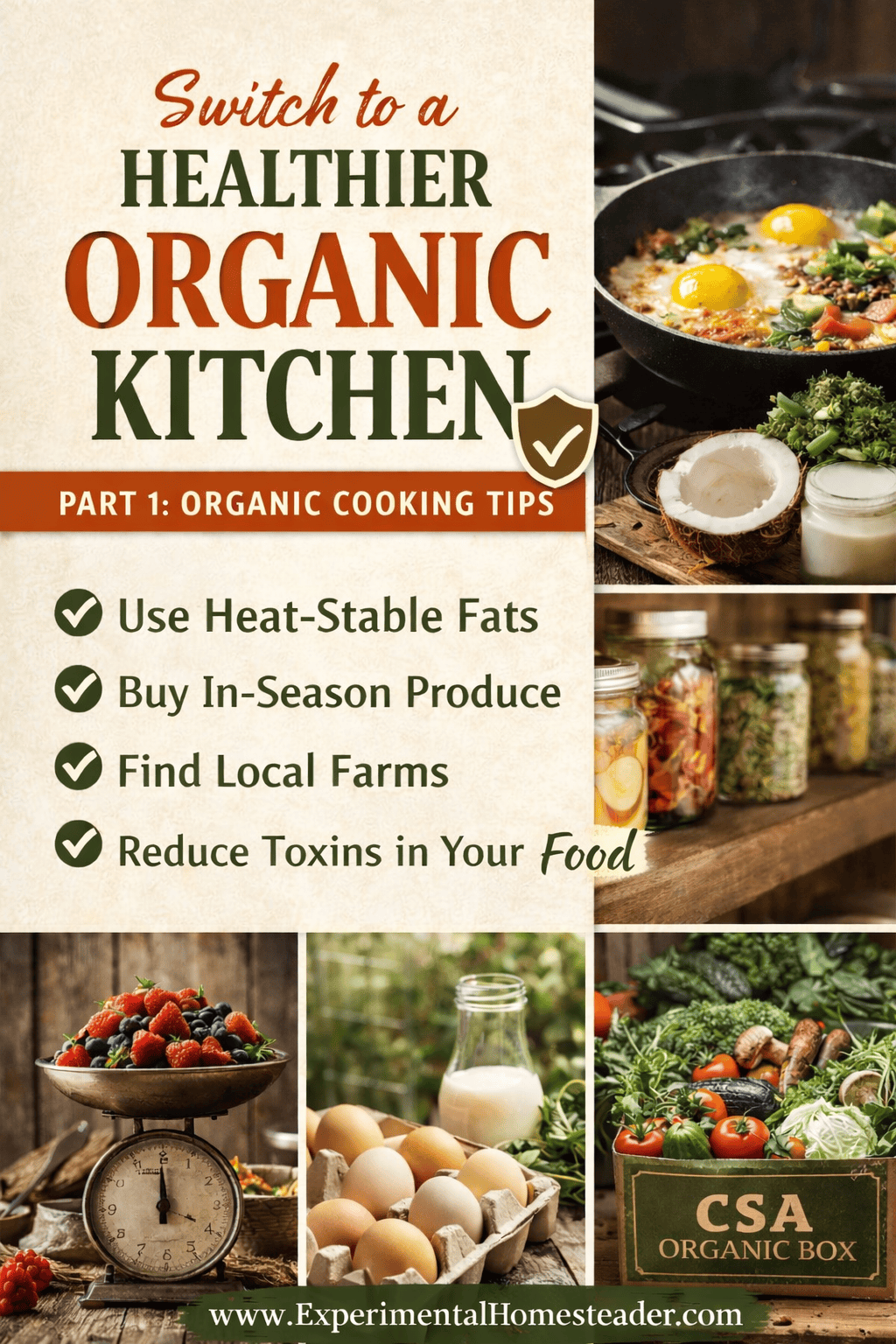
10. Be Mindful of Fish Choices
Large fish like tuna eat smaller fish - and over time, they accumulate higher levels of mercury.
Opt for smaller fish when possible, and treat large fish as an occasional food rather than a staple.
Organic cooking is about long-term wellness, not just ingredients.
11. Make Farmer's Markets Part of Your Routine
Farmer's markets aren't just charming - they're practical.
You can:
-
Ask how food was grown
-
Learn when items are harvested
-
Build relationships with local growers
-
Often pay less than grocery store prices
And yes - showing up matters.
12. Shop Late for Better Deals
Here's a homesteader trick worth remembering:
Stay until the end of the farmer's market.
Many vendors would rather sell at a discount than pack food back up. End-of-day deals are real - especially on produce.
13. Labels Aren't Everything
Not all healthy food is labeled "organic."
When you buy directly from a farmer, you can ask:
-
Were chemicals used?
-
How was the food grown?
-
What practices do you follow?
Sometimes, transparency beats certification - especially at the local level.
14. Consider CSA Boxes
Community Supported Agriculture (CSA) boxes are one of the easiest ways to eat organically.
Farmers deliver fresh produce straight to your door, often at a lower cost than retail. You also learn to cook seasonally - which naturally improves your kitchen skills.
15. Look for Local Food Co-Ops
Food co-ops often:
-
Grow organic food
-
Support local farmers
-
Offer bulk buying options
-
Keep prices lower than specialty stores
They're an incredible resource for homesteaders who want community and quality food.
Ready to Go Deeper?
If you're ready to take organic living beyond the kitchen, my eBook Organic Diet and Lifestyle walks you through how to:
-
Avoid chemicals in food and household products
-
Reduce everyday exposure for your family
-
Build an organic lifestyle step-by-step - without overwhelm
Whether you're just starting out or refining habits you already have, it's designed to meet you where you are.
And remember - organic living isn't about perfection.
It's about intentional choices, made consistently, over time.
👉 Part 2 of this series dives deeper into food sourcing and pantry strategies, so stay tuned - and feel free to share which tip resonated most with you. That conversation matters more than you might think.