Bil-Jac Senior Select Dog Food Review: Precious Angel's Experience
Disclosure: I received a trial-size bag of Bil-Jac Senior Select dog food free in exchange for my honest review. The observations here are my own. Editor's note: This review documents Precious Angel's experience at the time it was originally written. Product formulations, availability and packaging may have changed since then.
Senior dogs have earned a place in our hearts that nothing can replace. They've loved us through so much, and even though we know our time together won't last forever, we still wish it could. In the meantime, we want every day they have left to be healthy, comfortable and happy.
When Precious Angel, my 13-year-old Lab mix, began slowing down, struggling with hard stools and dealing with irritated skin, I worried. We'd been together since he was a tiny puppy, and I wasn't ready to accept that growing older meant there was nothing I could do to help him.
So when I had the chance to try Bil-Jac Senior Select dog food, I hoped a change in his bowl might make his days a little easier. What I noticed next gave me something I desperately wanted - hope.
In This Article
Why I Considered Changing Precious Angel's Food
Precious Angel had skin allergies, and I had also noticed that his stools were hard. He appeared to struggle when he needed to go to the bathroom. He was spending much of his time lying around, too. I talked with our veterinarian, who pointed out that he had already lived a long life for a Lab mix. He was approaching his fourteenth birthday that October.
When you have raised a dog from the time he is two weeks old, knowing that he is getting old does not make you stop looking for ways to help him. Precious Angel and I had been through a great deal together. I wanted to pay attention to any change that might make his everyday life easier. I also wrote about caring for him in my Achy Paws self-warming dog mat review.
Before changing his food, I had to separate what I could actually see from what I feared. I could see that he was less active, that his skin bothered him and that passing stool seemed uncomfortable. I could not tell just by watching whether age, diet, a medical problem or some combination of things was responsible. That uncertainty is one of the hardest parts of caring for a senior dog. They cannot explain where something hurts.
His long history with the same food mattered to me, too. A food that seems to work for a young dog does not automatically remain the best fit through every stage of life. That does not mean the old food was bad. It means that when a dog changes, it makes sense to review the whole routine, including food, water, exercise, grooming and veterinary care.
I also wanted to keep my expectations realistic. A different bag of kibble could not give me back the years that had passed. But if it helped him enjoy meals and feel more comfortable, even that would be worthwhile. The goal was never to make him young again. It was to make his senior years as good as I could.
What Happened After the Trial Bag
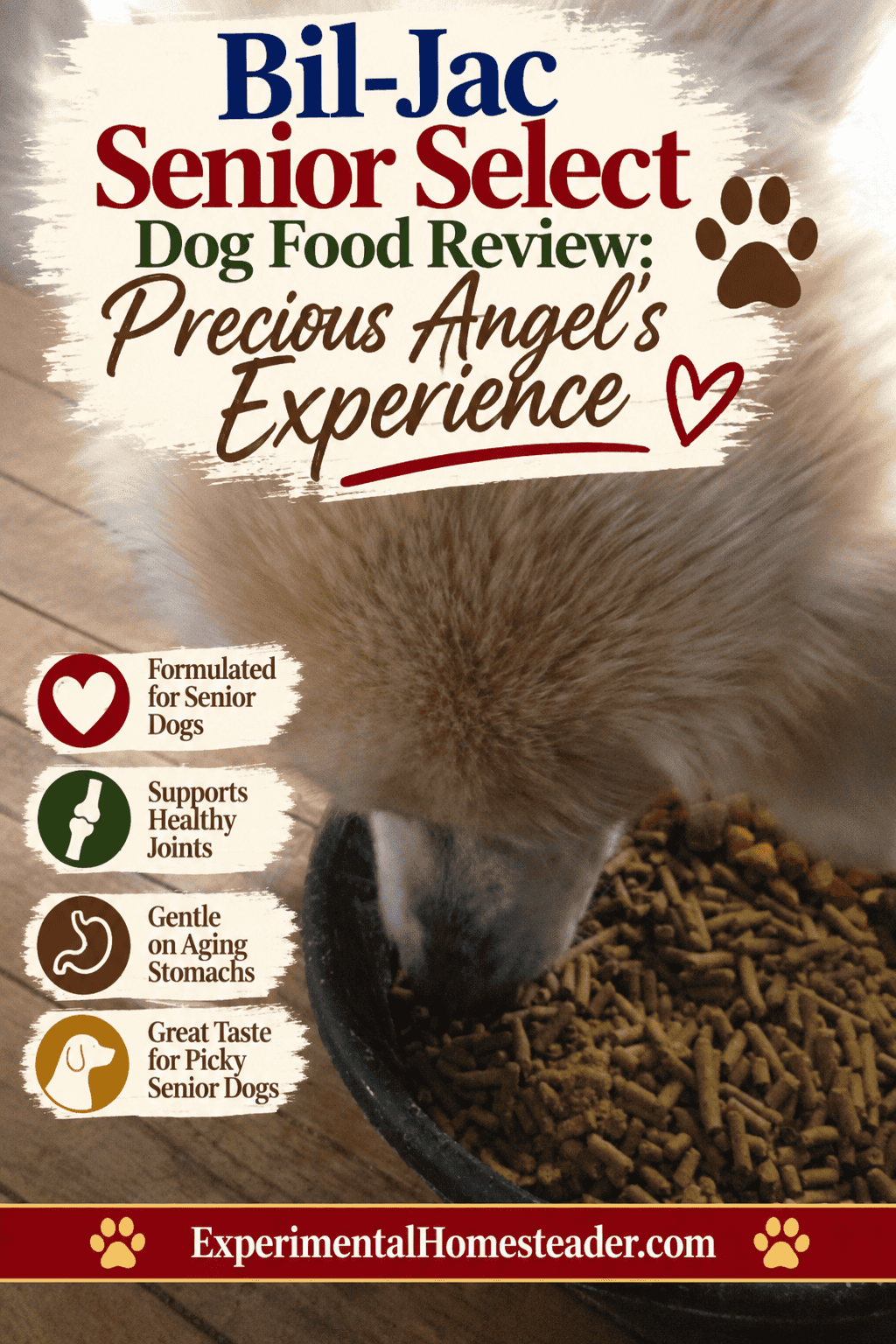
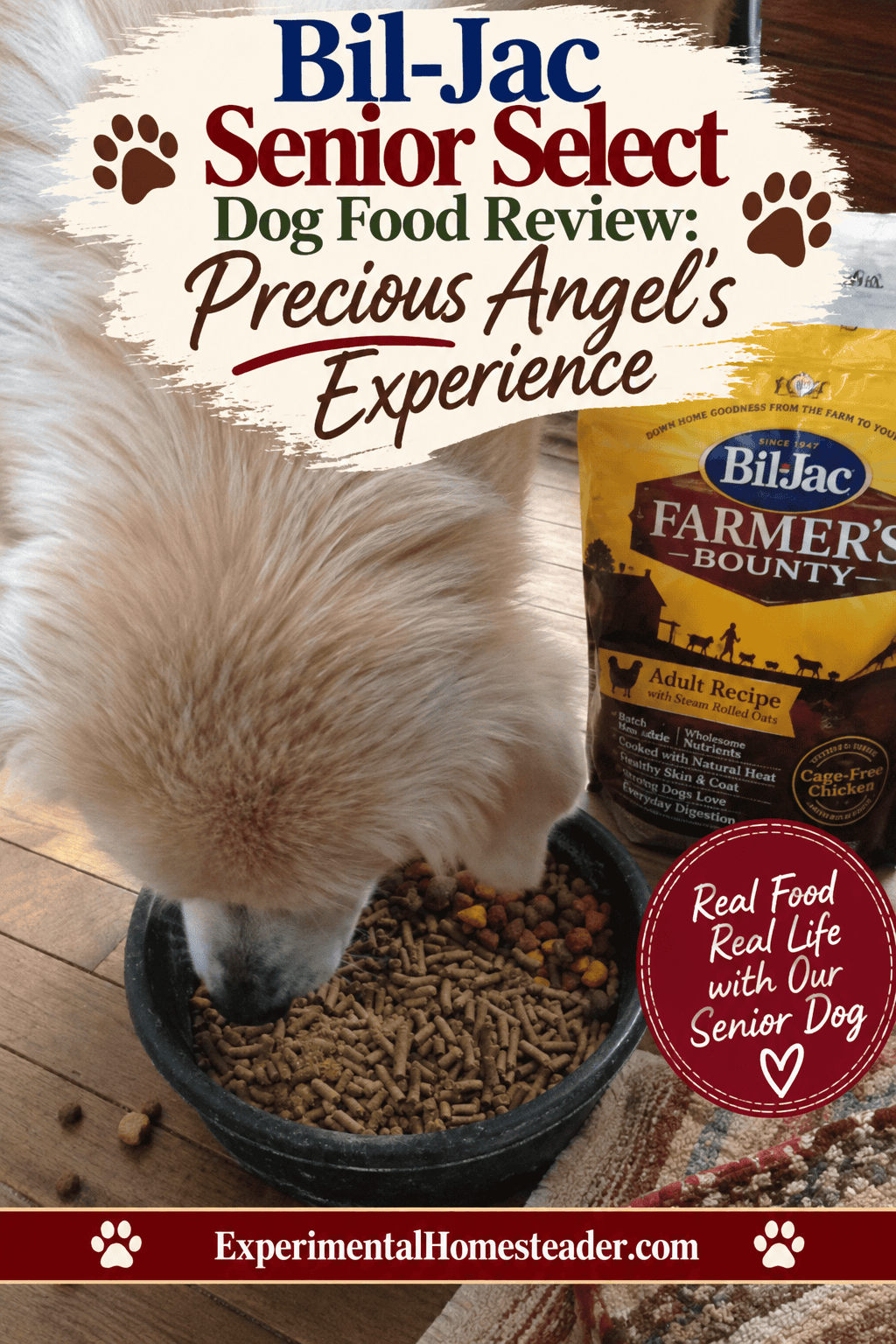
Precious Angel gobbled down the trial-size bag. After eating it, he seemed to want to go outside more often, and his stools appeared softer than they had been. I also caught a glimpse of the lively, hyper puppy attitude I remembered so well. Once the trial bag was gone and he went back to his usual food, that burst of energy did not last.
We decided that when his existing bag of food was finished, we would buy Bil-Jac Senior Select and see whether the changes continued. That decision came from watching Precious Angel, not from a controlled feeding trial. Food changes, other care and normal day-to-day variation can all affect how a dog feels.
One thing I remember clearly is how quickly he ate the sample. That was encouraging because an older dog's interest in meals can tell you something about how he is doing, although enthusiasm for a new flavor does not prove it is nutritionally better. I watched what happened afterward instead of judging the food only by whether he liked it.
The changes in his bowel movements caught my attention first. Previously his stool had been hard, and he seemed to struggle. After the trial food, he wanted to go out more frequently and his stool looked softer. Softer is not necessarily better if it turns into diarrhea, but in his case I was relieved to see that he appeared less uncomfortable.
Then there was his attitude. Precious Angel had always been a lively dog, so seeing some of that energy return was especially meaningful. The improvement did not seem to continue after the sample was gone. That was one reason we chose to purchase more, although a short trial and a return to his old food cannot establish that diet caused the change.
If I were repeating this experience now, I would record the dates of the food change, the amount fed, his appetite and what I noticed about his stool and activity. Notes make it easier to explain concerns to a veterinarian and harder to mistake one unusually good day for a lasting trend.
Why We Chose Bil-Jac Senior Select
The packaging described the food as intended for senior dogs and highlighted bites that were easier to chew. Those details appealed to me because Precious Angel was getting older and did seem to be struggling to eat his regular food. In the original comparison I made, I photographed the Bil-Jac food alongside his previous food so readers could see the difference in the kibble.
When we first switched, he ate a lot more than I expected, even though I had always kept food available in his bowl. After a couple of days, his appetite settled down. He still ate more Bil-Jac than his old food, but I did not notice weight gain during the period I described. That was simply what I observed with him, not a feeding recommendation. Portion sizes and food transitions are worth discussing with a veterinarian, especially for senior dogs.
Age-specific marketing alone would not be enough to persuade me. What interested me was that the food was presented as a senior formula and that the pieces were described as easier to chew. Even dogs without obvious dental trouble can become slower or more particular about meals as they age. I wanted Precious Angel to be able to eat comfortably, not simply finish a bowl because he was hungry.
I also paid attention to the practical side. Would he eat it consistently? Could we find it again after the trial bag? Would the change affect his weight or stool? A food can sound impressive on its packaging, but if a dog refuses it, struggles to chew it or develops digestive trouble, the label alone does not solve anything.
Because he initially ate more of the new food, the question of portion control became especially important. Different dry foods can have different calorie densities. A dog may eat a larger volume without gaining weight, or consume more calories in a smaller serving. Looking at calories per cup and body condition gives more useful information than comparing bowlfuls alone.
Changes I Noticed in His Energy, Stool and Skin
After the switch, Precious Angel's stools continued to look softer and lighter than the unusually dark stools I had been seeing before. He seemed to have more energy and was acting more like the lively dog I knew when he was younger. Those changes mattered to me because I had been worried about how uncomfortable and inactive he had become.
I also noticed less flaky skin and less dander when I brushed him. At about the same time, we bought a cone to keep him from chewing at his skin. Later, we could leave the cone off for hours and he seldom chewed. Because we changed more than one part of his care, I cannot say the food alone caused his skin to improve. I can only describe the changes I saw.
Energy was one of the easiest changes to recognize because I knew his personality so well. This was not a quiet dog who had suddenly become playful for the first time. He had always been hyper and full of life. Seeing that familiar behavior return, even in small ways, made me feel that there might still be things we could do to help him enjoy his days.
His stool was another practical sign I could watch without guessing. I paid attention to how often he went outside, whether he strained and how the stool looked. I would caution anyone reading this that very dark or black, tarry stool can be a medical warning sign, not merely a food issue. Persistent changes in a senior dog's bowel habits deserve a call to the veterinarian.
The skin changes were more complicated. His coat seemed less flaky, and I saw less dander when I brushed him, but we had also used a cone to interrupt the chewing that irritated his skin. Reducing that constant chewing could itself have helped his skin recover. I would rather tell you exactly what we did than claim the food cured an allergy.
That is what a firsthand review can offer: the details of one household's experience. I cannot measure exactly how much of his improvement came from the food, how much came from other care or how much was ordinary variation. I can tell you what I saw and why it mattered.
What Is Bil-Jac Senior Select Dog Food?
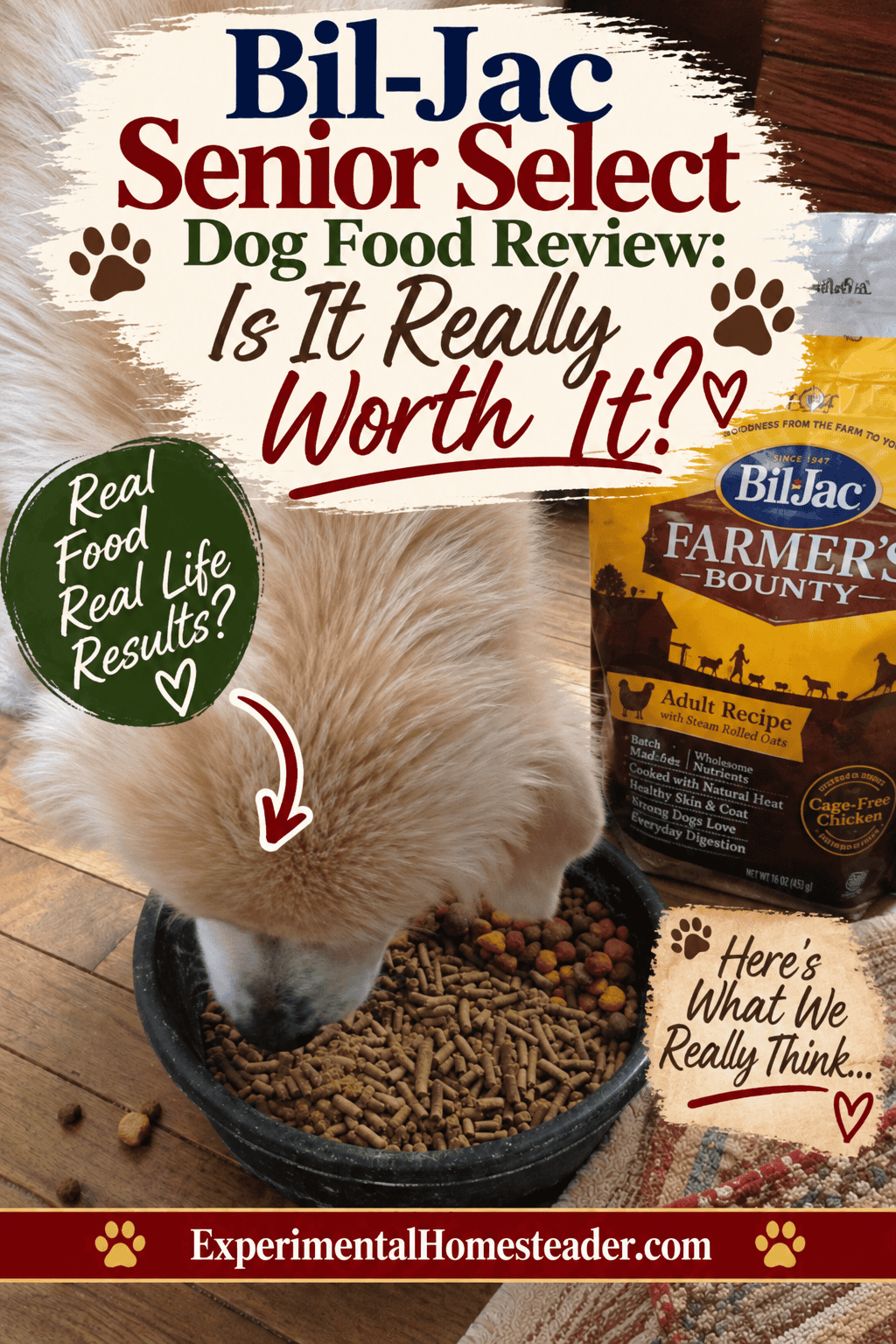
Bil-Jac Senior Select is a dry food formulated for adult dogs seven years and older. That matters because an older dog may have different energy needs, chewing comfort and digestion than the rambunctious puppy we remember. Precious Angel was already 13 when I tried it, so I was looking for a food suited to the stage of life he was actually in, not the dog he had been years earlier.
According to the current Bil-Jac Senior Select product information, the formula is slow-cooked and gently dried. Bil-Jac says that method is intended to protect amino acids and produce bites that are easier to chew. It also describes a fiber blend for digestive support, probiotics, fatty acids for skin and coat, and naturally occurring glucosamine and chondroitin from chicken ingredients. Those are manufacturer descriptions of the present-day product, not laboratory findings from my own review.
Senior is a useful description, but it is not a medical diagnosis. Some older dogs are active and maintain a healthy weight easily. Others have dental disease, reduced activity, chronic conditions or digestive changes. A senior formula is meant to serve a broad life stage, while an individual dog may still need something more specific.
I also think it helps to understand the difference between a manufacturer's description and a result you can expect. Terms such as slow-cooked, easy to chew and digestive support tell you how a company positions a product. They do not tell you whether a particular dog will tolerate it well. For Precious Angel, the practical test was whether he ate it, how he behaved and what happened to the problems I had noticed.
The current product information is useful for shoppers today, but it should not be read as an exact historical record of the bag I tried. Labels and formulations can change. Anyone buying Senior Select now should read the package in hand, especially if their dog has an allergy or a medically prescribed diet.
What Ingredients Are in Bil-Jac Senior Select?
When I look at a dog food label, I want to know more than whether the bag has a nice photograph on it. The current ingredient list starts with chicken by-products identified as organs only, followed by corn meal, chicken, oatmeal, dried beet pulp and brewer's dried yeast. It also lists flaxseed, vitamins, minerals and probiotic fermentation products. Chicken organs are animal ingredients, not automatically a sign of poor quality; what matters is whether the complete diet is appropriate for the individual dog.
The presence of corn meal and oatmeal also means this is not a grain-free food. If your dog has a diagnosed food allergy or needs a therapeutic diet, the ingredient list is something to review with your veterinarian rather than assuming that a formula labeled for seniors will address the problem. I was particularly interested in Precious Angel's skin, but his improvement happened while we were also taking steps to stop him chewing, so I would not credit the food alone.
Ingredient order can be helpful, but it has limits. Pet-food ingredients are listed by weight before processing, and ingredients with more moisture can appear higher on the list. That means a simple comparison of the first two words on different bags does not tell the whole nutritional story. I would look at the complete food and the dog's needs instead of judging by a single ingredient.
Chicken by-products are often misunderstood. The term can include nutrient-rich organs, and Bil-Jac identifies the chicken by-products in this formula as organs only. That is different from claiming the food is made exclusively from chicken muscle meat. Clear ingredient descriptions are useful because they let owners make informed decisions without relying on either fear or advertising.
Oatmeal and beet pulp are especially relevant to a discussion about stool quality. Both are used in pet foods as sources of dietary components that can affect digestion, although the effect depends on the full recipe and the individual dog. I noticed changes in Precious Angel's stool, but I cannot point to one ingredient and prove it was responsible.
An ingredient list is also a practical allergy check. Chicken is present in this formula, and it contains grains. If a veterinarian suspects a true food allergy, repeatedly trying commercial foods without a plan can make it harder to identify the trigger. A supervised elimination diet may be more appropriate than guessing.
Understanding the Protein, Fat, Fiber and Calories
The current guaranteed analysis lists at least 20% crude protein and 12% crude fat, with no more than 4% crude fiber and 10% moisture. Bil-Jac lists 368 calories per cup and states that the formula meets AAFCO nutrient profiles for adult maintenance. That last point is important: it describes a complete maintenance diet, not a prescription treatment for a medical condition.
The label also lists minimum amounts of omega-3 and omega-6 fatty acids, glucosamine and chondroitin. These ingredients may be useful parts of a balanced diet, but their presence does not prove that the food can reverse arthritis, cure itchy skin or fix constipation. When Precious Angel seemed livelier and more comfortable, I was delighted. I still think it is important to separate my observations from what a food can reasonably promise.
Guaranteed-analysis numbers are minimums or maximums, not necessarily the exact amount in every serving. Protein and fat are given as minimums, while fiber and moisture are maximums. They help you compare labels, but comparing two foods fairly can require accounting for differences in moisture and calorie density.
For an older dog, calories matter just as much as a senior label. Some dogs slow down and gain weight easily; others lose weight because they are ill, uncomfortable or eating poorly. I did not see Precious Angel gain weight during the period I described, but I would still want to monitor his body condition rather than assume a bigger appetite was harmless.
Protein is another subject that deserves nuance. Older dogs do not automatically need a low-protein diet just because they are older. Certain medical conditions may require specialized nutrition, but those decisions belong with a veterinarian who knows the dog's diagnosis. A complete maintenance food is not interchangeable with a veterinary therapeutic diet.
Fiber, fatty acids and joint-related nutrients are worth noting, yet a label cannot promise that a particular dog will stop itching or move more easily. I was happy to see encouraging changes in Precious Angel. I would not want that happiness to become an exaggerated health claim.
How Much Bil-Jac Senior Select Should a Senior Dog Eat?
This is one area where I would do things differently from the way I described feeding Precious Angel years ago. At the time, I kept his bowl filled and noticed that he ate quite a bit when we first switched foods. Bil-Jac now recommends measured, scheduled feeding, with adjustments based on a dog's age, activity, environment and body condition. Keeping track of portions makes it easier to recognize a real change in appetite or weight.
For dogs weighing 40 to 60 pounds, the current manufacturer feeding chart gives a starting range of 2½ to 3¼ cups per day. Precious Angel weighed about 55 pounds, so that is the weight bracket I would have looked at. It is a starting point rather than an individualized prescription. Dogs with health problems, unusual weight changes or different calorie needs may require a different amount, and fresh water should always be available.
That weight range is a helpful place to begin, not a rule that every 55-pound dog should eat the same amount. A lean, active dog and a less active dog of the same weight may need very different calories. Treats, table scraps and other foods count toward the day's intake as well.
I would start by checking the package's current feeding guide, measuring the food with a consistent cup and looking at the dog's body condition over time. You should be able to discuss whether the ribs are easy to feel, whether there is a visible waist and whether the weight is stable with your veterinarian. A number on the scale is useful, but it is not the only measurement.
Scheduled meals also help you notice changes. If a dog normally finishes breakfast and suddenly leaves half of it, that may be worth noting. When food is available around the clock, it can be harder to know exactly how much was eaten or when an appetite change began.
Precious Angel's appetite increased when we changed foods. At the time I was pleased that he wanted to eat. Looking back, I also see why measuring portions and tracking his weight would have given me a clearer picture of what was happening.
How to Change a Senior Dog's Food Without Rushing
A dog who has eaten one food for years may need time to adjust to something new. Rather than abruptly replacing every meal, it is generally sensible to introduce the new food gradually over several days, using smaller amounts at first and increasing them as the old food is reduced. The pace depends on the dog and veterinary advice. Watch for vomiting, diarrhea, constipation, changes in appetite or other signs that the switch is not going smoothly.
With Precious Angel, I paid attention to his stool, energy, appetite and skin because those were the things that had worried me in the first place. A simple written record can help you notice patterns without relying entirely on memory. If a senior dog strains repeatedly, passes black or tarry stool, stops eating, seems painful or becomes suddenly lethargic, that is a reason to call the veterinarian rather than simply trying another bag of food.
A simple approach is to begin with mostly the familiar food and a smaller portion of the new food, then increase the new food gradually if the dog tolerates it. Some dogs adjust within about a week; others need longer, especially if they already have sensitive digestion. The package directions and a veterinarian's advice should take priority over any fixed schedule.
During a transition, I would keep other changes to a minimum when possible. If you switch food, add several treats and begin a supplement all at once, it becomes difficult to know which change caused a problem. That lesson matters in Precious Angel's story because we were also addressing his skin with a cone.
Pay attention to drinking, appetite, vomiting, stool consistency, straining and behavior. A temporary change in stool may happen with a diet transition, but repeated vomiting, severe diarrhea, refusal to eat or obvious pain is not something to simply wait out in an older dog.
Most importantly, do not use a food switch to postpone veterinary care. Constipation can have several causes, and skin irritation may reflect parasites, infection, allergies or other conditions. Food may be part of a plan, but it should not be the only plan when symptoms persist.
Where Can You Find Bil-Jac Senior Select?
Bil-Jac still lists Senior Select on its website in 6-, 15- and 30-pound bags. Availability and prices can vary by retailer, and I would check the manufacturer's current product page before shopping rather than rely on the store information from my original review. The company also offers other senior and sensitive-needs foods, but those are different formulas and should not be confused with the specific Senior Select food Precious Angel tried.
Before buying a large bag, I would check the package size, freshness date, storage instructions and return policy. A smaller bag may make more sense when you are finding out whether an older dog will accept a new formula. Once opened, dry food should be kept according to the manufacturer's directions so it stays fresh.
I would also make sure the name on the bag matches the formula I intended to buy. Senior Select and other Bil-Jac products are not automatically interchangeable just because they share a brand. Different recipes can have different ingredients and calorie amounts.
Questions to Ask Before Switching Your Senior Dog's Food
Before buying, I would ask what problem I am actually trying to solve. Is my dog uncomfortable when chewing? Has his appetite changed? Is he straining to pass stool, scratching constantly or losing weight? Those details matter because a food change is not a substitute for finding out whether an older dog needs medical attention.
Then I would compare the current label with his existing food. I would look at the protein sources, grains, calories per cup and nutritional adequacy statement, and check whether any diagnosed health condition calls for a different diet. A formula made for healthy senior dogs is not necessarily the right choice for every senior dog.
I would also decide what to track before opening the bag: how much he eats, his weight, stool consistency, activity and any skin irritation. Keeping the rest of his routine as steady as possible would make those observations more useful. If he developed persistent digestive trouble, black or tarry stool, pain or sudden lethargy, I would contact the veterinarian rather than continue experimenting with food.
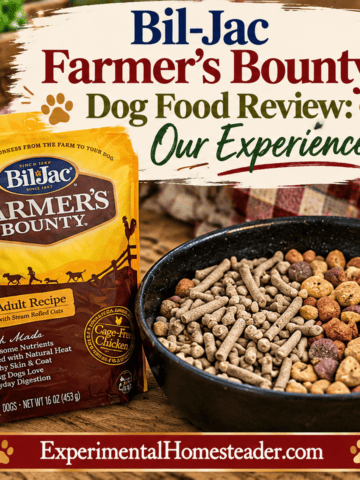
For other pet-care experiences from our home, you can read my Bil-Jac Farmer's Bounty dog food review and my article about natural dog care.
My Final Thoughts on Bil-Jac Senior Select
I did not expect one bag of food to turn back the clock for Precious Angel. I wanted him to be comfortable, to enjoy eating and to have as many good days as possible. Seeing that familiar energy return was deeply encouraging, especially after worrying about his skin and difficult bowel movements.
We started with a free trial-size bag and later bought more ourselves. What I observed was meaningful to me, but it was one dog's experience, with other care changes happening at the same time. I hope sharing both the details and the limitations helps you ask better questions about your own dog's food.
Precious Angel had already given me years of companionship. I could not make those years last forever, but I could keep paying attention to what he needed. For me, that was the real reason to try something different.