How to Make Fortune Cookies with Pie Crust
I love fortune cookies-even though Chinese food itself is not my thing. I know plenty of people adore it, but my taste buds have never agreed. The little crisp cookie and the surprise message inside, however, are another story. I think opening the fortune is half the fun. For another homemade sweet to share, see my coconut, cinnamon and rose cookies.
When I wanted to make fortune cookies for Valentine's Day, I found an easy shortcut that used refrigerated pie crust instead of traditional fortune-cookie batter. I already had leftover pie dough in the refrigerator, so the idea was perfect: it used something I did not want to waste and turned it into a playful homemade treat. Valentine's Day was simply the occasion that inspired my batch. These little pastry cookies are just as much fun for birthdays, showers, parties, anniversaries, or an ordinary afternoon when you have a bit of pie dough to use. Change the fortunes and decorations to suit the occasion, or skip the holiday theme entirely.
These are best described as pie-crust fortune cookies. They do not have the thin, crisp texture of traditional restaurant fortune cookies, but they are easy to cut, shape, decorate, and dip in chocolate. Mine were fun to make and tasted great-even though I became so focused on decorating that I forgot to bend some of them into the classic shape. Live and learn, right?

In This Article
The Batch That Didn't Quite Go According to Plan
I have a habit of looking at something ordinary and wondering what else I could make with it. This time it was pie dough waiting in the refrigerator. I could have rolled another pie, but Valentine's Day was on my mind, and I kept coming back to those little paper fortunes tucked inside cookies. The message is such a small thing, yet everybody wants to know what theirs says.
Once I started, the decorating took over. I wanted pink hearts, a little shine, and something that looked like a treat made for a particular person instead of another cookie from a package. I used a stencil and edible pearl dust, played around with little pastry decorations, and got so wrapped up in the pretty details that I forgot one of the most important parts of making a fortune cookie: bending the folded dough over a glass. Some of mine came out looking more like tiny decorated pastries. They tasted good anyway.
That's the sort of kitchen experiment I think is worth sharing. If I showed you only the prettiest finished cookie, you might think the trick was getting everything perfect the first time. It wasn't. The useful lesson was that the shape needs attention before the decorations, the edges need a firm pinch, and pie crust is going to behave like pie crust no matter how much I want it to be a delicate, crisp restaurant fortune cookie.
And the fortunes? That's where you can have the most fun. A handwritten message can be sweet, ridiculous, encouraging, or a little mysterious. I like the idea of setting out a handful at a family gathering and watching everyone compare what they found. You don't need an expensive dessert or a perfectly shaped pastry to make a moment people remember.
Traditional Fortune Cookies vs. This Pie-Crust Shortcut
Traditional fortune cookies are made from a thin batter that is baked in circles, folded while still warm and flexible, and allowed to cool into a crisp shell. This shortcut begins with pastry dough, so the finished treat is richer, thicker, and more like a small decorated hand pie.
I do not want readers to expect an exact copy of a restaurant fortune cookie. The appeal of this version is its simplicity and creativity. Refrigerated dough or leftover homemade pie crust is easy to roll and cut, and the pastry provides a sturdy surface for pearl dust, edible designs, small dough decorations, and chocolate.
The technique is especially useful when you want a Valentine's Day activity, party favor, or personalized dessert without learning the timing-sensitive folding process used for traditional fortune cookies.
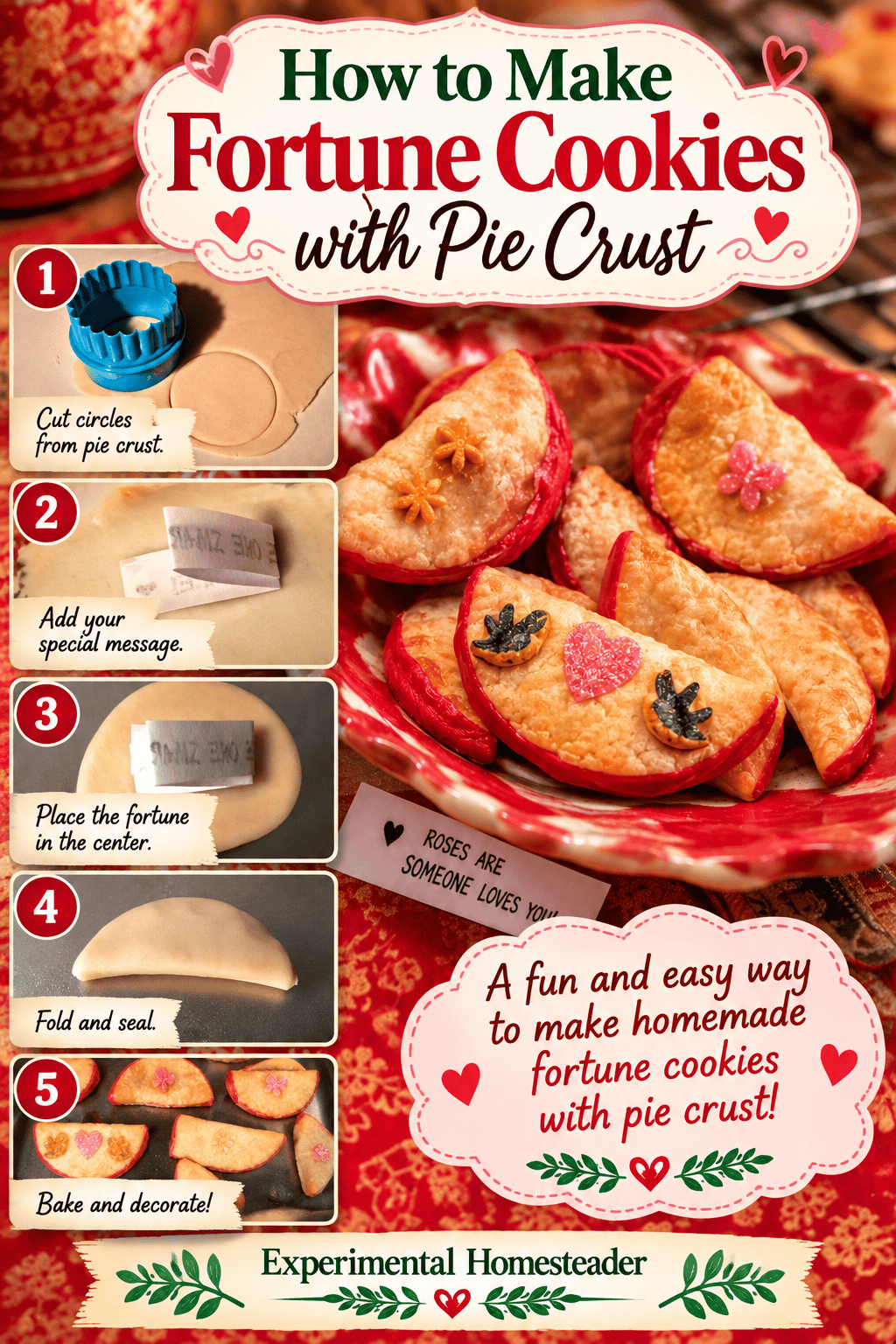
Write the Fortunes First
Prepare the messages before handling the dough so everything is ready when the cookies are cool. You can write your own fortunes, print simple messages, or ask family members to contribute ideas. Trim away excess paper so each strip is narrow enough to fit through the opening in the baked pastry.
Because ordinary home-printer paper and ink are not made as baking ingredients, this updated method adds the paper messages after the pastries are baked and cooled. Do not assume a printable sheet is safe to seal inside dough and heat in the oven. If using a specialty edible or oven-approved insert, follow its manufacturer's directions.
Fortune ideas for Valentine's Day
- You make ordinary days sweeter.
- A delightful surprise is headed your way.
- Your kindness will return when you least expect it.
- Someone is grateful to have you in their life.
- Love grows when it is shared.
- Your next adventure begins with dessert.
- Good things are already taking shape.
You can also create birthday wishes, jokes, family memories, scavenger-hunt clues, garden predictions, or encouraging notes. Personalized messages are what make this simple pie-crust project feel special.
Decorating Before Baking
I used a stencil and pink edible pearl dust to create heart designs. Depending on the product directions, edible dust can be applied dry or mixed with an approved liquid to create paint. Follow the label for the particular decorating product you have rather than assuming every dust works the same way.
I also made small decorations from scraps of pie dough using cake-decorating punches. I attached those pieces with a tiny amount of water brushed onto the pastry. Use very little; too much liquid can make the decorations slide or soften the dough.
Keep the decorations reasonably thin so they bake at a similar rate to the pastry beneath them. Large, thick embellishments can remain underbaked after the main cookie is ready.
Baking the Pie-Crust Fortune Cookies
Bake until the pastry looks set and lightly golden, following the guidance for the dough you used. My batch baked for about 10 minutes at 375 degrees Fahrenheit. Begin watching closely near the end because small pastry shapes can brown quickly.
When the cookies are finished, remove the pan carefully and transfer the pastries to a cooling rack when they are firm enough to move. Do not insert ordinary paper fortunes while the pastries are extremely hot or oily. Allow them to cool before adding the messages.
Insert the Fortunes After Baking
Fold or roll each narrow fortune so it fits through the opening you left in the pastry edge. Slide it gently into the cooled cookie without forcing the shell apart. If the opening has narrowed, use a clean blunt food-safe tool to ease it open slightly rather than cracking the pastry.
Tell recipients that the paper message is not edible. This is especially important when serving children or anyone who may not expect a nonfood item inside a homemade pastry.
Add Chocolate and Finishing Details
After my cookies cooled, I spread melted chocolate along the bottom edges. Dipping would have been faster, but spooning on the chocolate gave me more control and helped protect the decorations from being covered.
Place the chocolate-edged cookies on wax paper or parchment and allow the coating to set. I refrigerated mine for about 10 minutes to help the chocolate firm. If using food-grade markers, apply them according to the manufacturer's directions to a suitable cooled surface.
Chocolate is optional, but it adds flavor and helps the cookies feel more like a finished gift. White chocolate, dark chocolate, or a colored confectionery coating can create different looks, provided the product is used and stored according to its instructions.
Homestead Reasons to Make Pie-Crust Fortune Cookies
- Use leftover pie crust: Turn scraps into an intentional dessert instead of wasting them.
- Personalize a gift: Write fortunes for a specific person or family.
- Create a holiday activity: Let children suggest messages and decorate with supervision.
- Practice pastry skills: Work on rolling, cutting, sealing, and shaping dough.
- Stretch simple ingredients: A small amount of dough can become several individual treats.
- Make party favors: Package completely cooled cookies individually with an ingredient label.
For another homemade Valentine project that can become a thoughtful gift, see my quilled baby gift tag with paper ducks. It uses paper instead of pastry, but the personal message is just as important. This project fits nicely with other homemade Valentine treats. For more inspiration, see my DIY Valentine's Day treats and handmade chocolate-covered strawberries.
Print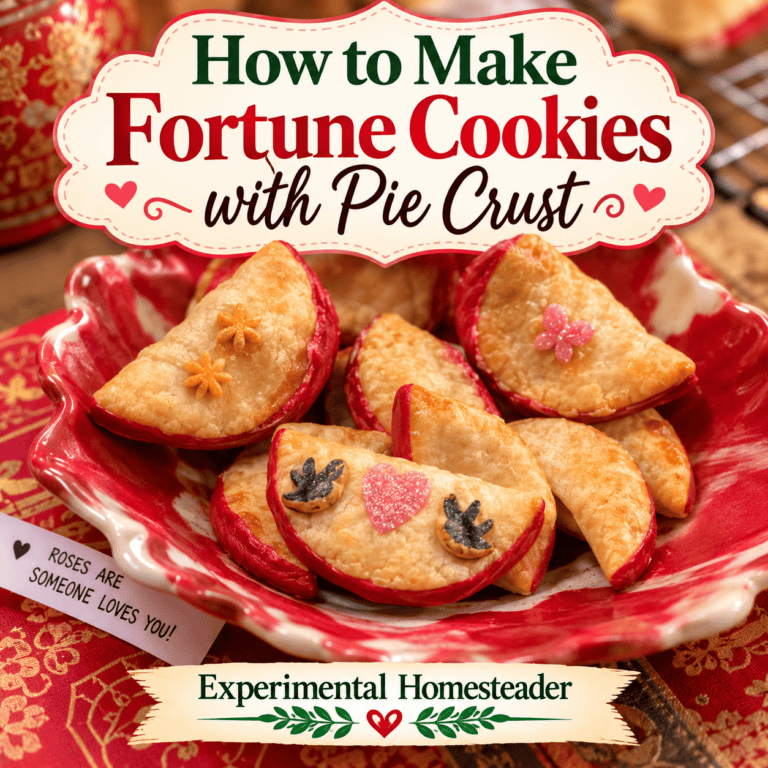
How to Make Fortune Cookies with Pie Crust
An easy homemade fortune cookie shortcut using refrigerated pie crust, edible decorations and optional chocolate. These tender pastry treats are different from crisp traditional fortune cookies. Add paper fortunes only after baking and cooling.
- Total Time: 30 minutes
- Yield: Approximately 12 cookies 1x
Ingredients
- 1 refrigerated pie crust (or an equivalent amount of chilled homemade pie dough)
- Edible pearl dust, gel food coloring, or food-grade decorating markers, as desired
- Small pie-dough cutouts for decoration, optional
- Melted chocolate for dipping or edging, optional
Instructions
- Preheat oven to 375°F, or use the temperature recommended for your particular pie dough. Prepare a baking sheet according to the dough directions.
- Roll chilled pie dough evenly between sheets of parchment or wax paper. Chill briefly if it becomes sticky.
- Cut rounds with a clean 2¼-inch cutter or glass. Gather and reroll scraps gently.
- Fold each round into a half-moon, pinching most of the curved edge while leaving a small opening for the fortune after baking.
- Gently bend the center of the folded edge over a clean glass rim to create the fortune-cookie curve. Transfer to the prepared baking sheet.
- Decorate with edible dust, gel color, or thin dough cutouts if desired, following product instructions.
- Bake until set and lightly golden, approximately 10 minutes for the original batch. Watch closely and follow your dough package's directions if different.
- Cool completely on a rack. Slip a narrow paper fortune through the opening only after baking; remind guests the paper is not edible.
- If desired, spoon or dip melted chocolate along the cooled cookie edges. Set on parchment until firm, chilling briefly if necessary.
Notes
Yield is an estimate and varies with dough size and rerolling. Use only products explicitly labeled edible, not merely nontoxic craft supplies. Ordinary printed paper fortunes must never be baked inside the pastry. Equipment: 2¼-inch round cutter, baking sheet, parchment or wax paper, rolling pin, clean glass rim, and cooling rack.
- Prep Time: 20 minutes
- Cook Time: 10 minutes
Nutrition
- Serving Size: 1 pie-crust fortune cookie

Why This Pie-Crust Experiment Belongs in a Homestead Kitchen
Homesteading has taught me to pay attention to what is already in the kitchen. Sometimes that means a pantry full of ingredients I have preserved; sometimes it means a little pastry dough that is not quite enough for another pie. Those scraps still represent flour, fat, time, and effort. Turning them into a few small treats is a simple way to stretch what I have without making another shopping trip.
There is also room for play in a practical kitchen. Not every project has to be about putting food by for winter or cooking a full meal from scratch. A little creativity can make an ordinary afternoon memorable, especially when the project is small enough to share with children or grandchildren. Writing the fortunes together gives everyone a part in the process, even if they are not ready to handle the oven or shape hot pastry.
For me, the useful part of this experiment is knowing the difference between a shortcut and the traditional recipe. Pie crust will never give you the delicate snap of a classic fortune cookie. It makes a tender, pastry-style treat instead. Once you know that, you can enjoy it for what it is and decide whether the convenience is worth it. If the dough is already on hand, I think it is worth trying at least once.
One of the things I appreciate about working with leftover pastry is that the scraps are not automatically waste. Pie dough has already taken time and ingredients to make, and I would rather see what I can do with it than throw it away. A handful of small circles may not be enough for another pie, but it can be enough for a few decorated treats. That does not mean every scrap has to become a masterpiece. It means looking at what is in the refrigerator and asking what else it could become. The fun here was not saving a fortune on groceries. It was getting a second, completely different project out of dough I already had.
The size of the cutter changes the whole experience, too. Smaller circles give you more cookies, but they leave less room for the message and make the curved fold harder to manage. Larger circles are easier to decorate, although they use more dough and take longer to bake. The first time through, I would choose a size that feels comfortable to handle instead of trying to squeeze the greatest possible number out of the crust. Reroll the scraps gently, and chill the dough when it gets too warm to hold its shape.
I also think there is something special about a dessert that invites people to participate. One person can cut the circles, another can write the fortunes, and someone else can decorate the cooled cookies. For a family gathering, the messages can be more memorable than the dessert itself. A funny prediction, a favorite saying, or a note meant for one particular person makes a simple pastry feel personal. That is a different kind of value than a perfectly decorated store-bought treat.
The practical lesson from my first batch is to get the construction right before becoming distracted by the finishing touches. Shape the pastry, pinch the edges, and remember the bend over the glass. Then play with the edible decorations. If a few cookies turn out lopsided, that is not a disaster. You have learned something about how the dough behaves, and the next batch will be easier.
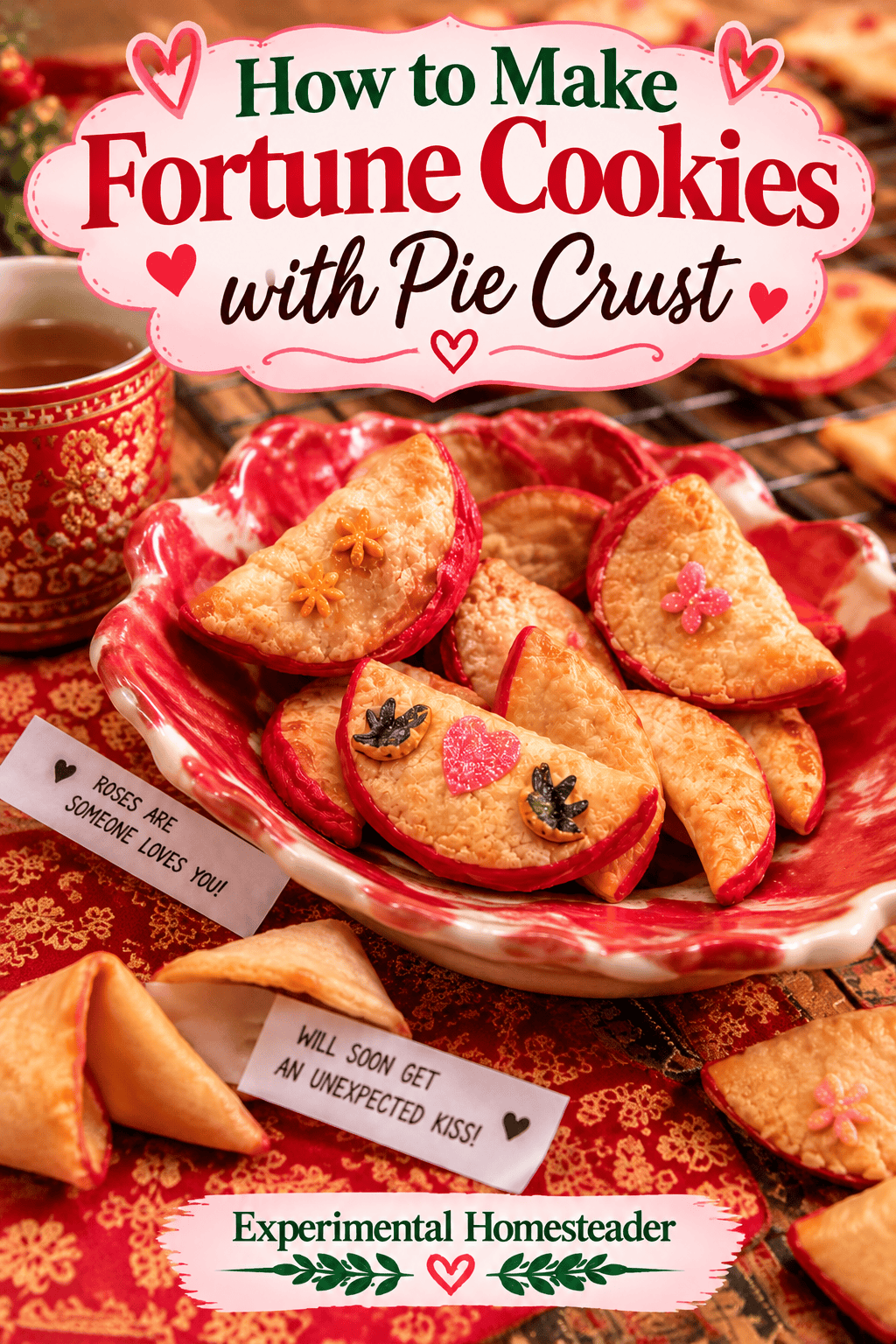
Troubleshooting Pie-Crust Fortune Cookies
The cookies opened while baking
The pastry edges may not have been pinched securely enough. Press the curved edge firmly while leaving only one planned opening for inserting the fortune afterward. Chilling very soft shaped dough briefly may also help it hold its form.
The dough stuck while rolling
Roll between sheets of wax paper or parchment and check periodically for sticking. If the dough becomes warm, return it to the refrigerator until it firms.
The cookies do not look like fortune cookies
Make sure you bend each folded half-moon over the rim of a glass before baking. I forgot this step on some of mine, which is why my first batch was not perfectly shaped.
The small decorations fell off
Use a tiny amount of water as edible adhesive and press the pieces gently into place. Avoid heavy decorations that can slide as the pastry warms.
The chocolate will not set
Make sure the pastries are cool before adding chocolate. Follow the melting and setting directions for the chocolate or coating you selected, then give it enough time to firm before packaging.
Frequently Asked Questions
Are these traditional fortune cookies?
No. These are easy fortune-cookie-shaped pastries made with pie crust. They are thicker, richer, and more tender than the thin, crisp cookies commonly served in restaurants.
Can I use homemade pie crust?
Yes. Leftover homemade pie dough inspired my batch. Keep it chilled, roll it evenly, and follow the baking instructions for your recipe.
Can I bake printed paper fortunes inside the cookies?
This updated tutorial recommends inserting ordinary paper messages after baking. Household paper and printer ink are not ingredients, so I would not seal them inside the dough and put them in the oven.
Can I make these for occasions other than Valentine's Day?
Absolutely. Change the messages and decorations for birthdays, anniversaries, family reunions, showers, graduations, holidays, garden parties, or a simple encouragement gift.
How should I store them?
Let the cookies and chocolate cool and set completely before storing. Follow the storage guidance for the pie crust and chocolate you used, and keep the paper fortunes dry. If giving them away, include relevant ingredient and allergen information.
A Fun Homemade Treat-Even When the Shape Is Imperfect
I had fun making these because they combined several things I enjoy: using leftover ingredients, creating something unusual, decorating by hand, and adding a surprise message. I love fortune cookies even if the meal traditionally associated with them is not one I personally enjoy.
My first batch was not perfectly shaped because I forgot the glass-rim bend on some of the cookies and did not pinch every edge firmly enough. They still tasted great. That is part of experimenting in the kitchen-sometimes the result teaches you exactly what to change next time.
If you enjoy experimenting with pastry, explore my homemade pie recipes. For another playful decorated treat, try my Valentine Oreo decorating ideas or decorated sugar cookie ideas. If you make these pie-crust fortune cookies, have fun with the messages and decorations. I would love to hear what occasion you made them for and whether your fortunes were sweet, funny, mysterious, or a little mischievous.