Painted Bunny Bread Tutorial
My first shaped bread was a bear, and once I saw how much personality a few pieces of dough could have, I wanted to make something special for Easter. My Grandma King once made a bunny cake, so I found myself wondering: why not make bunny bread instead of serving ordinary dinner rolls?
That family memory became the inspiration for this painted bunny bread tutorial. The bunny is made from one batch of bread dough shaped into simple balls and logs, then decorated with edible paint before baking. It makes the bread feel festive, personal, and completely unique without requiring a specialty pan.
You can keep your bunny simple, as I did, or add details such as a dough basket, colorful eggs, a bow tie, or flowers. Bread dough is wonderfully forgiving while you are shaping it. If a piece looks wrong, gently reshape it before the final rise and try again.
In This Article
Why I Made Bunny-Shaped Bread for Easter
Holiday food is often tied to memory. I still remembered the bunny cake Grandma King had made, but I wanted to translate that idea into something savory that could sit beside the Easter meal. A shaped loaf gave me the fun of a centerpiece while still serving the practical purpose of bread.
Instead of placing a basket of individual dinner rolls on the table, I could bring out one cheerful bunny-shaped bread for everyone to admire and share. Painting the dough with food coloring made the features easier to see and turned a simple homemade loaf into something people would remember.
This is also the kind of project I love for a homestead celebration. It uses ordinary kitchen skills and ingredients, but creativity makes the finished food feel special. You do not have to buy a novelty mold or complicated decorating supplies. Your hands, a basic bread dough, and food-safe color are enough.
What You Need for Painted Bunny Bread
- One batch of your favorite bread or dinner-roll dough, ready to shape after its first rise
- A large baking sheet or pan suitable for the finished bunny
- Parchment paper or the pan preparation directed by your bread recipe
- Gel food coloring labeled for edible use
- Small food-safe dishes or a clean plate for mixing colors
- A small amount of potable water
- Clean brushes reserved exclusively for food decorating
- A bamboo skewer or small food-safe tool for shaping details
- A small spatula or bench scraper for moving delicate dough pieces
I made mine with my toasted sesame honey whole-wheat bread recipe, but another dependable bread or dinner-roll dough can work. Choose a dough you already understand because its rising and baking behavior will affect how well the bunny retains its shape.
How to Shape Bunny Bread
1. Prepare the dough
Make the bread dough according to your chosen recipe and let it complete the first rise. When the dough is ready for shaping, gently press it down to release large air pockets. Avoid working in so much extra flour that the dough becomes dry, because the separate pieces need enough tackiness to join as they rise.
2. Form the body and head
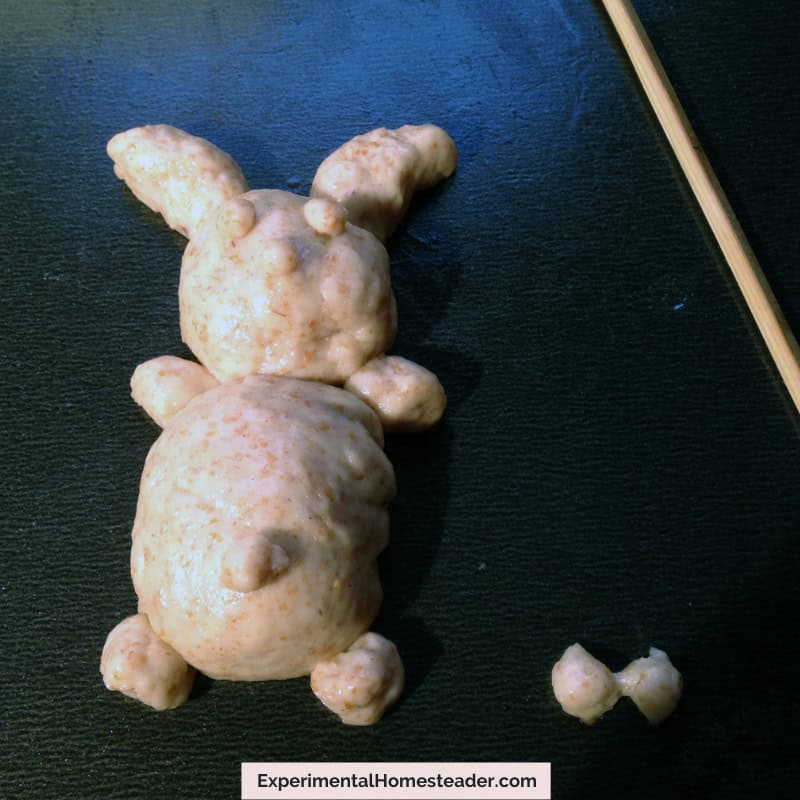
Shape one large ball of dough for the bunny's body. Make a second ball that is slightly smaller for the head. Place the pieces close together on the prepared baking sheet and gently press the touching edges so they can connect during the final rise and baking.
3. Add the feet and paws
Make four smaller dough balls of roughly equal size. Place two near the lower part of the body for the feet and two along the sides for the paws. They do not need to be perfectly identical, but similar sizes will help the bunny look balanced.
4. Shape the ears
Use two portions of dough that are a little larger than the paw pieces. Roll each into a short log, tapering one end if you want pointed ears. Position both ears above the head and press the joined edges gently into place.
5. Create the face and other details
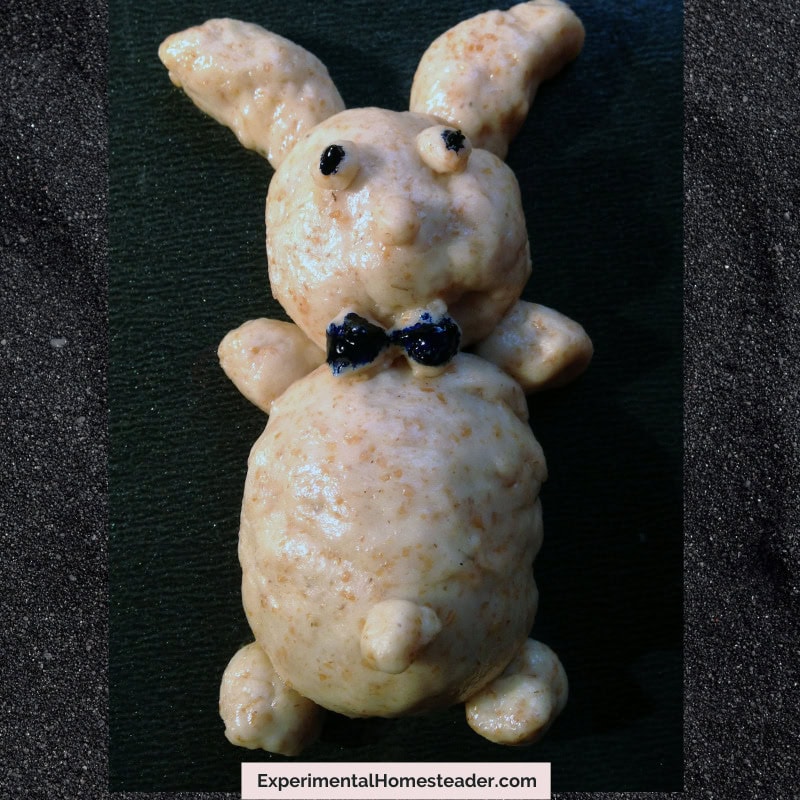
Small dough balls can become the eyes, nose, and belly button. Keep these pieces smaller than you think they need to be because they will expand during proofing and baking. If you want a bow tie, flatten a short piece of dough and pinch or trim the center. Mine was delicate, so I moved it with a small spatula rather than stretching it with my fingers.
You can stop there or add your own details. A small basket near one paw, miniature dough eggs, flowers, or a carrot can make each bunny different. Avoid piling thick pieces on top of one another because the center must still bake completely.
Let the Shaped Bunny Rise Carefully
Allow the assembled bunny to rise as directed by your dough recipe, but watch the shape rather than relying only on the clock. The pieces need enough time to become slightly puffy and connect, yet an excessive final rise can blur the face, bow tie, paws, and other details.
The dough will continue expanding in the oven. If the bunny already looks overly inflated before baking, the finished loaf may spread or lose definition. A slightly restrained final proof generally preserves the decorative shape better than allowing every piece to double dramatically.
Room temperature, dough composition, and the size of the shaped pieces all affect proofing time. Use the guidance from your base recipe and your observations of the dough instead of assuming every bunny will rise on the same schedule.
How to Make Edible Paint for Bread
I used gel food coloring mixed with a very small amount of water. Place about a teaspoon of water in a clean food-safe dish, then add a tiny amount of gel color with a clean skewer or utensil. Mix thoroughly and test the color on an inconspicuous bit of dough.
The edible paint should be thin enough to brush onto the surface but not so watery that it runs into the creases or makes the dough soggy. Add gel gradually because concentrated color can become much darker than expected. Use separate clean utensils and dishes if you are mixing several colors.
Most importantly, use a brush intended only for food. Never decorate bread with a craft brush that has touched paint, glue, glitter, or another nonfood material-even if the brush has been washed. Culinary decorating brushes are the safer choice for anything that will be eaten.
Ideas for Painting Your Bunny Bread
- Paint the inner ears and nose pink.
- Add dark eyes while keeping the surrounding face unpainted.
- Give the bunny a brightly colored bow tie.
- Paint miniature dough eggs in several Easter colors.
- Add green details to a dough basket, leaves, or carrot top.
- Use a light wash of color for soft pastels or a more concentrated mixture for bold accents.
I like leaving some of the natural bread color visible. That contrast makes the painted details stand out and helps the finished creation still look like bread rather than a heavily frosted dessert. The goal is to make it appealing and unique, not to cover every inch.
How to Bake a Large Shaped Loaf Safely
Bake the bunny at the temperature recommended by the bread recipe you used, but do not assume that dinner-roll timing will be sufficient for a large central body. My original directions suggested 10 to 15 minutes, yet the correct baking time depends on the dough, loaf thickness, pan, oven, and final shape.
Watch both the decorative pieces and the thickest part of the body. Small ears or a bow tie may brown before the center is finished. If the details are becoming too dark, loosely shield those areas with foil while the rest continues baking. Follow the doneness guidance for your base recipe and, when appropriate, check the thickest section with an instant-read thermometer.
The bread should be fully baked in the center before it is served. Let it rest on the pan briefly, then move it carefully to a cooling rack if the shape is sturdy enough. Cooling allows the interior to finish setting and makes the bunny easier to transfer to a serving board.
Serving Painted Bunny Bread
Serve the bunny slightly warm or completely cooled, depending on the bread recipe. Place it on a platter or wooden serving board where the entire shape can be seen. Butter, honey butter, jam, or another spread can be offered separately so guests do not have to cover the painted design immediately.
You can let everyone pull off individual pieces or slice the bunny with a bread knife. If you want tidy portions, begin with the ears and paws and then slice the larger body. The fun shape encourages conversation, especially when guests learn that Grandma King's bunny cake helped inspire the idea.
This bread fits naturally beside an Easter brunch or dinner. For more ways to build the menu, visit my collection of Easter brunch ideas. If shaped dough interests you, my bird-shaped bread tutorial offers another creative project.
Tips for Keeping the Bunny Shape Recognizable
- Make the facial features smaller than their desired finished size.
- Press adjoining dough pieces together without flattening them completely.
- Leave room around the bunny for expansion in the oven.
- Watch the final rise so the details do not become overly puffy.
- Use edible paint sparingly to avoid soaking the dough.
- Protect small browned pieces with foil if the thick center needs more baking time.
- Let the loaf cool before moving it more than necessary.
Frequently Asked Questions
Can I use any bread dough for bunny-shaped bread?
You can use many bread or dinner-roll dough recipes, but a dough that holds its shape is easier to decorate than a very wet or loose dough. Use the rising, baking-temperature, and doneness guidance from the specific recipe you choose.
Do I paint the bunny before or after baking?
For this tutorial, I painted the shaped dough with diluted gel food coloring before baking. Applying a light layer helps preserve the dough's texture and keeps the color from running.
Can children help paint the bread?
Children can help with appropriate supervision. Give them food-safe colors and brushes reserved for culinary use, and make sure an adult handles the oven, hot pan, and any sharp shaping tools.
Why did my bunny lose its shape?
The dough may have proofed too long, the decorative pieces may have been too large, or the dough may have spread more than expected. Try making smaller facial details and watching the final rise closely.
Can I make smaller individual bunny rolls?
Yes. Divide the dough into smaller sets of pieces and shape individual bunnies. Because smaller breads may bake faster than one large bunny, follow the dough recipe carefully and begin checking them earlier.
A Family Memory Turned Into Easter Bread
This painted bunny bread began with a simple connection between two kitchen memories: the bear-shaped bread I made first and the bunny cake Grandma King once created. Instead of making another cake or serving a basket of ordinary rolls, I turned one batch of bread dough into a cheerful Easter centerpiece.
That is one of my favorite things about homemade food. A recipe can feed people, decorate the table, preserve a family memory, and invite someone else to create a completely different version. If you make your own bunny bread, I would love to know which colors and details you add.