

0

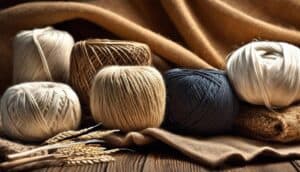
The yarn I am spinning in this video is 50% mohair from Leonardo, the angora buck and 50% wool from Johnny, the Leicester Longwool ram.

Leonardo is an angora goat and Johnny is a Leicester Longwool sheep. Both animals reside here at Exotic Gardening Farms & Wildlife Habitat.

Sheri Ann Richerson spinning yarn – http://www.youtube.com/watch?v=XHy_RYLStoQ

The yarn making process requires shearing the animal, washing the fiber and removing all the vegetable matter. Vegetable matter may include hay, animal feces around their rear ends, mud and other natural materials that have embedded themselves in the animals fur.

Once the fiber is clean, it must be carded. Carding fiber involves using either a drum carder or a set of hand carders. The fiber is brushed several times until all the hairs are going in the same direction.

I use hand carders right now, so once the fiber is brushed or carded as it is called, I roll the fiber into a rolag which looks somewhat like an empty toilet paper roll minus the hollow center.

The rolag is then drafted, or gently pulled into thin pieces of fiber. The length of the fiber and the elasticity of the fiber will determine how thin the un-spun yarn can be pulled.

This un-spun yarn that has now been drafted can be spun into yarn. The thinner the draft, the thinner the yarn. The thicker the draft, the thicker the spun yarn will be. Do not worry about spinning the yarn so it is perfectly even. There are no imperfections in hand-spun yarn.

Every thick and thin spot, every area that is not as perfect as store bought yarn will prove to you and others that what you are spinning is a perfect artisan yarn that machines are un-able to duplicate!

  • Share/Bookmark
0

Here is a basic recipe for creating a natural perfume.

Natural Perfume Recipes

2 cups distilled water

3 tablespoons vodka – or a tincture that you made with vodka

5 drops of an essential oil or fragrant tincture of your choice

10 drops of an essential oil or fragrant tincture of your choice

10 drops of an essential oil or fragrant tincture of your choice


Before you begin mixing the scents together, try them out on a scent stick to see if you like them. If the fragrance is enjoyable to you, add the distilled water to a dark glass bottle with a lid, then add the fragrances, one at a time, making sure to shake the bottle well after each addition. Be sure to write down the amounts of each fragrance so you can begin compiling your own natural perfume recipes collection.

When all of the fragrances have been added, shake again to mix the ingredients well. Sit the capped bottle in a cool, dark place. Shake it daily. You can check the smell after two weeks. If it suits you, go ahead and use it as you would any perfume. If you are not happy with the way the perfume smells, set it aside for up to a month.

Feel free to add other scents after that if you are still not happy, but do try the new combinations on scent sticks first.

  • Share/Bookmark
0

Each herb, seed, bark, root or flower has a certain temperature where the plant begins to release its essential oil. Knowing what that temperature is and the best method of distillation for the plant material you are trying to distill is essential. This takes a bit of research on your part.

When bringing a still up to temperature, it is best to go slowly. It is hard to cool a still so by carefully watching the temperature and beginning to turn the heat setting back as you go, you will have more control over the end result.

It is best to use fresh cut herbs that have been harvested early in the morning as soon as the dew dries after a several day dry spell has occurred. This insures the maximum amount of oil. If their has been a drought that year you may find some plants such as lavender have more oil than on a year where there has been an abundance of water.

This chart will give you an idea at what point some herbs begin to release their oils or volatilize. Never heat your herbs past this point and try to maintain this temperature throughout the distillation process.

Marjoram and Oregano – 163 F (72 C)

Mints – 200 F (93 C)

Sage – 150 F (65 C)

Savory – 176 F (80 C)

Cinnamon Bark – 170 F to 212 F (76 C to 100 C)

Wintergreen – 218 F (103 C)

  • Share/Bookmark
1

Creamy Soft Scrub Cleanser – this is perfect for cleaning bathtubs and sinks.

Ingredients:

Baking Soda

Vegetable Glycerin – optional

Liquid Detergent

Sponge

Bowl

Pour one-half cup of baking soda into a bowl. Add enough liquid detergent to make a texture like frosting. Scoop the mixture onto a sponge and wash the surface. This recipe rinses easily and doesn’t leave grit.  You can add 1 teaspoon of vegetable glycerin to the mixture and store it in a sealed glass jar to keep the product moist. Otherwise just make as much as you need at a time.


Eucalyptus-Mint Disinfecting Soap –  This soap is great for cleaning dishes, floors, stoves, sinks, and hands.

5 cups grated castile soap

½ cup baking soda

1 tsp. borax

1 tsp. eucalyptus oil

6 cups hot peppermint tea, made with 6 tbsp. fresh peppermint or 8-12 tea bags

Place the castile soap in a 3-quart stainless steel saucepan. Add the tea mixing well. If you are making the tea with fresh herbs bring the water to a boil, add in the tea bags and simmer for 10 minutes then strain.

Simmer very low for 15 minutes, stirring occasionally. Add the baking soda, borax, and eucalyptus oil. Stir well to blend all the ingredients.

Store the soap in a plastic jug or squirt bottle. Shake well before using.


Natural Mold Killers


Tea Tree

Nothing natural works for mold and mildew as well as this tea tree essential oil. Note that

the smell of tea tree oil is very strong, but it will dissipate in a few days.

2 teaspoons tea tree oil

2 cups water

Combine these ingredients in a spray bottle using a funnel to make sure the water gets

into the bottle then add the tea tree oil, shake to blend and spray on problem areas. Do not rinse. You can store whatever is left in the bottle. Just make sure to shake it up each time before you use it.

 

Vinegar Spray

Essential oil

Straight vinegar reportedly kills 82 percent of mold. Pour some white distilled vinegar

straight into a spray bottle, add a few drops of essential oil and spray on the moldy area.

Let it set without rinsing. The smell will dissipate in a few hours.

  • Share/Bookmark
0

Floral waters, or hydrosols are great for the skin. Hydrosols help tone, rehydrate and rebalance the pH of skin. Fruit or floral waters can be used in a number of ways. The first way is as a face toner or refresher. Simply dab an organic cotton ball with some of the hydrosol and wipe your face. You can do this twice a day, everyday. You can add hydrosols to your bath water for a fragrant bath and an all over body refresher. You can also mist yourself with hydrosols. A gentle fragrance will be left behind. Be sure to keep floral waters out of your eyes.


Here are some good ones to try.

Calendula hydrosol is a good one to use for its therapeutic properties. It has

has anti-inflammatory, anti-septic, and astringent properties.

Lavender hydrosol is very relaxing and balancing.

Lemon balm hydrosol has a calming effect on mental stress and fatigue. It also works well on skin inflammations’.

Lemon verbena hydrosol is stimulating and uplifting.

Peppermint hydrosol is refreshing and revitalizing.

Rose geranium hydrosol is balancing. It is the perfect hydrosol for the sporadic symptoms of menopausal women.

Rose hydrosol makes a wonderful balancing toner for all skin types. It also works as an anti-anxiety spray, a deodorant and a room freshener.

Rosemary hydrosol is energizing and stimulating.

  • Share/Bookmark
0

If you are distilling your own essential oils, you will get hydrosol as well. Hydrosol is the by-product of essential oil distillation. They are also called floral waters. They contain the same properties as the essential oil but are diluted so they are safe to use directly on the skin.

Hydrosols help tone, rehydrate and rebalance the pH of skin. Hydrosols can be used in a number of ways. The first way is as a face toner or refresher. Simply dab an organic cotton ball with some of the hydrosol and wipe your face. You can do this twice a day, everyday. You can add hydrosols to your bath water for a fragrant bath and an all over body refresher. You can also mist yourself with hydrosols. A gentle fragrance will be left behind.

Some good hydrosols to try are rose, chamomile, lavender, clary sage, orange blossom and rosemary.

Do not use hydrosols on or around the eyes. As with any new beauty product watch for an allergic reaction and if you see one, discontinue use.

  • Share/Bookmark
5

Picture 002websmall

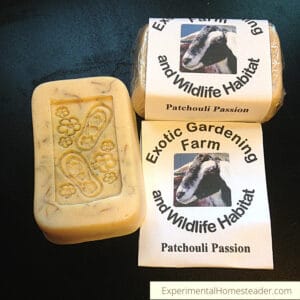
Making your own homemade soap is not hard. Lye can be dangerous and caution should be used, but there is nothing to be afraid of as long as you use common sense. There are a few basic supplies you will need before you begin to make homemade soap.

A thermometer is one of the most important pieces of equipment. You will also need a good pair of rubber gloves and eye goggles for safety reasons. A tall stainless steel pan, a pan to pour the hot soap into (glass works great), long handled wooden spoons and of course, your soap making supplies.

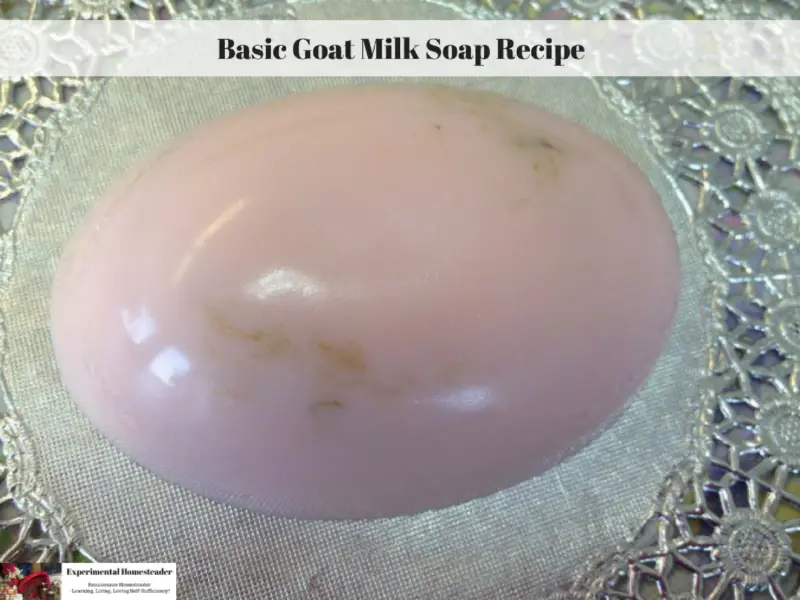
Homemade soap recipes can be found in numerous books and online. Here is a great recipe to make homemade soap with goat milk.


Easy Homemade Goat Milk Soap


3 pints of ice cold goat milk

1  12 oz. can of lye

5 1/2 pounds of lard

2 oz. glycerin

2 T borax

1/3 Cup Honey


Before beginning slightly freeze your goat milk. You want small chunks of ice in it, but you do not want it completely frozen.

Pour the lye, in powder form, into the milk.

Be careful here as the lye will quickly heat the milk up. Stir as you do this. You do not want the milk to get too hot and curdle.

Once the milk and lye are well mixed, add the honey.

The ideal temperature for the lye mixture will be around 85 degrees F, but be warned the mixture will need to cool down some to reach this temperature.


Once the milk, honey and lye have been mixed together, set the pan aside, with a lid on it, if possible, so the mixture does not cool too fast. Stir occasionally.


Put the lard into another container and heat it up until it reaches 90 degrees F then remove it from the heat.


When the contents are both pans are the right temperatures, 85 degrees F for the lye mixture and 90 degrees F for the lard mixture, slowly pour the lard into the lye mixture. Stir constantly and be careful not to splash this mixture. You do not want to get any of this on your skin.


When the lye mixture and the lard are well mixed, add the glycerin and borax. Stir constantly until the mixture thickens. When the mixture becomes the consistency of pudding, drizzle some of the soap on top of the mass of soap. If you can see the drizzle briefly before it sinks back into the mass of soap, the soap has begun to “trace” and is ready to pour into a pan to cool. This process can take anywhere from a few minutes to an hour.


Pour the soap into a pan and allow to cool overnight. You can add essential oils, herbs or other ingredients at this point or simply allow the plain soap to cure. This is the last step to make homemade soap unless you want to make hand milled soap.

If you allow the soap to cure without additives, when it is dry, which can take 6 weeks or longer, you can grate the soap, add nine ounces of water to twelve ounces of soap flakes, re-melt and add the additives. This is then known as hand milled soap.

 Laundry Soap

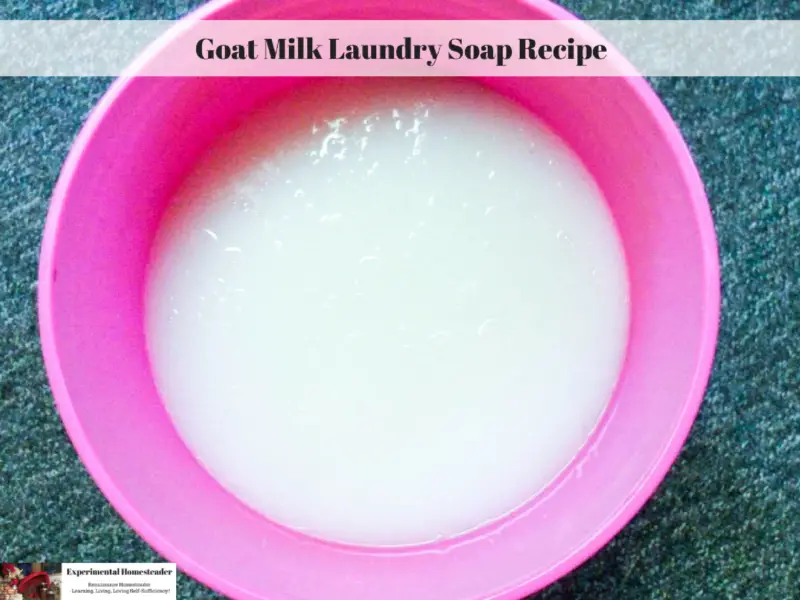
Once your soap is dry, you can grate it and make laundry detergent out of it or shampoo. To use it as laundry detergent, mix 1 cup grated soap, ½ cup borax and ½ cup washing soda together. You will use approximately 1 tablespoon of this mixture in each wash load, depending on how soiled your clothes are. Experiment and see what works well for you.

 Homemade LIquid Soap

To make shampoo, use ¼ cup grated soap, ¼ cup hot water, 2 tablespoons vegetable glycerin and  ½ teaspoon oil such as jojoba or olive. You can add a few drops of essential oils to this to scent it or add additional healing properties to the shampoo. For example, if you have dark hair, add a few drops of rosemary to enhance your hairs shine. Shake well and use as needed.

  • Share/Bookmark
0

There are many ways to get natural materials to make dried potpourri. You can collect plant material from your own garden or go for walks in the wild to forage for interesting pods, cones or other materials.

If you wild collect, make sure you have permission to do so. Look for materials that have been grown as naturally as possible. If the plant material has been sprayed you will be bringing all of those chemicals into your home with the plant material. Dried potpourri is easy to make.

The first step is to choose what plant material you wish to work with. Interesting natural bark, seed pods, pine cones, acorns, dried leaves and dried flower petals all make good choices.

The next step is to decide what you would like the potpourri to smell like. Choosing natural fragrances that compliment the essential oils you will be using is a good idea. You will also need a fixative to help retain the scent of your potpourri such as orris root or benzoin gum.

Once your potpourri is mixed up, put it in a large glass container with a lid. Set this in a cool, dark place and allow the potpourri scents to mix. Shake the container from time to time. When you are happy with the smell of the contents, go ahead and put some out.

Here are a few homemade potpourri recipes to get you started. Feel free to add or subtract botanical materials until you have a potpourri you are happy with.

Victorian Lavender Potpourri

1 ounce orris root

1 ounce lavender

1 drop vanilla essential oil

1 drop bergamont essential oil


Asian Potpourri

¼ cup camellia blossoms

1/8 cup rose petals

1 vanilla bean, cut up

1 tablespoon pine needles


Dream Mix Potpourri

1/8 cup lavender flowers

1 ounce cedar shavings

1/8 cup sage leaves

1 ounce orris root

¼ cup violets

¼ cup maidenhair fern fronds


 Moist homemade potpourri recipes are a little different than making a dry potpourri. The scent can last for years.

Before beginning choose a pretty glass or ceramic jar with a lid. You will need one that is fairly large for the recipe below. Gather your ingredients together before you begin.

10 cups rose petals

2 cups lavender buds

½ cup orrisroot, powdered

8 bay leaves

2 cups sea salt or kosher coarse salt

½ cup allspice, crushed

½ cup crushed cinnamon sticks

½ cup cloves, crushed

½ cup brown sugar

½ cup brandy

Begin by combining the rose petals, lavender buds and orris root in a large bowl.

In a second bowl, combine the bay leaves, the salt, crushed allspice, cinnamon stick pieces, cloves and the brown sugar. Mix well.

Once the contents of both bowls have been well mixed, get your glass or ceramic container.

You will begin by putting a layer of the rose petal mixture in the bottom of the container.

The next layer will be the brown sugar mixture. Continue alternating layers of materials until both bowls are empty.

The next step involves pouring the brandy over the top of the mixture.

Then lay a sex stone, which is just a large rock, on top of the potpourri material. Put the lid on the container.

Over the next six weeks, you will need to stir the contents of the container every two to three days. You can add additional essential oils during this time such as rose, cinnamon or whatever scents you prefer.

When the potpourri is ready to use, simply remove the lid and allow the scent fill the room.

To keep the moist homemade potpourri recipes going, simply add ½ cup of brandy yearly, making sure you stir it into the mix.

Another way to make a moist potpourri is to layer semi-dry plant material, add a layer of salt, then a layer of plant material.

Keep alternating layers until your container is ¾ of the way filled.

Put a sex rock on top and let it sit undisturbed. When the mixture begins to form a moist cake, remove it, add the fixatives, mix well and put back in the covered container.

Release the smell by removing the lid.

  • Share/Bookmark
0

4 tablespoons olive or almond oil

4 tablespoons beeswax

3 teaspoons cocoa butter

2 teaspoon lanolin

1 teaspoon coconut oil

15 drops lavender essential oil

Combine the olive or almond oil, beeswax, cocoa butter and lanolin.

Heat this mixture in the top of a double boiler, stirring constantly.

When the mixture is melted, remove the top pan from the heat and add the coconut oil and lavender essential oil. Stir the mixture briskly.

It will begin to thicken as it cools. Once the salve is thick enough to suit you, pour it into the glass jars that were prepared ahead of time.

Leave the jar sit overnight, uncovered so the salve can cool.

The next day, put a lid on the jar, label it with the name of the salve, the ingredients in the salve and the date.

This can be stored at room temperature for up to a year. If the salve begins to smell rancid, toss it and make a new batch.

  • Share/Bookmark
0

Lavender is a natural antibiotic, antiseptic, antidepressant, sedative, and detoxifier.

Tea Tree oil has an antiseptic action thought to be one hundred times more powerful than carbolic acid and non-poisonous to humans.

It has antiviral, antibacterial, and antifungal properties which make it useful for a wide range of applications.

Peppermint is an excellent digestive aid, great for the respiratory system and circulation along with being an antiflammatory and antiseptic. It is also useful in the prevention of mice, fleas, and ants.

Each variety of Chamomile oil has its own unique properties in addition to being antibacterial, antiseptic, and useful as a disinfectant.

Eucalyptus oil has numerous properties. It is useful as an antiflammatory, an antiseptic, antibiotic, diuretic, analgesic, it is deodorizing and useful as an insect repellent and in veterinary care.

However, you need to be aware that Eucalyptus Oil, as with many essential oils are poisonous if digested.

Thyme oil is an antiviral, antibiotic, antiseptic, and diuretic product that should be used with caution. It should not be overused as it can affect the thyroid gland and lymphatic system.

Caution must used to ensure the type of oil you are using. It is good for discouraging parasites and insects from your home.

Lemon Oil has antiseptic and antibacterial properties. Useful for cleaning, polishing furniture, weight lose and medical care. Clove oil is antibacterial, antiseptic and analgesic oil.

Used for disease and infection and in your spice cabinet.

Do not use on skin undiluted. If you prefer to use fresh herbs instead of the essential oils you can do that.

Remember that the essential oils are highly concentrated. It will take a lot of fresh material to equal the qualities in one drop of essential oil.

  • Share/Bookmark
WordPress SEO fine-tune by Meta SEO Pack from Poradnik Webmastera