Does the LĒVO II+ Actually Belong in a Homestead Kitchen? My Honest, Everyday Review
Does the LĒVO II+ infusion machine actually work in a real homestead kitchen? After using it every day for infused honey, simple syrups, and more, here's my honest experience and whether it's worth the counter space.
Short answer: Yes - if you make your own infusions regularly, the LĒVO II+ saves time, reduces mess, and is easy to use daily.
Disclosure: This is a paid partnership with LĒVO. They sent me this bundle for free so I could test it and share my experience. This is my honest LĒVO II+ review after using it every day in my homestead kitchen. Regardless of being a #LEVOPartner, all opinions are my own and based on my actual experience.
There's a certain point in a homesteader's life where you stop getting excited about "new kitchen gadgets."
Not because you don't love tools - but because you've learned the hard way that most of them don't earn their keep.
If it doesn't:
- save time
- reduce mess
- or get used regularly
…it ends up in a drawer, a cabinet, or worse - a box in the basement you swear you'll use "someday."
So when the LĒVO II+ showed up in my kitchen, I'll admit - I was curious.
But I was also cautious.
Because curiosity doesn't mean commitment.
And on a homestead, everything has to earn its place.
If a tool doesn't make life easier or better, it doesn't stay in my kitchen.
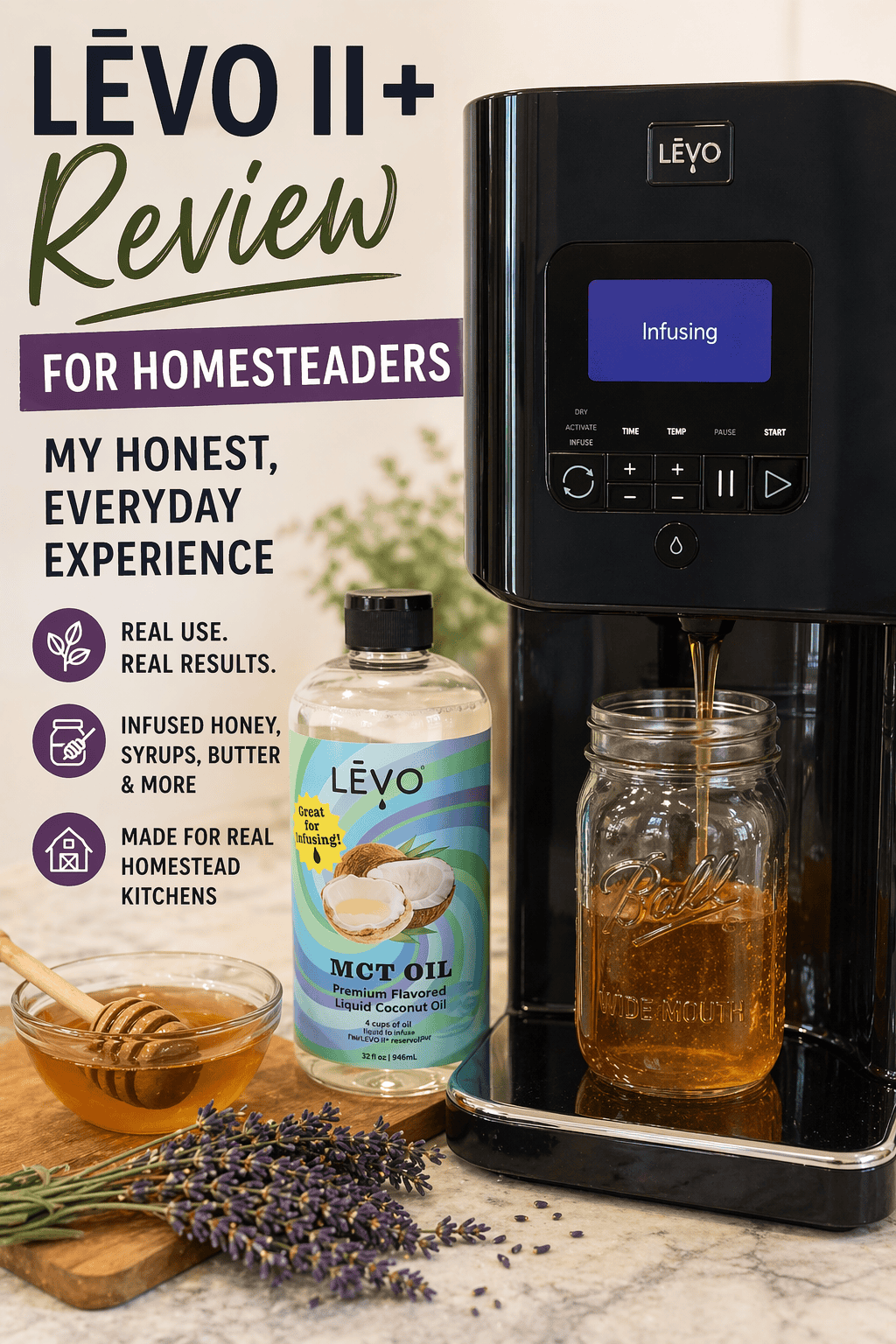
LĒVO II+ Review (Real Homestead Kitchen Use)
When I first opened the box, I was excited.
I had been wanting to try this machine for a while, especially because I do a lot of infusions the traditional way.
If you've followed me for any length of time, you already know I stepped away from making things like my herbal salves - especially recipes like my chapped hands salve and my cayenne pepper salve.
Not because they didn't work, but because of how much time they took to make.
I did continue making my mastitis udder balm essential oil salve for my goats when I couldn't buy it, but even that became something I truly dreaded.
And if you've ever made your own infusions the traditional way, you already know what that looks like:
- watching a pot so nothing burns
- trying to keep the temperature steady
- stirring more than you want to
- straining everything afterward
- cleaning multiple tools
It works - but it's not exactly something you do on a whim.
Traditional infusion methods work - but they demand time, attention, and a lot more cleanup than most people expect.
So yes, I was excited.
But what mattered more to me was this:
Would I still be using it a week later?
The answer surprised me a little.
Because I didn't just use it once.
I didn't just test it for content.
I've used it every single day since it arrived.
And that's when I knew this wasn't just another "try it and forget it" situation.
The real test of any homestead tool isn't the first use - it's whether you reach for it again tomorrow.
And how often after that do you continue to reach for it.
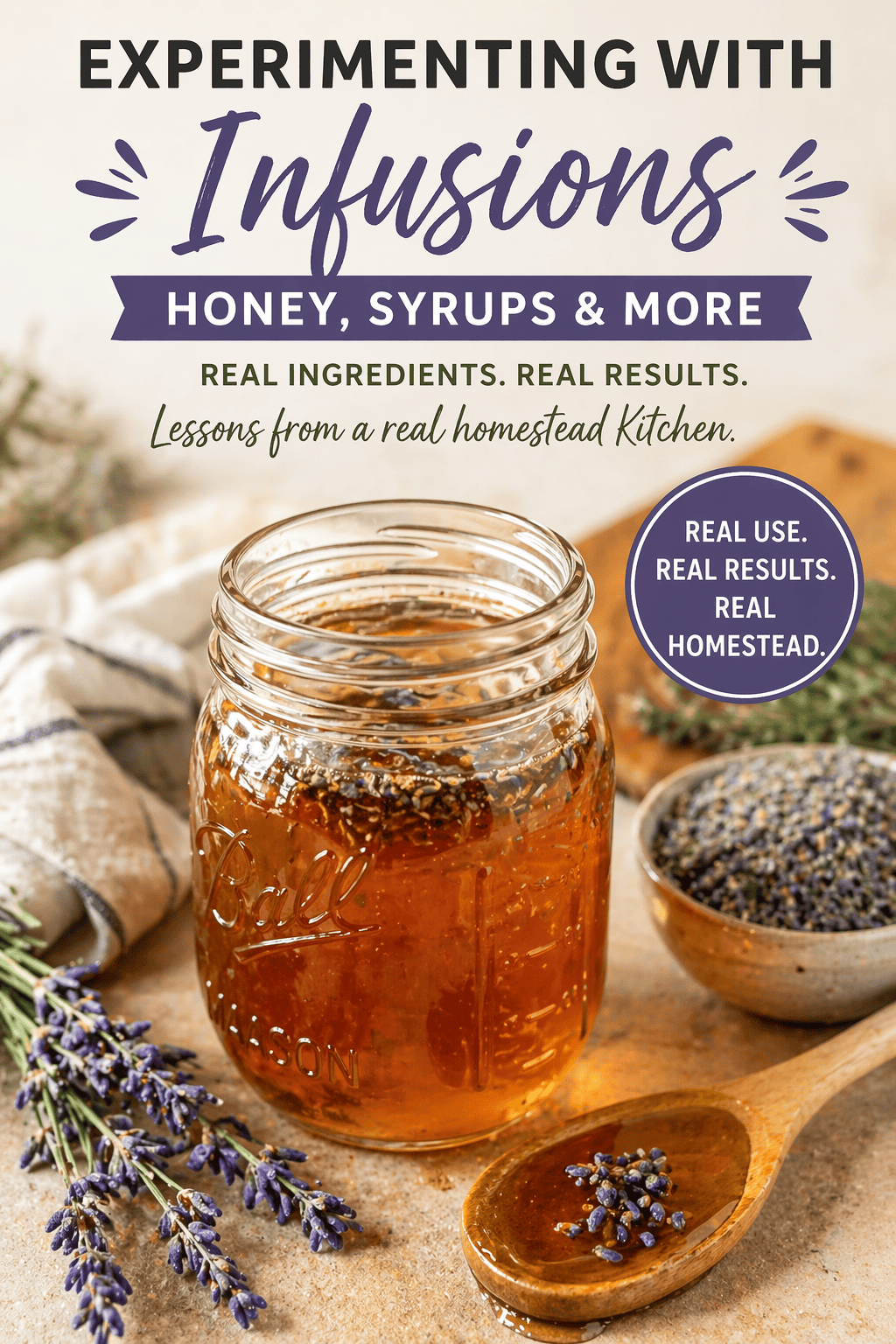
Starting Simple: Infused Honey
I didn't jump into anything complicated.
When I'm testing something new, I've learned to start with what I already know I'll actually use.
For me, that meant infused honey.
It's something I've made before the traditional way, and while it's not difficult, it does require attention - and time.
I'm lucky enough to have a friend who keeps honey bees, so I have access to real, local honey - the best kind.
And yes, I've infused it before with things like ginger, garlic, and other botanicals.
That part isn't new to me.
What was new this time was how I did it.
I came across a lemonade recipe on the LĒVO site that used honey and ginger, and I had to try it.
So I started by drying fresh ginger using the dry cycle on the LĒVO II+.
That alone saved me a step I would normally have to do separately.
Then I added the honey and let the machine do the work.
When it was finished, I pressed a button - and the infused honey drained straight into a mason jar.
That's it.
No straining.
No extra tools.
No mess.
When your infused honey drains straight into the jar, you suddenly realize how much effort the old way really takes.
Cleanup was just as simple.
I chose to wash everything by hand, but the removable parts are dishwasher safe.
Honestly though, it was so quick and easy to clean by hand that I just dried everything and moved on to the next infusion.
When cleanup is easy, you're far more likely to keep using a tool.
This time?
I added my ingredients, set the machine, and walked away.
That's the part that really stood out to me.
No hovering over the stove.
No worrying about overheating.
No straining afterward.
Just… done.
Being able to set it and walk away is what turns infusions from a chore into something you'll actually do.
And the result?
Exactly what I wanted - without the usual effort.
Simple Syrups-and Where Things Got Interesting
After honey, I started playing around with simple syrups.
This is where I really began to see just how flexible the LĒVO II+ could be.
Some of the recipes I tried weren't just one step. They required:
- an initial infusion
- adding water afterward
- running a second infusion cycle
Now, if you've ever done something like that on the stovetop, you already know how quickly it turns into a process.
Not hard… just time-consuming.
With this machine?
It was surprisingly straightforward.
Adjust.
Run it again.
Done.
No juggling multiple pots.
No trying to maintain temperature twice.
When a process feels simple, you're far more likely to repeat it - and repetition is what turns something into a real skill.
So next, I tried the lavender syrup recipe from the LĒVO site.
Step one was infusing dried lavender flowers into honey.
Step two was adding water to that infusion and running a second cycle before draining it.
I'll admit - I had a picture in my mind of a beautiful, light purple syrup.
That's not what I got.
Because of the honey, the finished syrup was more of a warm brown color.
But here's the thing…
The smell?
Absolutely incredible.
The scent alone was relaxing - it smelled like lavender should.
And the flavor was exactly what I was hoping for.
You could clearly taste the lavender without it being overwhelming.
It turned out to be one of those ingredients that quietly elevates whatever you add it to.
I've already used it:
- in tea
- and as a light syrup brushed onto cake for flavor
And honestly, I'm just getting started.
Sometimes the result doesn't look the way you expect - but if it smells right and tastes right, that's what really matters.
That's where this machine started to shift from being interesting… to being useful.
And that's the part that matters most to me.
Infusing Homemade Butter (What Went Wrong - and What I Learned)
After working with honey and syrups, I decided to try something I was really excited about - infusing homemade butter with garlic and rosemary.
And this is where things didn't go quite as planned.
The issue wasn't the machine - it was my butter.
When I made the butter, I didn't get all of the buttermilk washed out like I should have.
And if you've ever made butter, you know that step matters more than you think.
Once I started the infusion, the process really brought that leftover buttermilk out.
The smell, though?
Absolutely incredible.
I could clearly smell the garlic.
I could clearly smell the rosemary.
It smelled exactly like what I was hoping for.
Some of the butter did try to set up, but overall, it wasn't something I would have spread on bread.
Sometimes a failed batch teaches you more than a perfect one ever could.
What I ended up with was something I didn't expect - infused buttermilk, along with a small amount of butter I could still use.
While I'm calling it a fail, it really wasn't a total loss.
The butter I did get worked just fine for cooking in a skillet, and the infused buttermilk is something I can still use in other ways.
On a homestead, very few things are truly wasted - you just end up using them differently than you planned.
And honestly, that's part of the process.
I'm already planning to try this again - but next time, I'll make absolutely sure that butter is washed thoroughly before it ever goes into the machine.
Because if not?
I already know exactly what will happen.
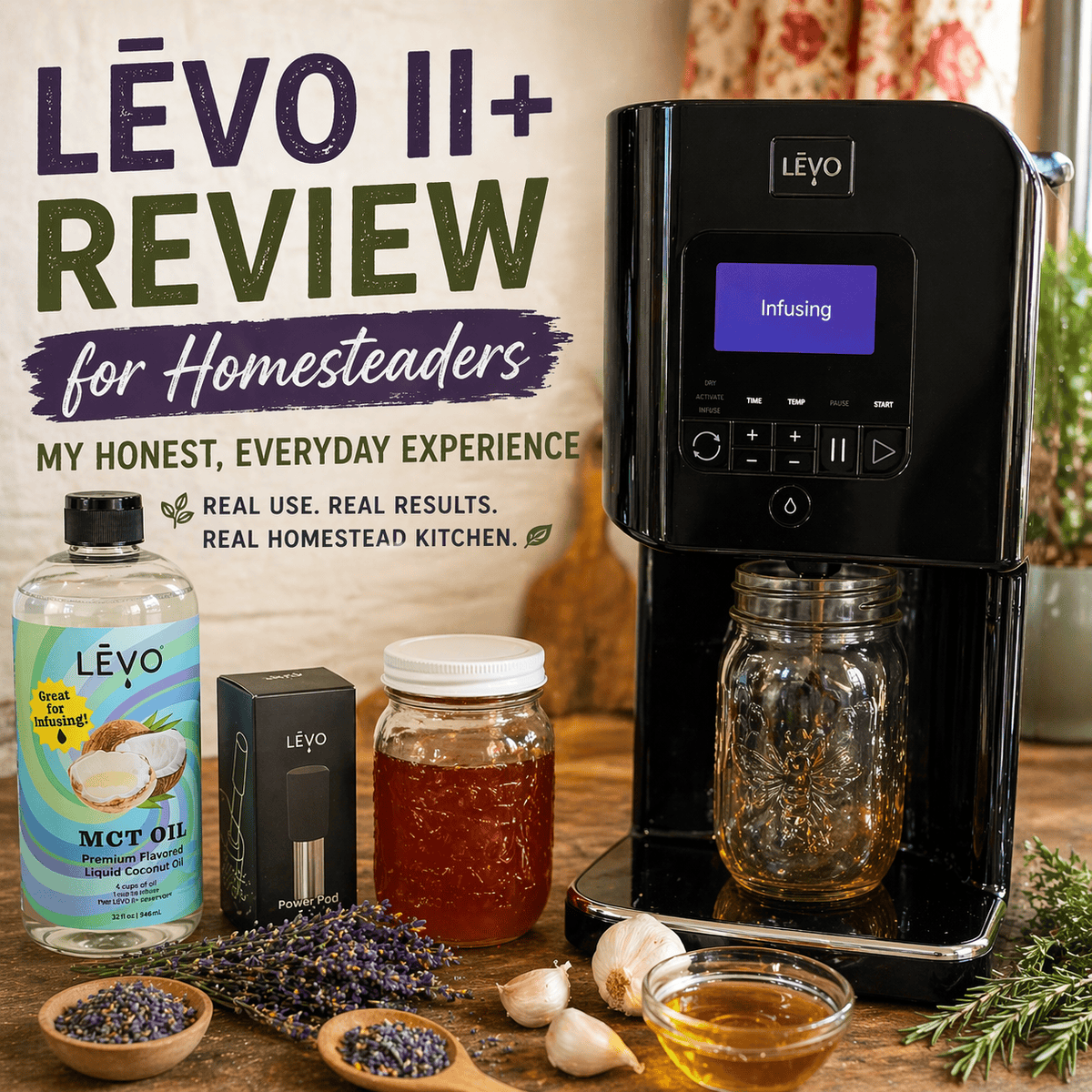
Doing It the Old Way vs. Doing It This Way
I'm not someone who throws out traditional methods.
I believe in them.
I use them.
But I also believe in being honest about them.
Traditional infusion methods:
- take time
- require attention
- involve more cleanup
And sometimes, that's fine.
But sometimes… you just don't have the extra time.
That's where this machine fits in.
It doesn't replace the knowledge.
It doesn't replace the skill.
It just removes some of the friction.
This isn't about replacing traditional methods-it's about making them easier to use in everyday life.
And that's a big distinction.
What Matters Most on a Homestead
If you strip everything else away, what we're really doing as homesteaders is this:
We're trying to use what we have - better.
Not more complicated.
Not more expensive.
Just… better.
So when I look at any tool, I'm asking:
- Can I use what I grow or preserve more effectively?
- Can I save time without sacrificing quality?
- Will this become part of my routine?
So far, for me, the answer has been yes.
Where This Is Going Next (and Why I’m Excited)
I'm just getting started with this.
So far I've made:
- infused honey
- simple syrups
- experimented with multi-step infusions
But I've got more plans.
And this is where it starts to feel really fun.
I'm looking at:
- chocolate infusions
- herbal infusions from what's growing right now
- and yes… eventually testing maple syrup infusions
Because that's what I actually want to know:
Not just what works.
But what really works in a real kitchen.
I'm not interested in perfect results - I'm interested in honest ones.
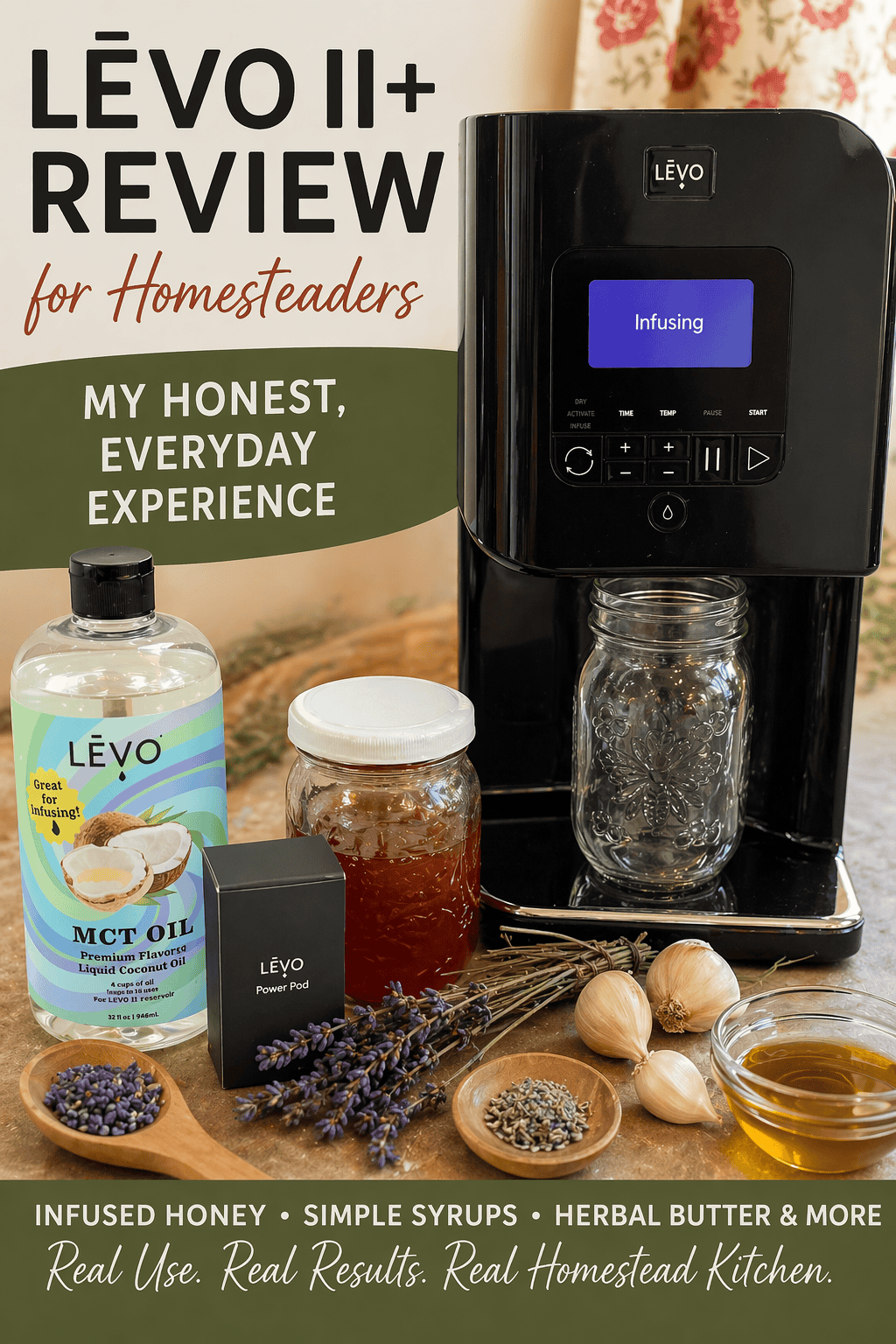
So… Does It Belong in My Kitchen?
I didn't expect to have an answer this quickly.
But I do.
Right now?
Yes.
Not because it's new.
Not because it's interesting.
But because I keep using it.
And that's the only reason anything stays.
The tools that last on a homestead are the ones you don't have to think about - you just use them.
Let's Talk
I'm curious -
Are you someone who:
- makes your own infusions already?
- has been thinking about trying it?
- or sticks to the traditional way?
Because honestly?
There's no wrong answer.
But there are definitely easier ways.
And I'm just starting to explore them.
👉 If you've been wanting to try one of these, you can check current pricing here using my affiliate link: https://levooil.com/SHERIANNRICHERSON
Frequently Asked Questions About the LĒVO II+ (Homesteader Edition)
Q. What can I actually make with the LĒVO II+ on a homestead?
A. A lot more than I expected, honestly. You can make infused honey, herbal oils, simple syrups, butter, salves, balms, and even bath and body products. If you're already growing herbs or foraging things like dandelion or lavender, this machine turns those into usable, shelf-stable products without a lot of extra work.
Q. Is the LĒVO II+ hard to use?
A. Not at all. If you can push a button and follow basic instructions, you can use it. The biggest learning curve is just deciding what you want to infuse first. After that, it's mostly setting the time and temperature and letting it do its thing.
Q. Does it really replace stovetop infusions?
A. For me, yes. The biggest difference is not having to babysit a pot. No standing there watching temperatures, no constant stirring, and no worrying about burning anything. That alone makes it worth it if you do infusions regularly.
Q. Can I use fresh herbs and flowers from my garden?
A. Yes - but they need to be dried first. The LĒVO II+ actually has a dry cycle built in, which makes this really convenient and saves so much time vs using a food dehydrator. Removing moisture is important so your infusions don't spoil.
Q. What oils work best for infusing?
A. It depends on what you're making. Olive oil is great for savory recipes and salves, coconut oil works well for both food and body products, and MCT oil is a good neutral option that stays liquid. Each one has its place depending on your goal.
Q. Can I make infused honey with it?
A. Yes, and it's one of the easiest and most satisfying things to make. You can infuse honey with herbs like ginger, lavender, mint, or even garlic. The best part is being able to set it and walk away instead of constantly monitoring it.
Q. Can I make simple syrups for drinks and recipes?
A. Absolutely. You can infuse herbs into honey or sugar bases, then add water and run a second cycle if needed. It simplifies what would normally be a multi-step stovetop process.
Q. Is the LĒVO II+ good for making salves and balms?
A. Yes, and this is where it really shines for homesteaders. You can infuse oils with herbs like calendula, plantain, or comfrey, then use those oils to make salves, balms, and other natural remedies without the mess of traditional methods.
Q. Can I use it for bath and body products?
A. Definitely. Infused oils made in the LĒVO II+ are perfect for lotions, body oils, bath soaks, and even homemade soaps. If you already make your own products, this just makes the infusion step faster and more consistent.
Q. Does it make the house smell while infusing?
A. Not compared to stovetop methods. It has odor control built in, so you're not filling your whole house with strong herbal scents.
Q. How easy is it to clean?
A. Surprisingly easy. The removable parts are dishwasher-safe, but I usually just wash them by hand because it's quick. Compared to cleaning multiple pots, strainers, and utensils, this is much simpler.
Q. Can I run multiple infusion cycles?
A. Yes, and sometimes you'll want to. Certain recipes - like simple syrups - may require infusing once, adding ingredients, and running it again. The machine makes that process straightforward instead of complicated.
Q. Is it worth it if I only do occasional infusions?
A. That depends on how much you value your time. If you only infuse once or twice a year, maybe not. But if you're making herbal products, cooking from scratch, or preserving what you grow, it quickly becomes something you reach for all the time.
Q. Can I experiment with my own recipes?
A. Yes, and that's honestly half the fun. Once you understand the basics - time, temperature, and drying - you can start experimenting with your own herb blends, flavors, and uses based on what you grow or have on hand. Plus LĒVO has a time and temperature calculator on their site to help you decide the best time and temperature for the infusion you are making.
Q. What's the biggest benefit for homesteaders specifically?
A. It turns "I should do that someday" into something you actually do. When a process is easier, you're more likely to use your herbs, preserve what you grow, and make your own products instead of putting it off.
Q. Can you infuse things like maple syrup, chocolate, condiments, or even mocktails?
A. Yes - and this is where things start to get really fun. While most people start with oils or honey, you can absolutely branch out into more creative infusions once you understand the process.
Maple syrup is one I've been really curious about because it opens the door to flavors like vanilla, cinnamon, or even savory notes. Chocolate is another interesting option - especially for adding subtle flavors like mint, lavender, or orange, although you do need to pay attention to temperature so it doesn't scorch.
Homemade condiments like ketchup, salad dressing or barbecue sauce can also be elevated by infusing the base ingredients first. Imagine a garlic- or herb-infused vinegar or oil going into your sauce - that's where you start building deeper flavor instead of just mixing ingredients together.
And if you enjoy seasonal drinks, infused syrups are perfect for mocktails, lemonades, teas, and even sparkling water blends. It's a simple way to turn what you grow - like mint, berries, or edible flowers - into something that feels a little special without adding a lot of extra work.
The key is thinking in layers. Instead of asking "what can I make," you start asking, "what can I infuse first to make this better?" And that's when your whole kitchen starts to shift.