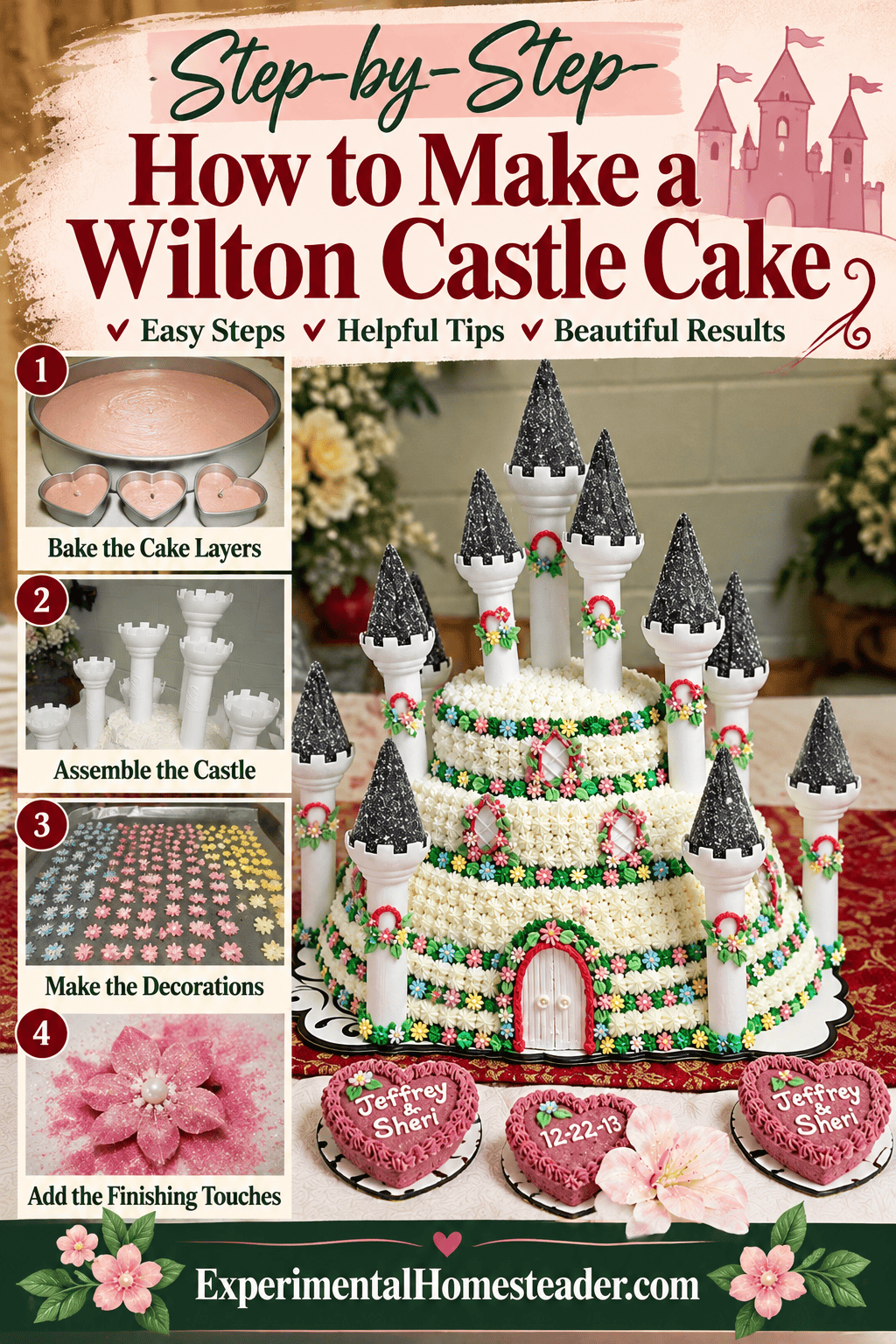
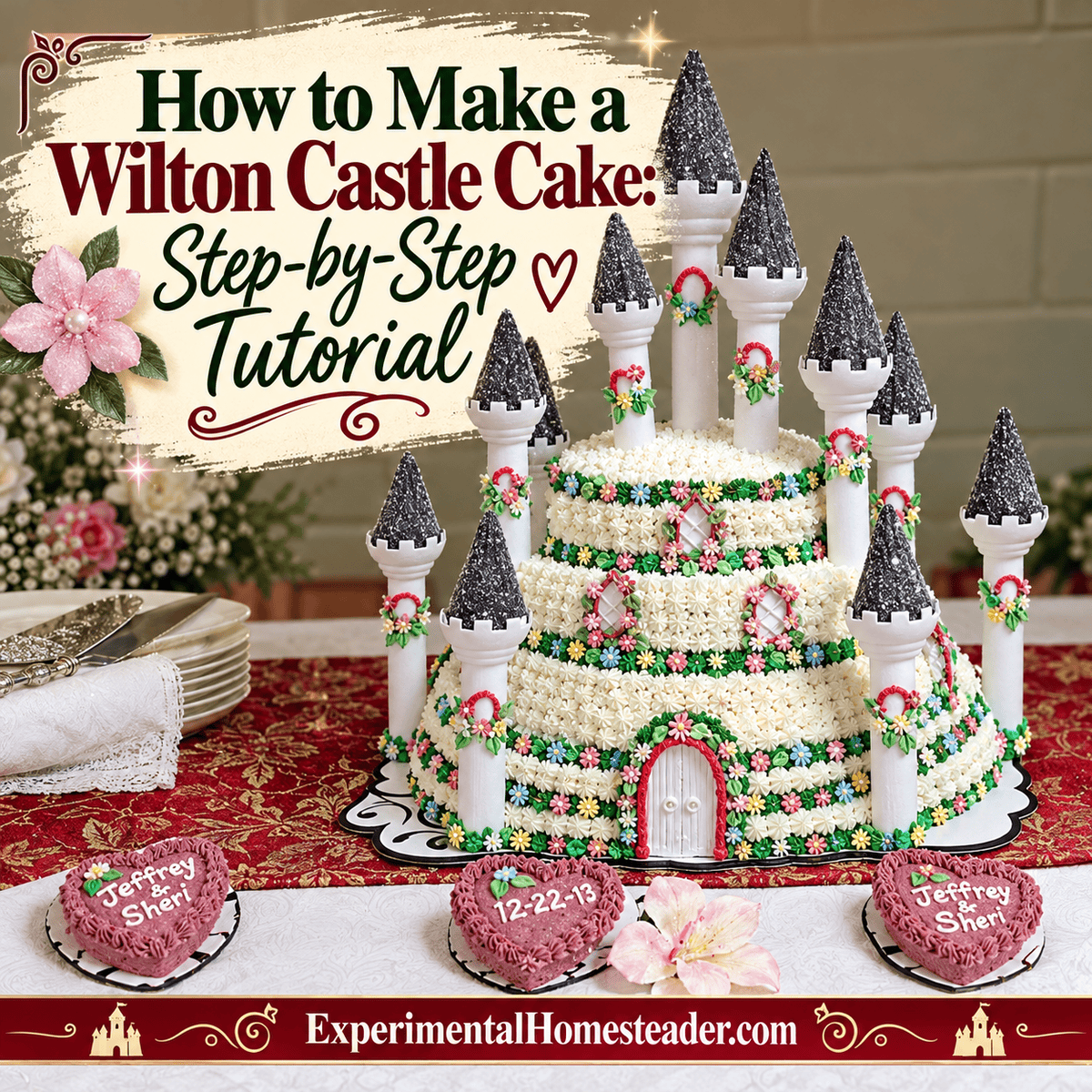
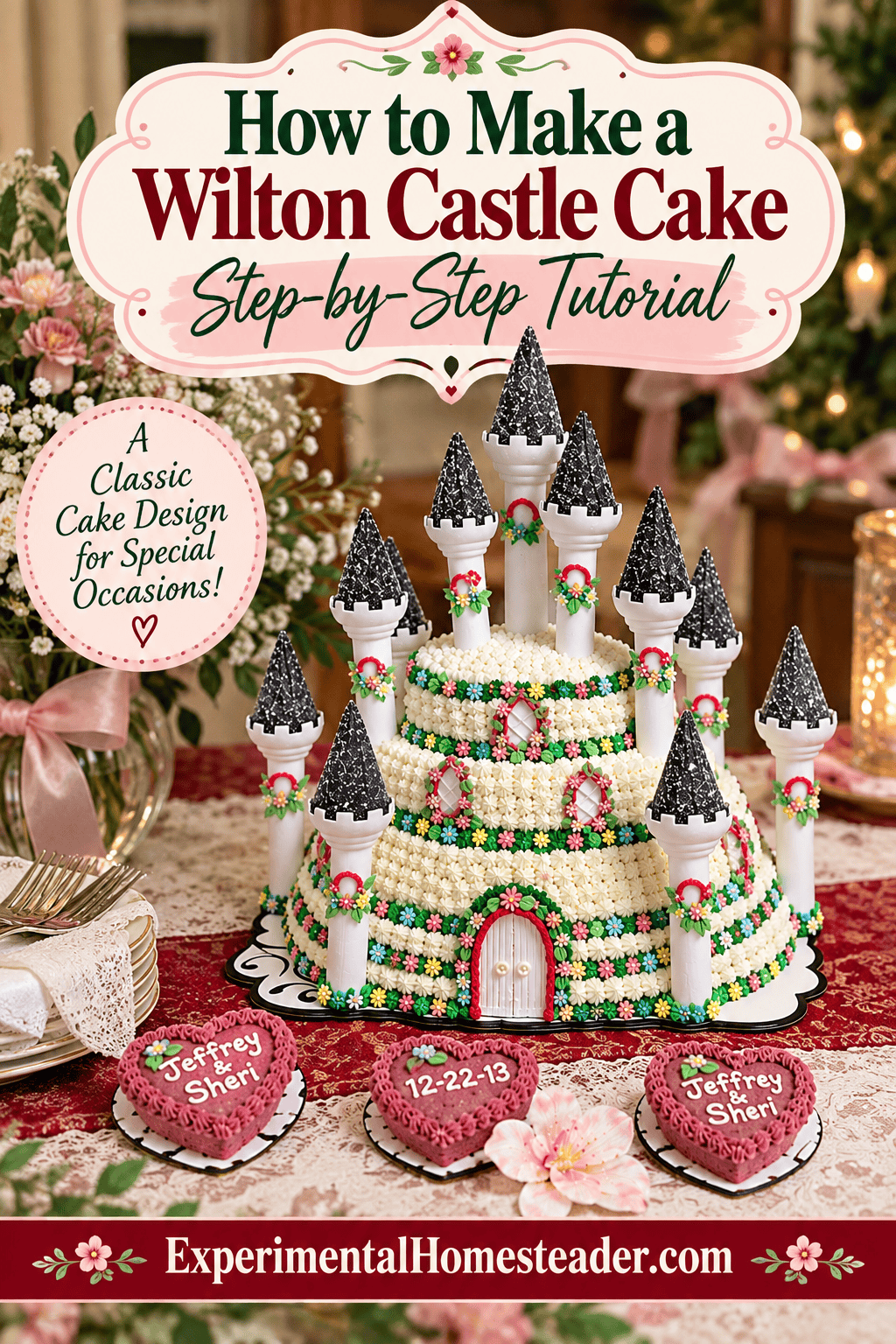
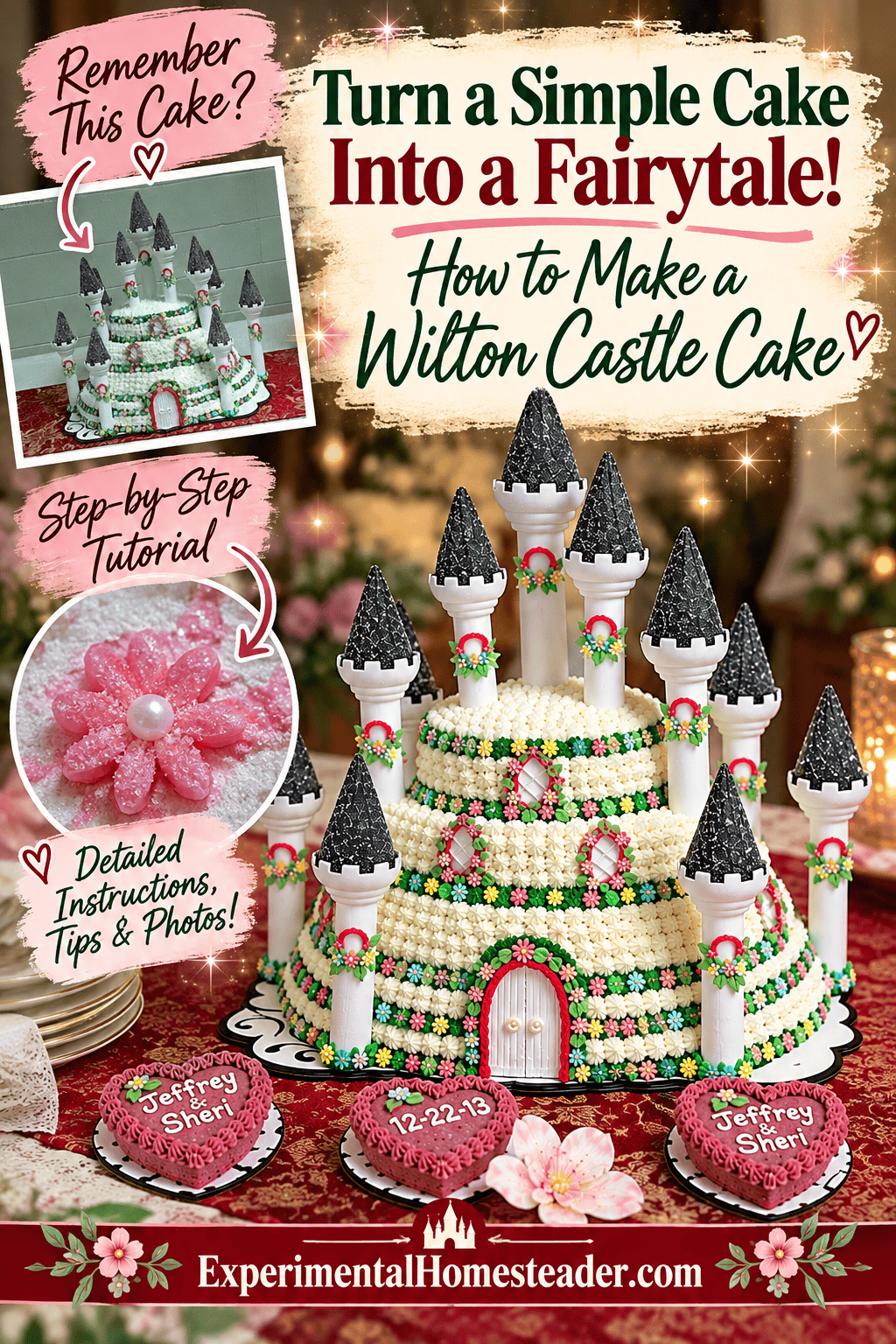
How to Make a Wilton Castle Cake: Step-by-Step Tutorial
The castle had turrets, tiny flowers and hundreds of leaves. It also had to stand upright long enough to become my wedding cake. Looking at the pieces I planned to assemble, I wondered whether I could actually pull it off. I had never worked with gum paste, and there were 282 flowers and 516 leaves to make before I could even begin decorating the cake. This was going to take more than a box of cake mix and a little icing.
For the cake itself, I used Betty Crocker Super Moist Cherry Chip cake mix with pudding in the mix and Wilton ready-to-use icing. The castle design was Wilton's A Fairytale Romance Cake. I'll walk you through how I made the decorations, baked and leveled the layers, supported the tiers and finished the turrets, including the mistakes that taught me what to do differently next time.
The cake meant more to me than an ordinary baking project. Jeffrey and I had dated for almost a year when we were 12, and I told him I would marry him someday. Many years later, on December 22, that childhood dream finally became our wedding. Making the castle cake myself was part of bringing that long-held dream to life.
In This Article
Making the Gum Paste Flowers and Leaves
The first step was to create the gum paste flowers. I had never worked with gum paste before. I had intended to use rose and orchid sugar flowers on the cake - however after seeing the size of the orchids and comparing them to the cake, they simply were too large. I ended up making lots of tiny leaves and lots of tiny flowers out of gum paste that I used instead. I made 516 tiny leaves and 282 small gum paste flowers. I used the Wilton Cut & Press Tools to create the leaves and flowers. Thank goodness I was able to find them because they made the job so easy!
I started on Monday with the flowers. Gum paste is a pliable sugar-based decorating material that can be rolled thin, cut into shapes and left to dry firm. If you have never used it, begin with a small piece rather than exposing the entire batch to air. Keep the portion you are not working with covered so it does not dry out while you learn.
I rolled my gum paste to about ⅛ inch thick and cut the flowers with Wilton Cut & Press Tools. For a beginner, the easiest way to work is to roll a small section evenly, press the cutter straight down, lift the cutout gently and repeat. If the paste sticks, use only a light dusting of cornstarch. Too much can leave a powdery residue on the finished decorations.
I put the cut flowers inside a Wilton Gum Paste Storage Board so they would stay workable while I finished cutting the rest. This mattered because I still needed to add the sugar pearls to their centers. Do not let those flower centers dry hard before you are ready to press in the pearls.
I wanted the flowers to remain moist enough so that I could put the Edible Sugar Pearls in the center of each flower. I used Wilton food coloring to turn some of the gum paste red and blue so I had a few flowers that would be vibrant. I used the Wilton Color Dust on all the flowers to give them a shimmer after they were cut- and to add a touch of color to some of the white flowers. The Wilton Color Dust creates a pastel color instead of the vibrant color I was afraid the food coloring would create. It worked out perfectly.
Once all the flowers were cut, I removed them from the storage board a few at a time and dusted them with the Wilton Color Dust. Then the Edible Sugar Pearls were placed in center of each flower and gently pressed into it. Once this was done, I laid them out on a wax paper lined cookie sheet to dry.
Tuesday and Wednesday were spent making all 516 leaves. I colored some gum paste green, rolled out a small portion at a time and cut the leaves with the Wilton tools. I also marbled some of the paste by leaving streaks of color rather than mixing it completely, which gave the leaves a slightly variegated look. For a first attempt, cut a few leaves and compare their size with the cake before making hundreds. Unlike the flowers, the leaves did not need to stay soft for another decorating step. I spread them in a single layer on wax paper lined cookie sheets and let them dry. Keep the cutouts separated and handle them gently after drying because thin sugar decorations can break. I used more cornstarch than necessary on the wax paper. It brushed off, but a light dusting would have been better. Allow the decorations to dry in a dry place, away from steam or condensation, and make a few extras in case some break during assembly.
Baking the Castle Cake Layers
Once the flowers and leaves were cut out and drying, it was time to bake the cake. My oven is very old, the temperature goes up and down and the top part of the interior of the oven is rusted out so the top of the stove gets very hot. I can only bake one thing at a time, then I must turn the oven off and let it cool. I can also forget about the amount of time it says it takes to cook something because although the cake should have taken 40 to 45 minutes to bake, the reality is it was done in 20. If I ever get a new stove I won't know how to cook! LOL! Anyway, here is how I made the cake.
First, I mixed up two boxes of Betty Crocker Super Moist Cherry Chip cake mix with pudding in the mix. Yes, I used boxed cake mix for this project. That gave me enough batter to fill the large oval pan that was to become the bottom of the cake and three smaller heart shaped pans that were for our one year anniversary. Actually I ate one of them today, but I did freeze two of them for next year. I put the four cake pans on the center rack of the oven and baked them per the instructions on the cake box - except I used the Wilton chart for my pans for baking times. As I said, the cake was done in 20 minutes. I removed the cake pans from the oven, turned it off and set the smaller ones on a cake cooling rack. The larger pan I set on top of my jerky making pan which happened to have a grid wire rack on top.
I let the pans cool about 15 minutes, then slid a butter knife around the edge of the pans, turned the cakes upside down and removed them from the pan. I put them back on the cooling rack and allowed them to cool completely. Now the larger cake was tricker to do this with. The smaller ones fit nicely on a saucer. The larger cake I used the bottom of the jerky pan to turn the cake out onto and then laid the wire grid on top of the cake and flipped it. If you try to flip this without something on top, it will break in half - no matter how cool the cake is.
Cooling and Leveling the Cake Layers
Later that day, I made three more boxes of cake mix and filled the last three oval pans. I baked them, cooled them, removed them from the pans and let them sit on the cooling racks until they were completely cool. Once the cakes were completely cool, I used the Wilton Cake Leveler to remove the rounded tops. A domed cake might look fine by itself, but stacked layers need level surfaces or the cake can lean. Set each cake on a flat surface, check the height of the lowest edge and trim the dome with a cake leveler or a long serrated knife held parallel to the counter. Turn the cake as needed rather than cutting downward at an angle. I leveled the small hearts too, and saved the trimmed cake in a baggie for snacking. Before stacking, transfer each cooled, leveled tier onto its own sturdy, food-safe cake board or appropriately sized cardboard covered completely with aluminum foil. Support the cake with a flat board or tray while flipping or moving it. A large layer can crack if you try to lift or flip it without support. The foil-covered board stays underneath its tier when the castle is assembled and helps distribute the weight.
Icing the Cake Layers
Once the cakes were leveled, I needed to put icing on them so they would not dry out. I went with pre-made icing as well. It was quicker, easier and made to sit out. I chose Wilton White Ready To Use - and it tasted great! It was easy to work with regardless of how I was using it. That first night, I covered each completely cooled layer with a smooth coat of icing. Beginners may find it easier to apply a thin crumb coat first, chill it briefly if appropriate for the icing, and then add a smoother finishing coat. Use an offset spatula and work from the top toward the sides without pressing hard enough to tear the cake. I bought two 4 lb 8 oz tubs for the entire castle cake and had a little left over. Keep the finished layers protected from dust and drying out, and follow the icing manufacturer's storage directions.
I used a different icing on the small hearts and went ahead and decorated them. That got them out of my way and let me concentrate on the larger cake. If you enjoy themed cake projects, my Clawdeen cake tutorial is another decorating project, and my Valentine's Day cupcake decorating ideas offer a smaller project for practicing icing techniques. Friday was a down day because I was busy making the bride and groom cake pops. That is for another post though.
Assembling and Supporting the Castle Cake
Saturday morning I took the boxed cake layers to the church and began setting up the castle. Each tier needs its own sturdy, foil-covered cake board. I cut wooden dowel rods to support the boards beneath the tiers above. For a beginner, first mark where the next board will sit, place food-safe supports within that area, and trim them to an even height so the board rests level. Follow the support manufacturer's guidance for the number and placement of dowels. Count the supports and remove every one before serving, especially when children will be eating the cake. Never cut a slice with a wooden dowel still inside it. As the cake was stacked, I spread icing over the foil covered cardboard. Once the cake was completely stacked - I goofed and put the castle pieces in place. It would have been easier to do all the icing stars on the cake and then position the castle pieces. I was just anxious to see it all together.
Decorating with Icing Stars and Gum Paste Flowers
I began piping white and green icing stars onto the cake. If you have never piped stars, practice on a plate first: hold the star tip close to the surface, squeeze gently until the star reaches the size you want, stop squeezing, and lift straight away. Try to keep your pressure consistent so the stars look similar. I worked in small sections. While the green stars were still fresh, I paused to press the dried gum paste flowers and leaves into place without crushing them. If a decoration will not stay put, add a tiny dab of icing as edible glue rather than forcing it into the cake. Some of the edible sugar pearls had come loose, so I asked Sharli, Rhonda, Mary and Roberta to help secure them with icing. Working in sections makes it easier to catch loose decorations before moving on.
Finishing the Castle Turrets
Once the castle was iced, the turret peaks needed decorating. Mary, Rhonda and Roberta helped with that job. For a beginner, it is easier to ice removable castle pieces separately before placing them on the assembled cake. Set each piece down carefully and touch up any icing smudged during handling. Remember to remove non-edible castle pieces before serving. Shari combined all the leftover icing and added some of the Wilton black food coloring to turn it kind of grey. They spread the icing over the peak pieces and held them while I sprinkled the clear cake sparkles over them. Then we carefully placed the peaks on the turrets making sure to touch up the areas we touched so the icing was not messed up.
By late Saturday night, the cake was finished. It was - indeed - a masterpiece fit for a fairy tale wedding - which was exactly the kind of wedding I ended up having.
Troubleshooting a Castle Cake for Beginners
Gum paste cracks or crumbles: Work with smaller portions and keep unused paste covered. If a piece is already dry and brittle, do not force it to bend. Make another cutout, handle it gently and let it dry flat. Thin decorations are delicate, so prepare a few extras.
Cake layers have uneven or rounded tops: Wait until the cake has cooled completely. Use a cake leveler or long serrated knife to trim the dome, keeping the blade level. Check the layer on a flat board before stacking. A tall cake will lean if its layers are uneven.
The stacked cake leans or feels unstable: Stop adding tiers or decorations. Make sure each upper tier sits on its own sturdy cake board, supported by level, properly positioned food-safe dowels in the cake beneath. Check that the base is rigid and flat. If the structure still moves, disassemble and correct the supports rather than trying to hide the problem with icing. Count and remove all dowels and non-edible decorations before serving.
Icing pulls crumbs off the cake: Let the cake cool completely and apply a thin crumb coat before the final coat. Use a light touch and clean crumbs from your spatula instead of dragging them through the icing.
Gum paste flowers break: Lift delicate flowers with a small flat tool instead of pinching the petals. Let them dry undisturbed and make extra decorations so one break does not delay the cake.
Flowers or leaves will not stick: Add a small dab of fresh icing behind the decoration and hold it gently in place. Avoid pressing so hard that dried gum paste cracks.
Icing stars lose their shape: Practice on a plate, keep the tip close to the cake, squeeze steadily, stop pressure, then lift. If the icing is too soft, firm it according to the manufacturer's storage directions.
Castle turrets will not stay in place: Check that the cake tiers are level and properly supported. Decorate removable pieces separately and position them carefully. Never rely on icing alone to hold a heavy or unstable castle piece.
Print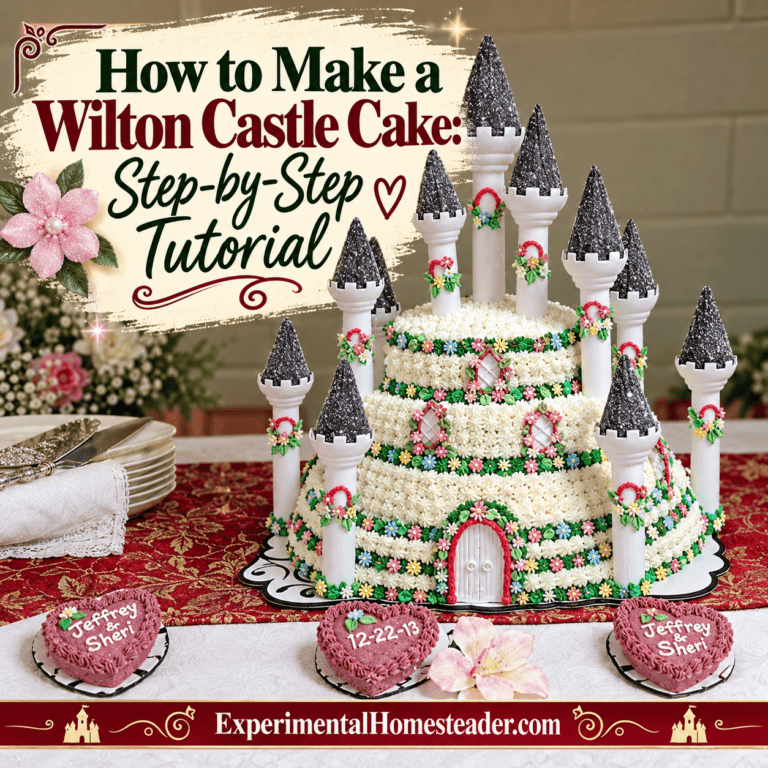
How to Make a Wilton Castle Cake: Step-by-Step Tutorial
A real wedding cake project made with Betty Crocker Super Moist Cherry Chip cake mix, Wilton ready-to-use icing, and hundreds of handmade gum paste flowers and leaves. Follow the decorating and assembly steps from my castle wedding cake.
Ingredients
- 5 boxes Betty Crocker Super Moist Cherry Chip cake mix with pudding in the mix
- 5 cups water
- 1 ⅔ cups vegetable oil
- 15 eggs
- 2 tubs Wilton White Ready To Use Icing (4 lb 8 oz each; some icing left over)
- Gum paste for 282 small flowers and 516 leaves
- Wilton food coloring in red, blue, green and black
- Wilton Color Dust
- Edible sugar pearls
- Clear cake sparkles
- Additional icing for the small heart cakes
Instructions
- 1. Prepare the gum paste flowers: roll gum paste approximately ⅛ inch thick and cut small flowers with Wilton Cut & Press Tools. Keep the cut flowers in a gum paste storage board while working.
- 2. Color and finish the flowers with food coloring and Color Dust. Press edible sugar pearls into the centers and dry the flowers on wax-paper-lined baking sheets.
- 3. Cut 516 small gum paste leaves, coloring some green and marbling some for a variegated appearance. Let the leaves dry on wax-paper-lined baking sheets.
- 4. Prepare two boxes of Cherry Chip cake mix according to the package. Fill the large oval pan and three small heart pans. Bake using the pan-specific Wilton timing guidance and check for doneness; my oven baked these in about 20 minutes.
- 5. Cool in pans for about 15 minutes. Loosen the edges, carefully turn out the cakes, and let them cool completely. Support large layers when turning them out to prevent breaking.
- 6. Prepare the remaining three boxes of cake mix and bake the other three oval layers. Cool completely, then level the oval and heart cakes with a cake leveler.
- 7. Coat the oval cake layers with Wilton White Ready To Use Icing. Decorate the small heart cakes separately.
- 8. Transport the cake layers and assemble at the venue. Support each tier with appropriately cut wooden dowels beneath its cake board, following safe tiered-cake construction practices.
- 9. Pipe white and green icing stars onto the cake, placing gum paste flowers and leaves as you work. Secure any loose sugar pearls with icing.
- 10. Color remaining icing gray with a little black food coloring, cover the turret peaks, add clear cake sparkles, and position the peaks carefully. Touch up the icing as needed.
Notes
This cake follows the Wilton A Fairytale Romance Cake design. The five cake-mix boxes made the castle layers and three small heart cakes. My oven ran unusually hot, so its 20-minute baking time is not a general recommendation. Pipe icing stars before positioning castle pieces. Support stacked tiers properly and remove non-edible structural pieces before serving.
- Method: Baking