Polish Chickens
Of all the chickens I've raised over the years, Polish chickens have a special place in my heart. There is just something about watching one of these birds come strutting across the chicken garden with that magnificent head of feathers bouncing along. Those crests always reminded me of the fancy hats ladies wore in Victorian times, and I never got tired of seeing them.
But raising Polish chickens taught me that there is a lot more to this breed than a pretty face. Those wonderful feathers can get in the way of their vision, their personalities can be a little dramatic, and they aren't necessarily the birds you would choose if your only goal was filling an egg basket. Still, I love having them around. Chicken T, in particular, is one I remember fondly.
If you've been admiring these unusual chickens and wondering what they're really like to keep, I want to share both what I experienced with mine and what you should know before bringing them home. The Polish Crested chickens I have owned - both hens and roosters - are not as aggressive as some of the other breeds I've raised although they are a bit skittish, flighty and easily excited. Mine made it through the Indiana winters just fine for a number of years. They do well in hot and humid climates as well, so late summer was not an issue either.

In This Article
My Experience Raising Polish Chickens
The feathered crest on top of their heads does obstruct their vision. This is one reason I paid attention to how easily my Polish chickens could see their surroundings and find their way around the coop. I would trim some of the feathers on my Polish chickens heads so they could see easier. At one point I had 150 chickens and the Polish did not mind living in close proximity to the other chickens. I allow my chickens to free range during the day - although I noticed the Polish stayed close to the chicken coop - but I did lock them up at night to protect them from prediators.
The standard hens of this breed typically weight four pounds at maturity while the standard roosters weight six pounds. The bantam hens weigh 26 ounces and the bantam roosters weigh 30 ounces. They are good egg layers with the standards laying medium sized eggs and the bantams laying extra small eggs.
I just didn't bother to separate my Polish chickens so they could lay pure eggs that I could then hatch. Polish hens are not broody, so hatching their eggs in an incubator or placing them under another broody hen is necessary. If you come across chicks or decide to try your hand at hatching eggs from this breed, be aware that sexing them at the hatching stage based on color or feather development is not reliable.
How to Care for Polish Chickens
Polish chickens are best known for their impressive feathered crests, but that beautiful head of feathers also affects how they experience their surroundings. Their care starts with a secure, dry coop, dependable predator protection, suitable feed, clean water, and enough room to move without being bullied by more assertive birds. Their crests can restrict their field of vision, so approach them calmly and make sure feeders, waterers, roosts, and entrances are easy to find.
When planning the coop, start with the space your entire flock needs rather than treating Polish chickens as decorative extras. Provide room for each bird to move, roost, and reach food without being crowded. Position roosts where a chicken can see and reach them without flying blindly into another bird, and use landing space or lower perches for individuals that struggle. Keep the coop dry, but don't seal it so tightly that moisture and ammonia build up. Ventilation should remove damp air above the birds while avoiding a direct cold draft across the roost.
Walk the perimeter of the run as though you were looking for a way in. Check gates, corners, loose wire, gaps at ground level, and any place predators could dig or reach through. Strong hardware cloth is generally a better choice for vulnerable openings than lightweight chicken wire, which is designed mainly to contain poultry. A roof or overhead barrier helps where aerial predators are a concern. The most important protection is a dependable evening routine: count birds, shut and latch the coop, and make sure no chicken has settled outside where you cannot see it.
If you have a mixed flock, watch what happens at feeding time and when birds choose roosts. A Polish chicken may tolerate the company of larger breeds yet still be pushed aside by one particular hen. Extra feeding stations, visual barriers, and enough space to get away can prevent a minor pecking-order issue from becoming an injury. Introduce newcomers gradually, preferably where birds can see one another through a barrier before sharing the same space.
Coop, Run, and Flock Safety
Use a well-ventilated coop that stays dry and protects birds from drafts at roost level. Provide sturdy roosts and accessible nest boxes. A covered or securely enclosed run is particularly useful for crested chickens: limited visibility can make it harder to notice approaching predators or other birds. Watch mixed flocks closely for pecking at crest feathers. Provide multiple feeding and watering spots if dominant chickens keep timid birds away.
The first question isn't whether the crest looks perfectly tidy; it is whether the chicken can function comfortably. Stand where you can watch the bird without startling it. Does it find its feeder promptly? Does it hesitate at doorways, bump into obstacles, or fail to notice another bird approaching? A large crest doesn't always need trimming, but feathers hanging directly over the eyes deserve a closer look. Gently part the feathers and inspect the eyes and skin for irritation, dampness, and debris.
If trimming is genuinely needed for a backyard bird, work with another person who can hold the chicken securely, use small sharp scissors, and remove only the mature feathers obstructing vision. Keep the blades well clear of the skin and eyes, and do not cut blood feathers that are still growing. If you are uncertain about what you are seeing, ask an experienced poultry keeper or veterinarian for hands-on help. Exhibition birds may have different grooming expectations, so check show rules before trimming a potential show prospect.
Weather makes crest management especially important. Rain, wet snow, and splashing from drinkers can leave head feathers heavy or matted. A soaked crest during freezing weather needs prompt attention and a dry place to recover. Check for frozen clumps and avoid pulling at feathers or skin. During warm weather, look for irritation and signs that insects or other birds are bothering the head feathers. The goal is not a perfect hairstyle; it is a bird that can see, eat, drink, and move confidently.
Crest Care and Grooming
Check the crest regularly for dirt, dampness, parasites, and feathers that cover the eyes. My own Polish chickens sometimes needed their head feathers trimmed so they could see more easily. If you trim feathers, work carefully with good lighting and keep scissors well away from the eyes and skin. Never cut developing blood feathers. A wet or matted crest needs attention, especially during cold weather. If a bird has an injured eye, swollen face, or persistent discharge, contact a poultry-experienced veterinarian.
Feed according to the bird's life stage. Chicks need a complete starter ration; growing birds need a suitable grower feed; and laying hens need nutrition that supports egg production. A mixed flock containing roosters, young birds, and laying hens may be better managed with an appropriate all-flock ration plus a separate calcium source for hens, rather than giving high-calcium layer feed to every bird regardless of age. Follow the feed manufacturer's guidance and consult a poultry professional when balancing a breeding flock's diet.
Offer treats sparingly. Scratch grain, garden produce, and kitchen scraps may be enjoyable extras, but they dilute a balanced diet when they become a major portion of what chickens eat. Provide clean water at all times and position it so a bird with a heavy crest can drink without soaking its head. If you notice a chicken eating less, first check whether it can see the feeder and whether flockmates are driving it away. Then consider illness, parasites, crop problems, and other causes rather than assuming the breed is simply fussy.
Keep a basic observation routine: note appetite, alertness, breathing, droppings, gait, feather condition, and body weight or condition. New birds should be quarantined away from the established flock and monitored before introductions; ask a local poultry veterinarian or extension service about an appropriate quarantine plan for your area. Clean equipment between groups. Sudden weakness, severe breathing difficulty, inability to stand, or multiple birds becoming ill warrants prompt veterinary or animal-health advice.
Feeding and Everyday Health
Feed a balanced ration appropriate to each bird's age and purpose, rather than relying on scratch grains or kitchen scraps. Laying hens generally need a complete layer feed and access to calcium; growing chicks need an age-appropriate starter or grower ration. Offer fresh water daily, clean soiled bedding, and observe appetite, droppings, movement, and social behavior. Keep new birds separate from the flock initially so you can monitor their health before introductions.
For day-to-day management, it helps to establish a simple routine instead of waiting for a problem. In the morning, check that every bird is moving normally, eating, drinking, and able to see its surroundings. Look at the crest for wet bedding, dirt, or feathers covering the eyes. During feeding, notice whether a timid bird hangs back while more assertive chickens take the best spots. In the evening, count birds as they return to the coop and look for one sitting apart, breathing unusually, or struggling to reach a roost. A few minutes of observation often tells you more than an occasional lengthy inspection.
Think about the layout from the chicken's point of view. Place waterers where birds can find them without navigating clutter, keep pathways clear, and avoid moving equipment unnecessarily if you have a bird with a particularly heavy crest. Provide dry bedding and inspect corners and roosts for dampness. If the crest repeatedly becomes wet from a drinker, adjust the waterer's height or design rather than repeatedly drying the same bird. These small adjustments make ordinary chicken keeping easier for crested birds.
Do Polish Chickens Lay Eggs?
Yes. Polish hens can lay white eggs, though they are generally kept as ornamental or exhibition birds rather than chosen for maximum egg production. Individual laying rates vary with age, daylight, nutrition, health, and breeding line. If a steady supply of eggs is your main goal, compare the breed's ornamental appeal with the production you need before choosing your flock.
Provide comfortable nest boxes in a quiet location, collect eggs regularly, and keep notes on when each hen begins laying, how consistently she lays, and whether production changes during a molt or shorter winter days. These records help distinguish normal seasonal changes from a possible health or management issue.
Before you decide whether Polish chickens are a good fit for your egg basket, consider how you plan to use those eggs. A few hens may provide welcome eggs for everyday cooking, but their output can be less predictable than a flock selected primarily for production. Track eggs by date and, if you can identify which hen laid them, by bird. Note changes during winter, molting, broodiness, and hot weather. This gives you a realistic picture of what your own flock provides instead of treating a breed-average estimate as a promise.
Egg quality matters as much as the count. Collect eggs frequently, especially in hot or freezing weather, and keep nest boxes clean and inviting. Offer a complete ration appropriate for laying hens and a separate calcium source as needed; don't expect extra treats to replace balanced nutrition. A sudden drop in laying, thin shells, changes in appetite, or a hen spending unusual amounts of time in a nest box deserves attention. If you keep birds for both beauty and eggs, decide in advance whether occasional production is enough or whether you also want a more productive breed in the flock.
Breeding and Hatching Polish Chickens
Start with healthy breeding birds and decide whether your goal is a backyard flock or birds that meet a recognized exhibition standard. Record parentage, hatch dates, colors, growth, temperament, and any health concerns. When keeping more than one rooster or breeding variety, separate breeding groups as needed to know which birds produced each hatch.
Polish hens are often less inclined to brood than breeds known for maternal behavior. Many keepers therefore use an incubator or a reliable broody hen. For incubator hatches, follow the manufacturer's instructions for temperature, humidity, turning, and hatch-day settings; use an accurate thermometer and hygrometer rather than guessing. Give newly hatched chicks a safe brooder with a suitable heat source, starter feed, clean water, and enough space to move toward or away from the heat.
Don't assume you can reliably sex Polish chicks from crest shape or feather color alone. Observe development over time, and keep clear records rather than making early promises about whether a chick is a pullet or cockerel.
Breeding begins long before eggs go into an incubator. Choose healthy adults with the traits you want to maintain, and make sure you know which rooster has access to which hens. If birds have been running together, don't assume the first eggs collected after separating them identify the new sire; hens can retain viable sperm for weeks. Keep clear breeding records and allow an appropriate separation period when parentage matters. For exhibition goals, consult the current breed standard rather than breeding solely for the biggest crest or prettiest color.
Set up an incubator according to its manufacturer's instructions and verify temperature and humidity with dependable instruments before setting eggs. Store hatching eggs carefully and avoid using cracked or heavily soiled eggs. During incubation, follow the equipment guidance for turning and humidity; near hatch, follow the recommended lockdown procedure rather than repeatedly opening the machine. Once chicks hatch and dry, move them to a prepared brooder with appropriate heat, feed, water, and enough space to move toward or away from the heat source. Watch the chicks themselves: crowding directly under the heat suggests cold, while avoiding it may indicate excessive warmth. Polish chicks need the same careful brooder management as other breeds, plus ongoing observation as their crests develop.
Showing Polish Chickens
If you want to show Polish chickens, begin by learning the current exhibition standard for the variety you own. Look for good overall condition, appropriate body type, clean and well-kept plumage, and a crest that matches the applicable standard. Show preparation also means checking feet and legs, managing parasites, practicing calm handling, and protecting the crest from damage. Ask the show organizer about entry requirements, health documentation, and any local poultry exhibition rules before traveling.
A bird that makes a delightful backyard companion is not automatically an exhibition-quality bird, and that's perfectly fine. Decide whether you're raising Polish chickens for enjoyment, breeding, exhibition, or a combination of those goals.
Keeping Records for Your Polish Chicken Flock
Because ornamental chickens may be kept for several years, records are especially useful. Track each bird's name or identification, hatch date, color or variety, egg production, breeding pairings, treatments, molts, and show results. If you want a ready-made place to organize those details, my Backyard Chicken Keeping Record Book printable is available in the Experimental Homesteader Mercantile. You can also start with my free chicken record-keeping printable.
For more everyday flock-care ideas, explore my Chickens & Poultry resources and guide to keeping chickens at home. I also have a Chicken Coop Cleaning Checklist for keeping routine coop tasks organized.
Polish Chicken Temperament: Are They Friendly or Flighty?
Polish chickens are often described as lively, curious, and sometimes nervous. A bird whose crest blocks part of its view may startle when someone approaches from behind or reaches down suddenly. That does not automatically mean the bird is aggressive. In my flock, both hens and roosters were generally less aggressive than some of the other breeds I raised, but they could be skittish and easily excited. Individual personalities vary, especially between birds raised with frequent gentle handling and birds that have had less contact with people.
When handling a Polish chicken, speak before you reach for it, move slowly, and support its body and wings securely. Let children learn to approach calmly rather than chasing birds around the run. If a bird is suddenly more withdrawn, stops eating, or reacts as though it cannot see, check its eyes and crest instead of assuming the behavior is simply its personality.
When and Where Can You Raise Polish Chickens?
Polish chickens can be raised in backyard flocks and on homesteads wherever local rules allow chickens and you can provide suitable shelter. They are especially rewarding for keepers who can offer a secure run and monitor how their crests affect vision. Check local ordinances before acquiring birds; rules for roosters may differ from those for hens.
Spring is a common time to bring home chicks because hatcheries and farm stores offer more choices, but chicks need a properly heated brooder regardless of season. Adult birds need year-round care. Mine handled Indiana winters and hot, humid summers, but that experience does not mean every Polish chicken will tolerate damp crests, icy water, or poorly ventilated housing. In winter, keep bedding and head feathers dry and water unfrozen; in summer, provide shade, airflow, and plenty of clean water.
Common Questions About Polish Chickens
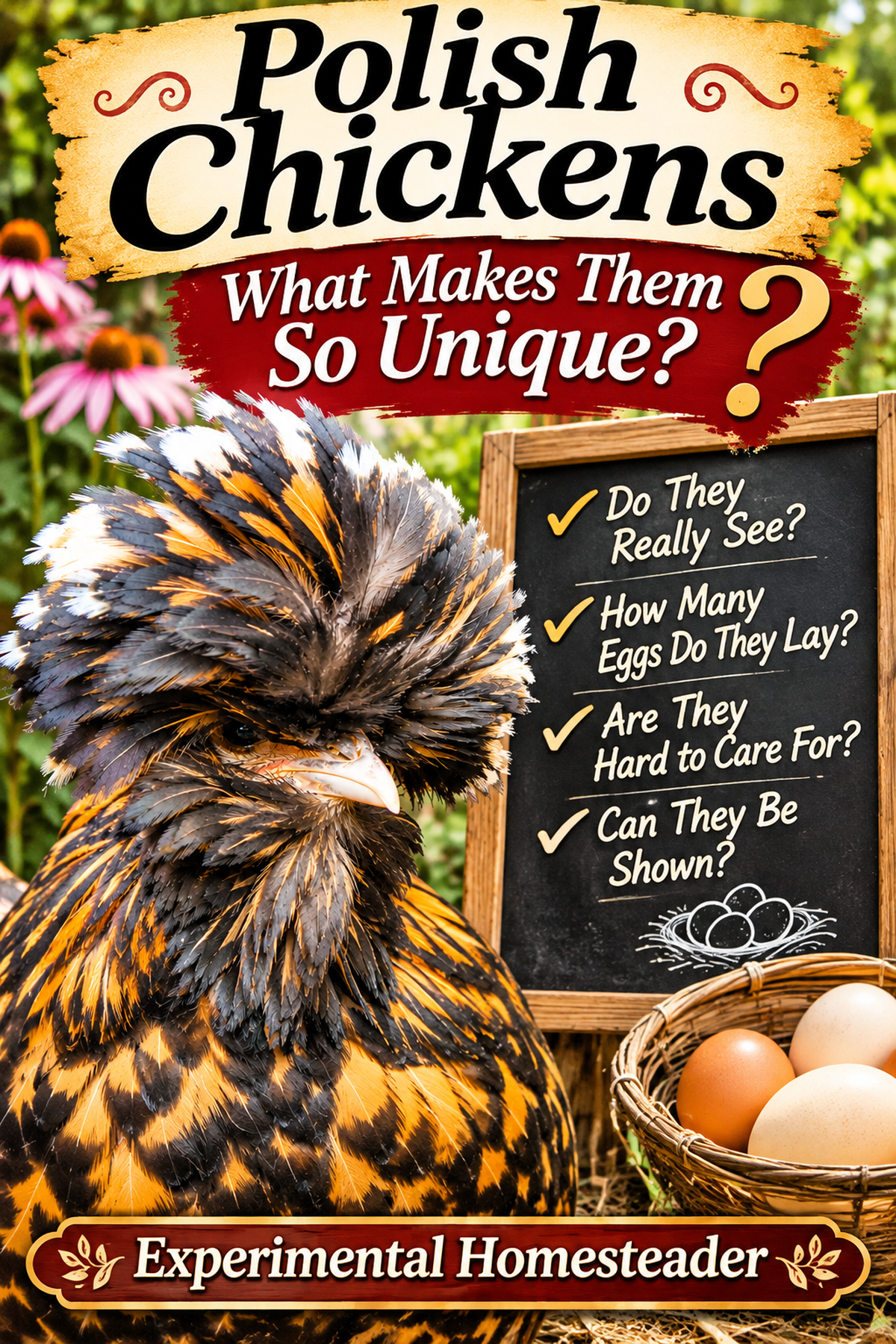
Can Polish chickens really see through their crests?
They can see, but heavy feathers hanging over the eyes may reduce their field of vision. Watch whether a bird can find feed and water, navigate the coop, and respond to movement around it. A careful trim of obstructing mature feathers can help, but avoid the eyes and never cut growing blood feathers. A crest that looks dramatic in a photograph is not, by itself, proof that the bird cannot see.
How many eggs do Polish chickens lay?
There is no guaranteed number for every Polish hen. You'll see estimates in breed descriptions, but actual production depends on the bird's age, line, nutrition, daylight, molt, and health. Expect white eggs and generally more modest production than from specialized commercial laying breeds. Standard and bantam birds also differ in egg size. If egg numbers matter to you, keep a dated record for your own hens rather than relying on an advertised annual figure.
Are Polish chickens hard to care for?
The basic feeding, housing, and health routines are similar to those for other backyard chickens. The extra work is paying attention to crest cleanliness, visibility, flock bullying, and predator protection. They are manageable for a careful beginner, but not necessarily the best choice for someone wanting a low-maintenance, high-production laying flock.
Can Polish chickens be shown at poultry exhibitions?
Yes. Polish chickens are a recognized exhibition breed, with standards that vary by variety and the organization hosting the show. A show prospect needs more than a striking crest: condition, body type, feather quality, and conformity to the current standard all matter. Check the show's rules before entering, and remember that exhibition grooming requirements may differ from practical backyard crest trimming.
Why choose Polish chickens instead of a production breed?
For many people, the appeal is their distinctive appearance and the pleasure of watching their behavior. If your priority is large numbers of eggs, compare them with breeds selected for laying. If you enjoy ornamental poultry and are prepared for a little extra crest care, Polish chickens can be a memorable part of a mixed flock.
Where Do Polish Chickens Come From, and Why Do They Have Crests?
Despite their name, the precise origins of Polish chickens are uncertain. Crested chickens have a long history in Europe, and the breed was developed and exhibited over generations for its striking appearance. It is better to describe their history as complex than to assume they originated in modern-day Poland simply because of the name.
Their distinctive head feathers grow over a prominent area of the skull associated with crested breeds. The feathers themselves are not a separate hat or growth: they are part of the bird's plumage. This is why a large crest can be both the breed's most recognizable feature and the reason a keeper needs to check visibility and grooming.
Color terms describe patterns, not just a single shade. In a laced variety, individual feathers have a contrasting edge that gives the plumage its patterned appearance. Golden-laced birds combine warm golden coloring with dark edging; silver-laced birds create a contrasting black-and-silver effect; and buff-laced birds have softer, warmer tones. White-crested black birds are especially striking because the pale head feathers contrast with a predominantly dark body. The exact appearance changes with age, sex, and feather condition, so compare mature birds rather than judging a young chick from one photograph.
Bearded Polish chickens have additional facial feathering, while non-bearded birds leave more of the face visible. Frizzled feathering produces outward-curling feathers and requires its own care considerations, especially for weather exposure and feather damage. When buying birds, ask the breeder what variety the parents are, whether the chicks are standard-sized or bantams, and whether the line is intended for exhibition or backyard enjoyment. For showing, always consult the current recognized variety list instead of assuming every attractive color combination is eligible.
If you're comparing birds at a farm store or from online photographs, ask to see the parents whenever possible. A chick's down color, the way its crest grows in, and its adult feather pattern can all change as it matures. A photograph of a black-and-white Polish chicken is a helpful example of the breed's range, but it should not be used to assign a precise exhibition variety without checking the bird's complete feather pattern and other identifying traits.
Polish Chicken Colors and Varieties
Polish chickens come in several striking color patterns, including golden laced, silver laced, buff laced, and white-crested black. Some have beards and muffs around the face; others are non-bearded. You may also encounter frizzled birds, whose feathers curl outward, but frizzled feathering is a feather characteristic rather than a color. The varieties accepted for exhibition depend on the current standard and show organization, so verify the specific variety before advertising or entering a bird as show quality.
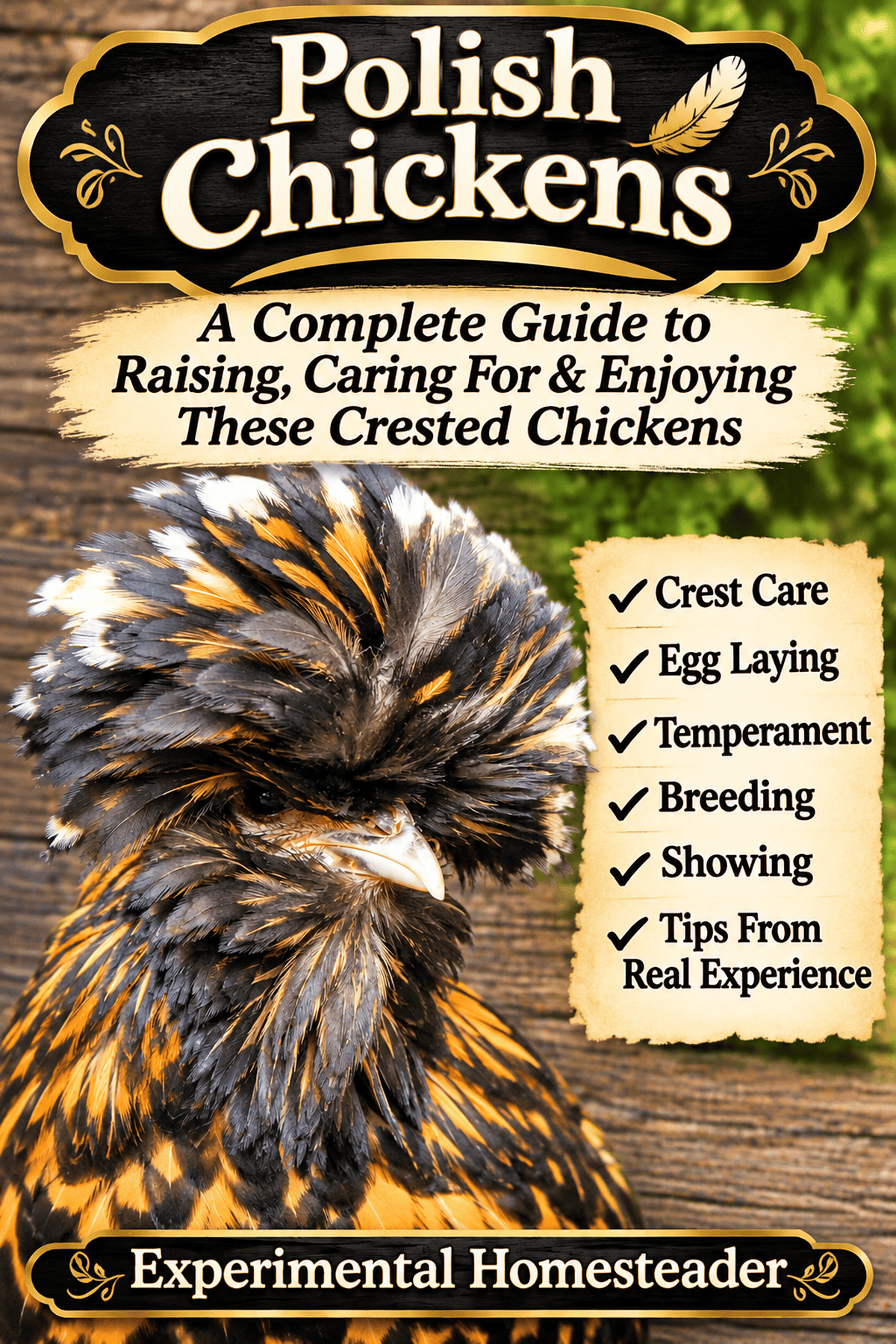
Color photographs are useful for comparison, but lighting, age, and individual feather patterns can make identification tricky. Chicken T's black-and-gold feathering and elaborate crest are shown in my own photographs. If you're identifying another bird, compare its whole body, feather pattern, crest, comb, and other breed characteristics rather than relying on the head feathers alone.
Polish Rooster vs. Hen: How Can You Tell?
Young Polish chickens can be difficult to sex by appearance. A rounded, tidy-looking crest is sometimes associated with pullets, while a looser, more pointed crest may develop on cockerels, but crest shape alone is not a dependable test. As birds mature, look for a combination of clues: pointed saddle and hackle feathers in males, developing sickle feathers in the tail, comb and wattle development, and eventual crowing or egg laying. No single early behavior or feather pattern guarantees the answer.
If you're buying chicks, ask the seller whether they are straight-run or sexed and what guarantee, if any, applies. Keep hatch dates and individual photographs so you can compare changes as the birds grow. That is especially helpful if you're planning a breeding pen or live where roosters are restricted.
How Long Do Polish Chickens Live?
With good care, a backyard Polish chicken may live for several years; some keepers report birds reaching roughly five to eight years or longer, but there is no guaranteed lifespan. Genetics, predators, disease, nutrition, housing, and veterinary care all matter. A hen may continue living long after her most productive laying years, so think about long-term care as well as eggs when adding ornamental birds to your flock.
My Polish chickens were part of a much larger flock, and I observed that they tended to remain closer to the chicken coop when I let everyone range during the day. That was their behavior in my setting, not a guarantee that every Polish chicken will stay near home. If you plan to let yours range, first teach them where the coop, food, and water are located. Watch how confidently they navigate the yard and how quickly they respond when the flock becomes alarmed. Be prepared to use a protected run if a bird cannot detect hazards in time.
Pay attention to the entire social arrangement, not simply whether two breeds are considered compatible on paper. A crest can attract curious pecks, and timid birds may be excluded from a favored roost or feeder. Watch for missing crest feathers, small wounds, repeated chasing, or a bird waiting until everyone else has eaten. Give birds escape routes and several feeding areas, and intervene early if one chicken is being singled out. Always lock the flock in secure housing at night; daytime free-ranging does not replace predator protection.
Can Polish Chickens Free-Range or Live With Other Breeds?
They can share space with other chickens, and some keepers allow them to range, but both situations require observation. A large crest may block a bird's view of hawks, dogs, obstacles, or approaching flockmates. A secure covered run is the more protective option, especially where predators are common. If you do allow supervised ranging, provide nearby cover and a reliable way to bring the flock back inside.
In mixed flocks, watch for feather pecking around the crest and for timid birds being pushed away from food or roosts. Introduce new birds gradually, offer more than one feeder and waterer, and separate an injured or persistently bullied bird. Compatibility depends on the individual chickens, not just the breed names.
When Do Polish Hens Start Laying?
Many pullets begin laying somewhere around five to seven months of age, although individual Polish hens may start earlier or later. Breed line, season, daylight, nutrition, and health all influence the timing. Their eggs are generally white, and Polish chickens are usually chosen for their appearance rather than commercial-level production. Record the first egg from each hen, then note changes in size and frequency as she matures.
How Do You Check a Polish Chicken's Crest for Lice and Mites?
During routine handling, gently part the feathers around the crest and behind the head to inspect the skin and feather bases. Look for moving parasites, clusters of eggs attached to feather shafts, irritation, crusting, or excessive scratching. Also inspect the vent area and under the wings because external parasites are not confined to the crest. If you suspect an infestation, identify the problem and use a poultry-appropriate treatment according to its label and any egg or meat withdrawal requirements. Clean and inspect housing as part of the response; treating the bird without addressing the environment may not solve the problem.
A Practical Polish Chicken Care Checklist
When you're deciding whether this breed belongs in your chicken garden, I would start with what you can realistically do every day. Polish chickens are not impossible to raise, and they certainly don't need to be treated like fragile ornaments. But those magnificent crests mean you need to notice things that might be less obvious with another breed. A little regular attention can prevent a small inconvenience from becoming a serious problem.
- Every morning: Check that each bird can find its food and water, walks normally, and has clear, dry feathers around its eyes.
- During the day: Watch for crest pecking, chasing, or a timid chicken being pushed away from the feeder. Keep water fresh and provide shade or shelter as weather requires.
- Every evening: Count the flock, check for stragglers, secure the coop, and look for signs of predators trying to enter.
- Each week: Examine crests, skin, feet, and body condition; refresh bedding and inspect the coop for dampness and parasites.
- Seasonally: Review winter moisture and frozen-water risks, summer heat and ventilation, molting, laying changes, and the condition of fencing and roofed runs.
- Whenever something changes: Write down the date, symptoms, feed changes, eggs laid, or treatments. Small records become surprisingly valuable over the years.
Before bringing home chicks, also ask yourself a few honest questions. Do you have a secure place for them when you're away? Can you separate a bullied bird if necessary? Are you comfortable with a breed that may lay fewer eggs than a production hen? And do you want to raise birds for their appearance and personality as much as for what they produce? Those answers will tell you more about whether Polish chickens are right for you than any photograph ever could.

A Polish Chicken Care Printable for Yearly Members
Would you like a printable checklist to keep with your poultry records? I created a seven-page Polish Chicken Care Checklist & Flock Health Tracker with daily and weekly care reminders, seasonal checks, individual bird records, and egg and breeding trackers. This printable is not for sale separately. It is included as a benefit of the Experimental Homesteader yearly membership, along with our other member resources. If you are already a member, sign in to your membership area to explore the resource library.
Are Polish Chickens Right for Your Homestead?
Polish chickens are a wonderful choice if you enjoy unusual, expressive birds and are willing to pay attention to crest visibility and flock dynamics. They may be less practical if your only goal is maximum egg production or you cannot provide a protected area for birds with limited vision. For me, their personalities and those remarkable feathered hats made them unforgettable.
Chicken T was the last of the Polish breed that I owned. I originally found these chicks at our local Tractor Supply among the chicks they get in every spring. They never received another batch of Polish chicks that I was aware of and thus I have not raised them for a number of years. I miss watching the regal, whimsical Polish chickens run around in the chicken garden. I enjoyed them more than any other breed I have had and hope someday to add more Polish chickens to my flock.