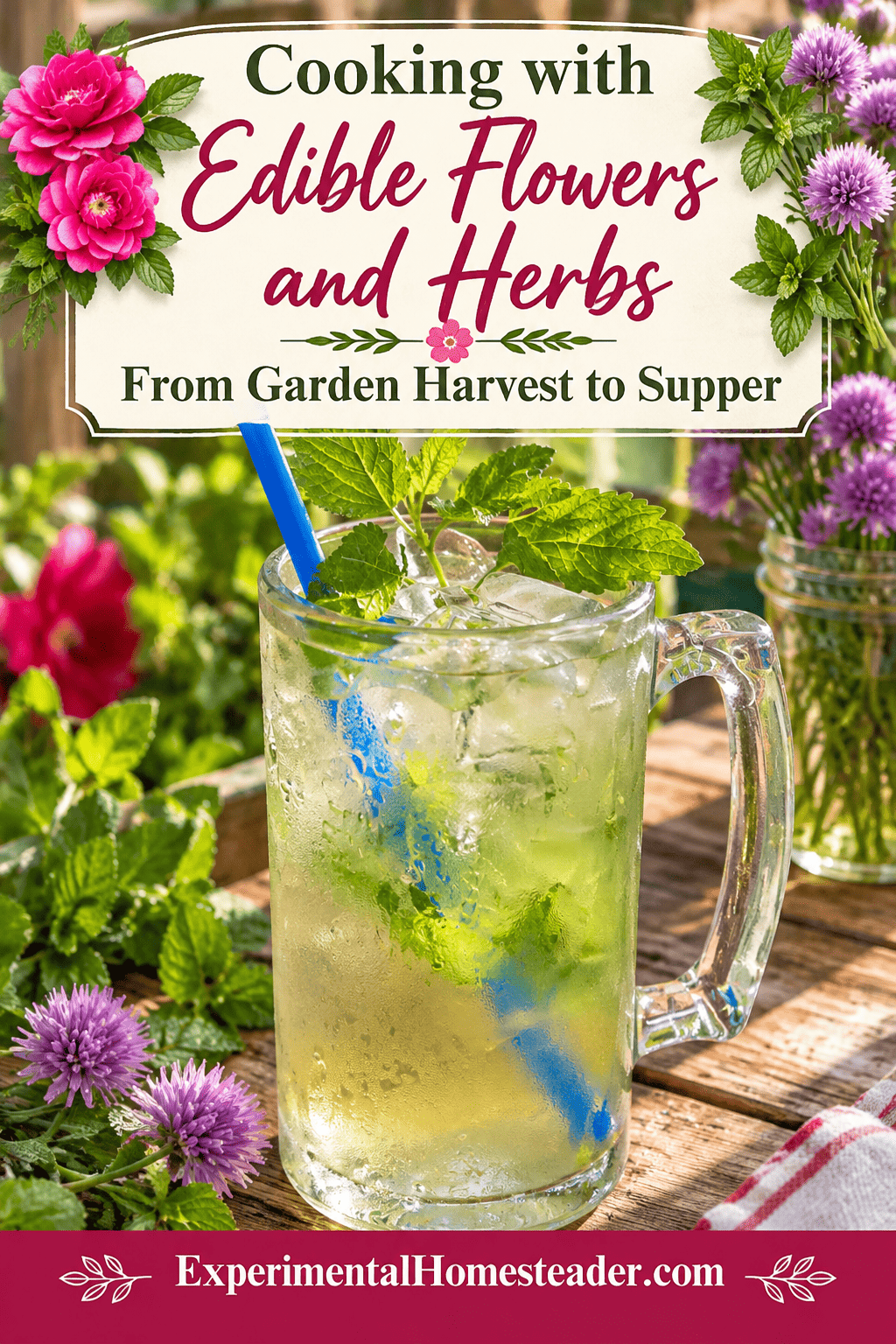
Cooking with Edible Flowers and Herbs: From Garden Harvest to Supper
There is something satisfying about walking outside to pick the last ingredient for supper. Sometimes that means a handful of thyme for a roast, a sprig of rosemary for potatoes or chives to finish a bowl of mashed potatoes. Other times it means picking a few nasturtiums or chive blossoms and discovering that the flowers growing beside your vegetables have a place in the kitchen, too.
I don't want you to think edible flowers are only for decorating fancy cakes. I want you to know what they taste like, what foods they belong with and how to put them to work in meals you actually cook. A good place to begin is with supper, complete with meat, potatoes, gravy, vegetables and dessert.
In This Article
Start with Flavor, Not Color
If this is your first time cooking with flowers, set out three little plates before you begin. Put a few clean nasturtium petals on one, some separated chive florets on another and a familiar herb such as parsley on the third. Taste each food-safe ingredient separately and think about what it reminds you of.
Would you put it on a baked potato? Would you want it in a salad? Does it belong anywhere near dessert?
You are building your own kitchen vocabulary, and that is far more useful than memorizing a long list of flowers. Keep a notebook nearby and jot down what you liked. Next season, those notes will help you decide what deserves more room in the garden.
A flower may look beautiful on a plate and still be the wrong choice for the food. Nasturtiums have a lively peppery taste that makes sense alongside roast beef, sandwiches and savory salads. Chive blossoms bring an onion-like bite to potatoes, butter and creamy spreads. Rose petals are fragrant and often work better with fruit and sweets. Lavender is strong enough to take over a dessert when you use too much.
Taste a small amount of a positively identified, food-safe flower on its own before deciding where it belongs. Pay attention to whether the flavor is peppery, sweet, bitter, oniony or perfumed. The goal is not to add flowers to everything. The goal is to choose an ingredient that makes an already good dish more interesting.
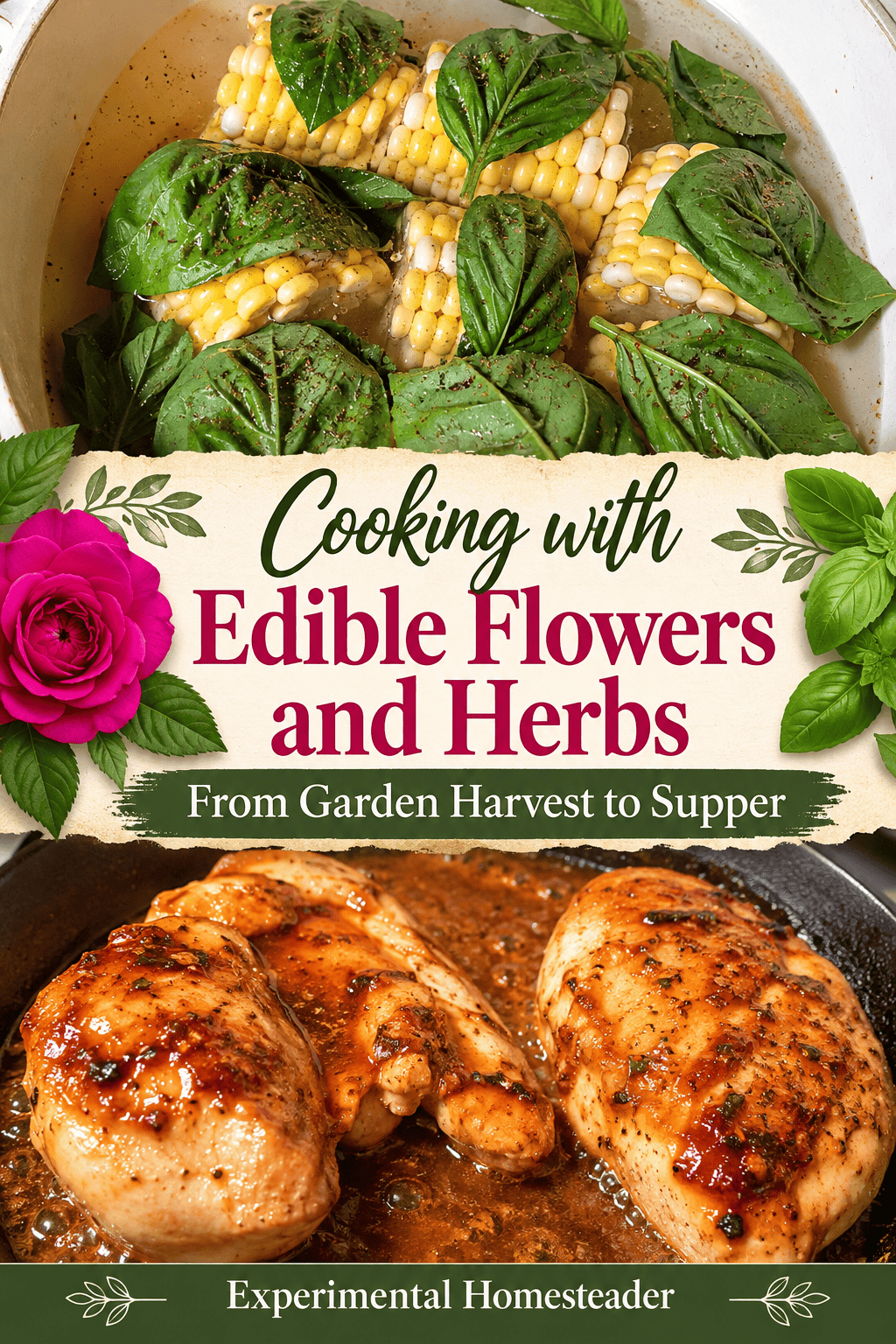
A Roast Chicken Supper with Herbs and Edible Flowers
For a whole chicken, begin with about a tablespoon of softened butter or oil and one or two teaspoons of chopped garden herbs, adjusting the seasoning to the bird and your family's taste. If you prefer boneless cuts for a weeknight meal, my oven chicken breast recipe offers another practical starting point for cooking with herbs.
If you have never roasted chicken, place it in a roasting pan, keep raw chicken juices away from your washed flowers and ready-to-eat foods, and use a thermometer rather than judging doneness by the color of the skin.
While it rests, pull apart one clean chive blossom and sprinkle a few florets over a small serving first. Taste that bite. If you like the flavor, add a little more to the serving platter. That is a much friendlier first experiment than committing a whole roast to an unfamiliar ingredient.
Chicken is one of the easiest places to begin because it works with so many garden herbs. Pat the chicken dry, season it with salt and pepper, and rub it with a little oil or softened butter. Add chopped thyme, rosemary and sage, using more thyme than rosemary if you prefer a gentler flavor. Roast the chicken using your usual method until the thickest part reaches 165°F on a food thermometer.
Let it rest before carving so the juices stay in the meat. Don't put delicate petals in the roasting pan at the beginning; they won't keep their fresh appearance or texture through a long roast. Instead, sprinkle a few clean, separated chive-blossom florets over the finished chicken or serving platter. They contribute a mild onion note without competing with the herbs that seasoned the meat.
Potatoes, Gravy and the Vegetables That Make It Supper
For a small batch of gravy, heat two tablespoons of chicken drippings or butter with two tablespoons of flour over medium heat. Stir for a minute or two, then gradually whisk in about one cup of broth until smooth.
Keep stirring as it thickens; add more broth if you prefer a thinner gravy. Taste it before seasoning because the drippings and broth may already be salty. If lumps appear, keep whisking or strain the gravy before serving. Meanwhile, give beginners an easy flower job: pull apart a chive blossom and sprinkle the tiny florets over one bowl of mashed potatoes. This lets everyone try the flavor without changing the whole batch.
For vegetables, don't overlook what you already know how to prepare. Buttered green beans with parsley, carrots roasted with thyme or steamed broccoli finished with a spoonful of chive butter all fit this meal. The flower does not need to appear in every dish. In fact, giving it one thoughtful place on the plate makes it easier to appreciate.
While the chicken cooks, cut potatoes into evenly sized pieces. For roasted potatoes, toss them with oil, salt, pepper and a little chopped rosemary or thyme, then spread them in one layer so they brown rather than steam. For mashed potatoes, cook until fork-tender, drain well, mash with warm milk and butter, and finish with chopped chives. Chive blossoms are especially nice here: pull the tiny florets apart and scatter them over the hot potatoes just before carrying the bowl to the table.
For gravy, use the chicken drippings with excess fat skimmed off, add flour to the measured fat to make a smooth roux, and gradually whisk in broth until it reaches the consistency you like. Taste before adding more salt. A little finely chopped sage or thyme can reinforce the flavors of the roast, but there is no need to add flower petals to the gravy simply because this is an edible-flower meal. Roast carrots alongside the potatoes, or steam green beans and finish them with butter and parsley. Now you have an entire supper where the flowers and herbs each have a sensible job.
Turn Your Edible Flowers Into Something Delicious
Growing edible flowers is just the beginning! Discover ways to bring those beautiful blooms into your kitchen with my Spicing Up Your Food With Edible Flowers Quick Guide.
Get the Edible Flowers Quick GuideBeef, Pork and Other Savory Main Dishes
Edible flowers can work just as well with beef and pork, although the choice of flower matters. For beef, a rosemary-and-thyme seasoning works beautifully with a roast or pan-seared steak. Serve the meat with garlic mashed potatoes and a peppery nasturtium salad on the side. The nasturtiums provide contrast to the richness of the meat rather than becoming a strange ingredient in the pan sauce.
For pork, sage is a natural starting point. Season pork chops with sage, thyme, salt and pepper, cook them thoroughly to a safe internal temperature of 145°F followed by a three-minute rest, and serve with pan gravy, potatoes and a vegetable.
If you want a floral element, use a modest amount of chive blossom in a side dish or herb butter. You don't need to reinvent the entire recipe to make use of what is blooming in the garden.
A Pot of Soup That Uses the Harvest Well
For a beginner-friendly pot, use about four cups of broth, two cups of diced cooked meat, two medium potatoes, a carrot and half an onion. Soften the onion and carrot first, add the broth and potatoes, then simmer until the potatoes are tender.
Stir in the already-cooked meat long enough to heat it thoroughly. Begin with about half a teaspoon of dried thyme or a teaspoon of chopped fresh thyme, taste the broth and add more only if it needs it. If you are using rosemary, start with a small pinch because it can dominate the pot. Add parsley just before serving.
Spoon a little soup into a bowl, top it with a few chive florets and see what you think before decorating everyone's supper.
Sturdy herbs can go in early because they have time to season the broth; tender parsley and basil are best stirred in near the end when you want a fresh aroma. Remove woody stems before serving.
Flowers are generally better used as a last-minute accent, if they suit the soup at all. A scattering of chive florets on a creamy potato soup makes more sense than boiling rose petals with beef and carrots. Think about what the finished bowl needs before you reach for another blossom.
Salads, Herb Butter and Simple Side Dishes
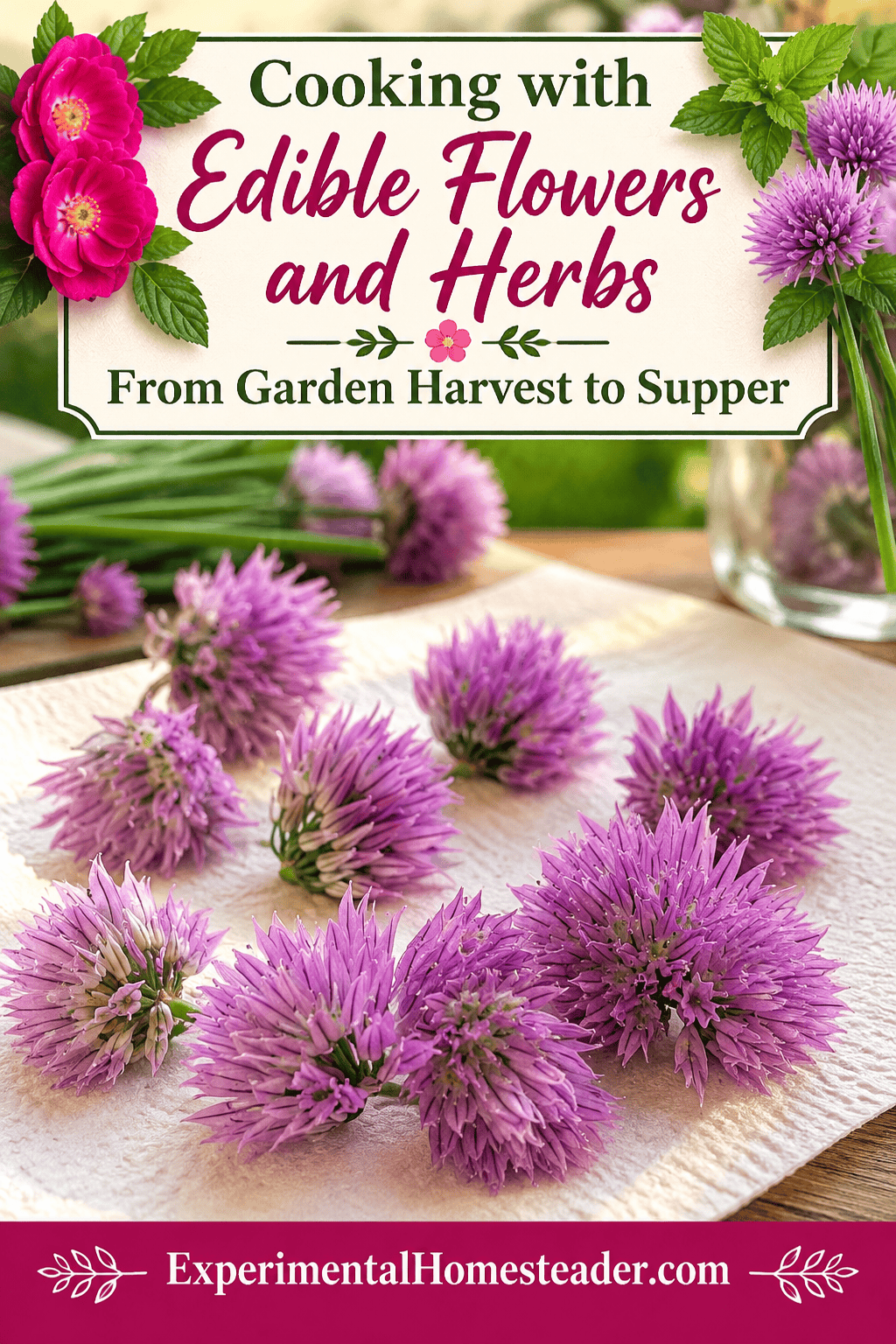
Let's make a small batch of chive-blossom butter. Soften four tablespoons of butter until it can be stirred easily, then mix in a teaspoon of finely chopped chives and a small pinch of clean, dry chive florets.
Taste a little on warm bread before deciding whether it needs more chives. My rosemary peppercorn bread is another way to bring savory garden herbs to the table. If you have nasturtiums growing, try my nasturtium butter recipe for a peppery, edible-flower variation. Refrigerate the herb butter promptly and use it within a few days, keeping it cold between servings. You can make a similar spread with cream cheese, or add the chopped chives to fresh goat cheese.
For a simple edible-flower salad, begin with a handful of greens and only two or three blossoms rather than an entire bowl of flowers. A little goes a long way, and you can always add more next time.
Another easy side is fresh goat cheese or cream cheese mixed with chives and parsley, with a few suitable edible petals scattered on top immediately before serving. These small additions make the harvest useful without creating another complicated project.
Dessert Belongs on the Menu Too
For an easy first floral dessert, slice a ripe peach or a few strawberries into individual dishes and top them with a spoonful of whipped cream. Add just a few tiny pieces of clean, fragrant rose petal to one serving and taste it before offering the combination to others. You might find that the fruit needs nothing else, or you may decide the petals make it special. If you prefer lavender, use culinary lavender in a recipe designed for its concentrated flavor rather than shaking it freely over the dessert. For more ways to bake with floral flavors, see my lavender bread recipe and vanilla-lavender grape gummy bears.
The trick is to let the fruit remain the star. This is also a lovely way to experiment with different rose varieties from your own food-safe garden and learn how much their fragrances vary.
After a savory supper, dessert is where a gentler floral flavor can shine. Try serving sliced peaches with a small amount of culinary lavender, or add a few fragrant, food-safe rose petals to a fruit dessert where their flavor belongs. Start sparingly and taste before adding more. Lavender can turn a sweet dish unpleasantly perfumed when it is used with a heavy hand, and rose petals vary in intensity from one variety to another.
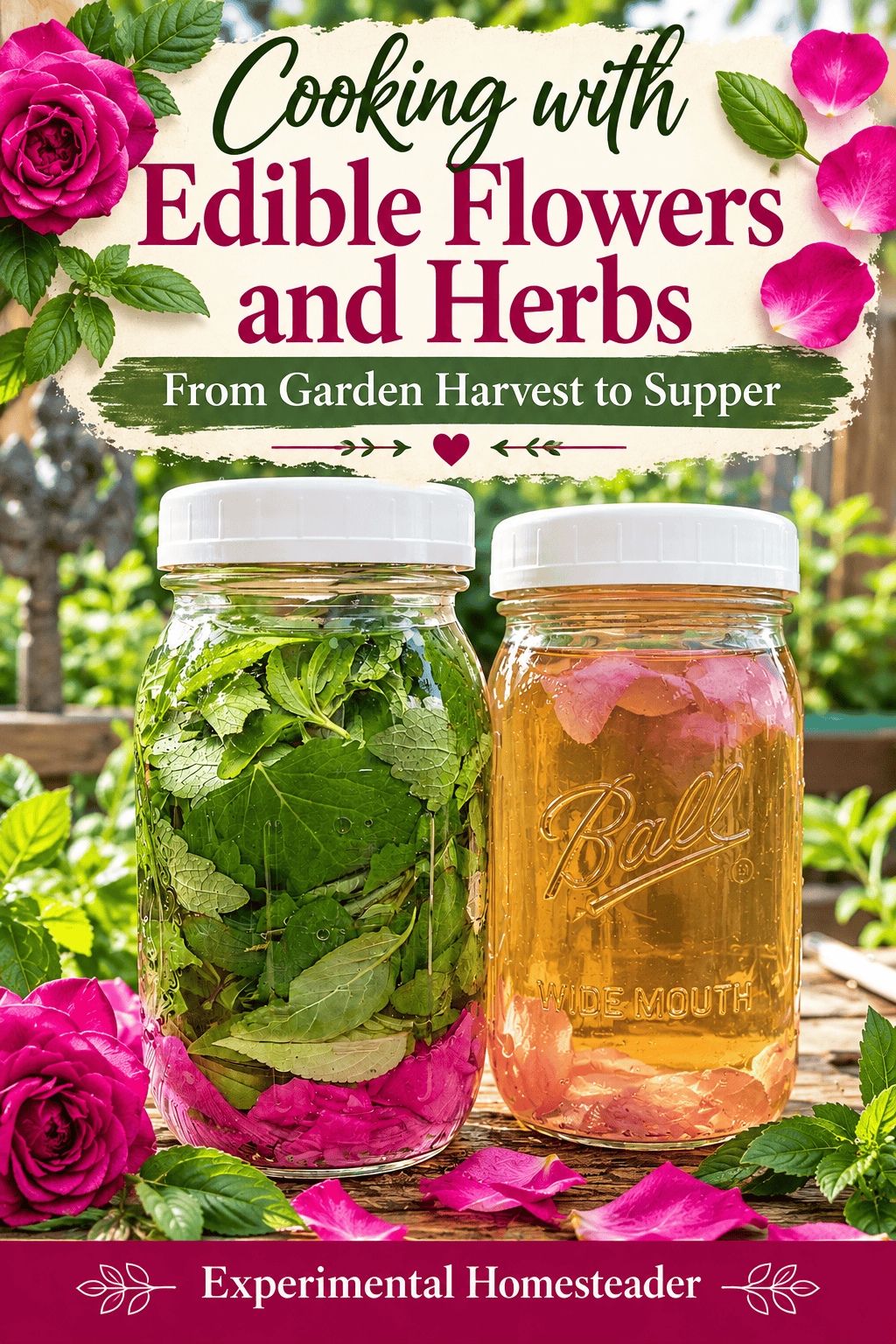
For an easy presentation, garnish a finished cake or bowl of fruit with clean edible petals immediately before serving. If you are making a syrup, jelly or shelf-stable preserve, use a tested recipe rather than improvising the proportions. My rose petal jelly recipe is a good place to explore preserving the fragrance of roses. My caramelized peaches with lavender offer another way to explore floral flavor without letting it overwhelm the dessert.
Fresh herbs and edible flowers are useful beyond the dinner plate. For ideas on choosing, preparing and enjoying herbs in a cup, visit my herbal tea guide. It is a natural companion to the garden harvest and a good way to explore another use for fragrant herbs.
Who Can Enjoy Edible Flowers and Which Ones Should Beginners Try?
If you are starting a culinary flower garden from scratch, you do not need dozens of varieties. One pot of nasturtiums and a clump of chives can teach you a great deal about how flowers fit into everyday food. Start by learning the plant's identity, which parts are edible, how to harvest them and how the flavor changes as the blossoms mature.
Keep culinary flowers separate from plants grown only for ornament, and explain the difference to children or anyone else helping with the harvest. For guests who have never eaten flowers, a small optional garnish is a kinder introduction than mixing unfamiliar blossoms throughout the main dish.
Anyone with plant or pollen allergies may need to avoid particular flowers. When serving guests, tell them what you have added, and keep a flower-free portion available. Children should never be encouraged to pick and taste unidentified garden blossoms. Edible does not mean every part of a plant is edible, and a common name alone is not enough to establish safety.
When, Where and How to Harvest for Cooking
Make harvesting part of your supper routine rather than an extra chore. Before you begin cooking, walk through the garden with a small clean bowl and decide what the meal actually needs. If you are making mashed potatoes, look for chive blossoms. If salad is on the menu, see whether you have a few fresh nasturtiums.
Pick only what you plan to use, bring it inside and prepare it away from raw meat and dirty garden tools. If a blossom is bruised, infested or past its best, leave it out. A handful of carefully chosen flowers is more valuable in the kitchen than a basket full of blossoms you cannot identify or use.
Florist flowers, roadside plants and ornamentals treated with unsuitable chemicals do not belong in the kitchen. Once indoors, inspect the blossoms for insects and damaged parts, gently clean them as appropriate, and let surface moisture dry before using them in butter, spreads or salads.
Separate the edible portion from any parts you should not serve. Keep the prepared flowers cool until you are ready to use them, and add delicate blossoms at the end of cooking whenever you want their fresh flavor and appearance.
What to Do with the Flowers You Cannot Use Today
Before drying a large harvest, ask yourself how you plan to cook with it later. Thyme and rosemary are easy to imagine in winter soups, roasted potatoes and meat rubs. Dried edible petals require a little more thought: perhaps you have a specific tea blend, seasoning mixture or dessert recipe in mind.
Dry only correctly identified edible parts, and follow a method suitable for each plant. Check for complete dryness before storing, and see my step-by-step guide to drying edible flowers and herbs for recommended dehydrator temperatures, approximate drying times and storage advice. If you are not sure what to do with a particular flower, it is perfectly fine to enjoy it fresh this season and experiment with preservation after you have a recipe worth repeating.
Everything must be thoroughly dry before it goes into a storage jar. Dried herbs can become seasoning blends for roasts, soups and vegetables, while dried edible flowers may be useful in carefully chosen culinary mixtures. Label the contents and date rather than relying on memory months later.
Troubleshooting: When a Floral Dish Does Not Taste Right
One of the best habits a new cook can develop is changing just one ingredient at a time. If you add lavender, rose, mint and lemon balm to a dessert all at once, it can be difficult to tell which flavor you enjoy and which one is too strong. Begin with one flower and a familiar base recipe.
Write down approximately how much you used, when you added it and what happened to the flavor and appearance. The next time, adjust one thing. Cooking with edible flowers is not a test you pass or fail. It is a practical skill you develop with a few small experiments, just as you would with any unfamiliar herb or spice.
If a dish tastes too peppery, use fewer nasturtiums next time and pair them with milder greens or a richer food. If the flavor is too floral, reduce the rose or lavender instead of trying to cover it with extra sugar. If petals turn limp in a salad, dry the greens more thoroughly and add the blossoms after dressing. If fresh herbs seem to disappear into a long-cooked dish, save a portion to add at the end.
And if a flower tastes bitter or unfamiliar, stop and reconsider whether it is an appropriate ingredient for that particular dish. Never taste a plant you cannot identify positively. Good cooking is about making thoughtful adjustments, not using up every flower just because it is available.
Frequently Asked Questions About Cooking with Edible Flowers
Can I cook edible flowers in the oven?
Some edible flowers can be incorporated into baked dishes, but delicate blossoms often lose their color and texture under prolonged heat. Use fresh petals as a finishing touch when appearance matters, and choose a recipe suited to the flower when you want its flavor baked in.
Do edible flowers taste like they smell?
Sometimes, but not always. The flavor depends on the species, variety and growing conditions. Taste a small amount of a safely identified edible flower before adding it to a recipe.
Can I use flowers from a florist?
No. Unless flowers were specifically grown and sold for culinary use, you cannot assume they are suitable for eating.
Should flowers go into gravy?
Usually, herbs are the more useful seasoning for gravy. Thyme and sage can complement a roast and its pan juices, while delicate flowers are often better reserved for potatoes, salads or a finishing garnish.
Can I prepare a flower garnish ahead of time?
Yes, for a short period. Keep clean blossoms cool and protected from moisture and crushing, then arrange them on the food immediately before serving.
Bring the Garden into Your Next Supper
If you want to keep exploring, my edible flowers in fall recipes and homemade gifts article offers more seasonal ideas, and my home food preservation guide explains additional ways to save the harvest. You do not have to start with a fancy menu. Make the chicken, roast the potatoes, stir the gravy and put vegetables on the table the way you normally would. Then look at what is growing outside and decide whether a little thyme, sage, chive blossom or nasturtium would make one part of the meal better. For more ideas for drinks, frozen treats, candy and desserts, see my different ways to use edible flowers in food, drinks and desserts. That is how edible flowers become useful kitchen ingredients instead of a novelty you try once. Which edible flowers have you cooked with, and what would you like to try next? I'd love to hear what has worked in your kitchen.