Edible Flower Safety: Identification, Allergies, Harvesting and Preparation
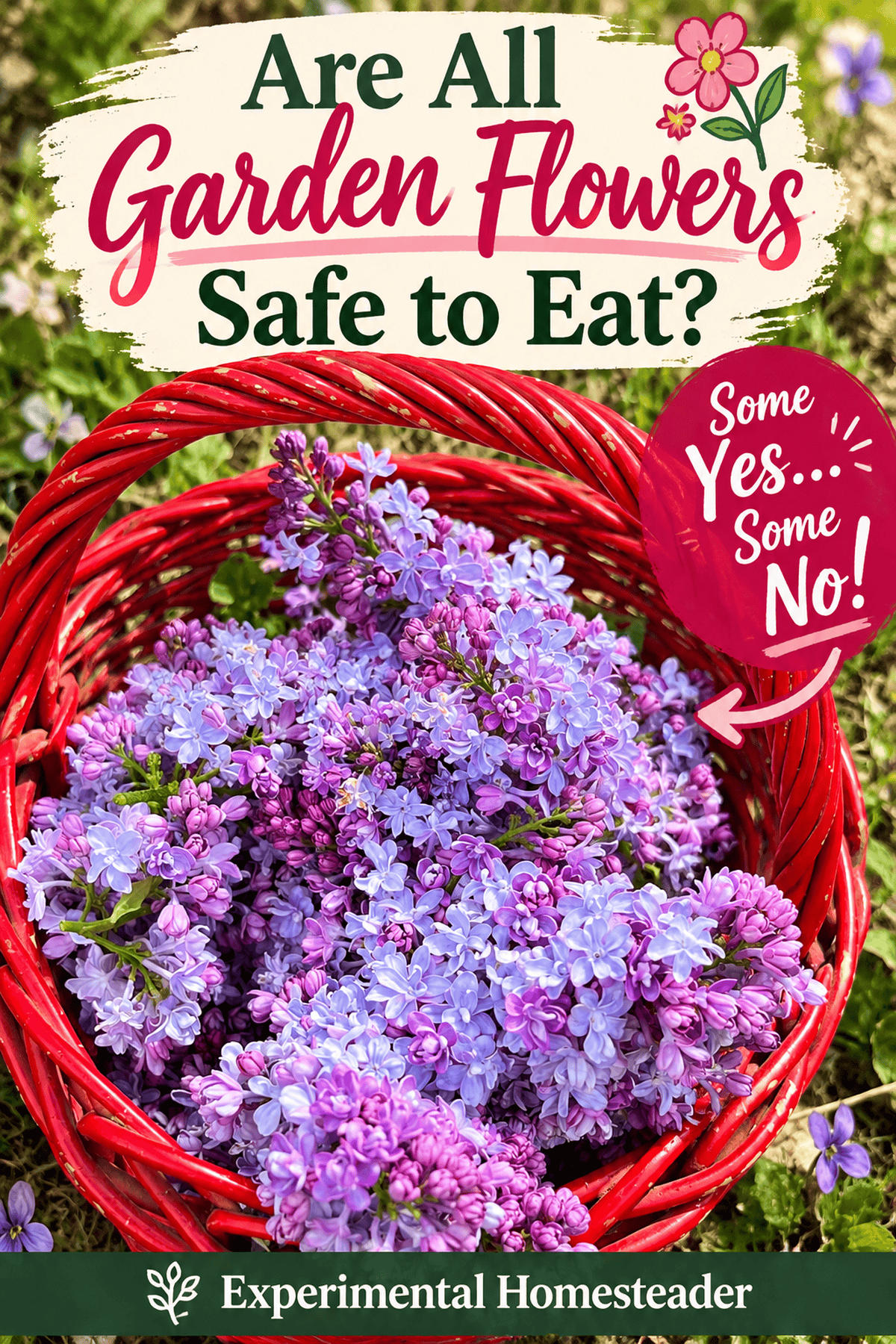
Imagine carrying a bowl of freshly picked flowers into the kitchen, ready to scatter colorful petals over a salad or decorate a dessert. It is one of the pleasures of growing food and flowers together. But before those blossoms reach the plate, there is an important question: are you absolutely sure every flower in that bowl is safe to eat?
Some familiar garden plants have poisonous look-alikes, some contain edible and inedible parts, and even correctly identified edible flowers can cause trouble for someone with an allergy. A flower growing next to your vegetables is not automatically food. In this guide, I'll walk you through how to identify flowers confidently, choose safe growing and harvesting conditions, prepare them for the kitchen and recognize when it is better to leave a blossom in the garden.
In This Article
Who Needs to Be Especially Careful with Edible Flowers?
Before making a beautiful salad or dessert for company, think about who will be sitting at the table. A flower that you enjoy may not be appropriate for a guest with a plant allergy or someone who has never eaten that ingredient. I would rather tell guests exactly which flowers are in a dish and offer a plain serving than surprise someone with an unfamiliar garnish. When children are helping in the garden, make it clear that picking a pretty flower does not mean it is something they should taste.
Anyone with known plant or pollen allergies should approach edible flowers cautiously and avoid flowers related to their known allergens unless a qualified clinician has advised otherwise. People with a history of severe allergic reactions should not experiment casually with unfamiliar blossoms. Stop eating a food that causes symptoms; difficulty breathing or swelling of the tongue or throat requires emergency care.
Young children should be supervised and taught that only specific, correctly identified flowers prepared by an adult are food. Pregnant or breastfeeding people and those taking medications or managing medical conditions should distinguish occasional culinary use from medicinal teas, extracts and concentrated preparations, which may have additional risks.
What Makes a Flower Safe to Eat?
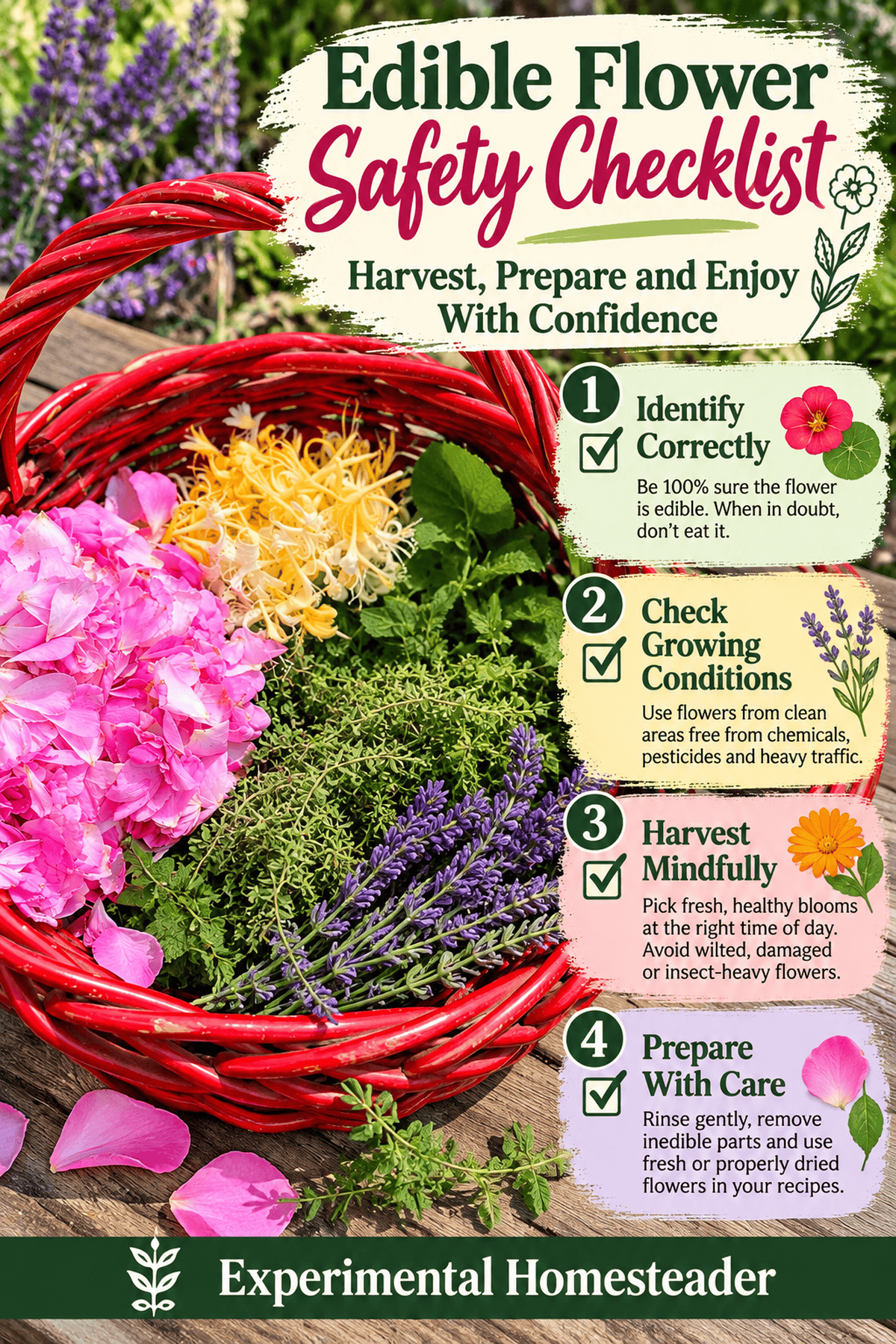
Here is how I would approach a new flower in the garden. First, find the plant label or seed packet and confirm its identity. Next, check which part is used as food. Then think back over how it has been grown, including any sprays or treatments used nearby. Finally, consider how you plan to prepare and serve it. If you cannot answer one of those questions, put that flower back in the garden and choose an ingredient you know. There is no reason to gamble with dinner.
A flower is suitable for the kitchen only when its species is positively identified, the specific plant part is known to be edible, and the plant has been grown and handled in a way appropriate for food. Those are separate requirements. Correct identification alone does not tell you whether the plant has been sprayed.
Do not rely on color, fragrance or a casual online photo match. Use a reliable reference with the botanical name and identifying characteristics, and compare more than one feature before harvesting. If any doubt remains, leave the flower out of the meal.
Why Botanical Names Matter
Let's make the labeling practical. When you sow edible flowers, write the botanical name on a weatherproof plant marker and keep the seed packet in your garden records. When you harvest, put a matching label beside the bowl or basket before you begin removing petals. If you grow several similar-looking varieties, process them one at a time. This habit prevents the uncertainty that can arise when you carry an unlabeled mixture into the kitchen and try to remember which plant came from which bed.
When I save seeds or pass plants along, I want the next gardener to know exactly what they are growing. Keep the botanical name with the seed packet, garden notes or container label. If a friend offers you an unnamed flowering plant and says it is edible, ask for the identification before using it in the kitchen. The extra moment it takes to check a name is much easier than trying to identify a bowl of loose petals after harvest.
Common names can refer to different plants, sometimes with very different safety profiles. The nasturtiums commonly eaten in salads belong to the genus Tropaeolum, while watercress is sometimes called nasturtium in botanical naming contexts. Similar-sounding names do not make plants interchangeable.
Keep seed packets and plant labels so you can confirm the exact species and variety. When sharing flowers or seedlings with someone else, pass along the name rather than simply calling them 'edible flowers.'
Nasturtiums are a useful example of why it matters to identify the plant and understand which parts are edible. My guide to eating nasturtium flowers and leaves explains how I use them in the kitchen after proper identification and harvesting.
Which Parts of a Plant Can Be Eaten?
Let's say you want to decorate a cake with flowers. Before picking the whole blossom, check whether the petals alone are used or whether the entire flower is suitable. Prepare only the edible part the recipe calls for, and keep stems or other parts out of the finished food when they are not meant to be eaten. This matters just as much when making salad, flavored butter or tea. Knowing that a plant is edible is the beginning of the decision, not the end of it.
Some plants have edible petals but other parts that are unpleasant or unsuitable. Others have edible leaves, flowers and immature seeds. Always check the specific plant before deciding which part to harvest, and remove any parts the culinary reference says not to use.
Do not assume that because an herb leaf is commonly eaten, its flowers, roots or seeds are automatically used in the same way. The recipe and the plant identification need to agree.
Where Should You Harvest Edible Flowers?
If you are just getting started, choose one container or a small part of a garden bed specifically for edible flowers. Keep a record of what you plant and any treatments used there. Harvest from that known area rather than picking blossoms at random from a yard, roadside or public planting. If someone offers you a bouquet, enjoy it in a vase unless you can verify that the flowers were grown and handled for food. A separate edible-flower growing area makes the decision much simpler at harvest time.
Your own food garden or container is often the best choice because you know the plant's identity and treatment history. Avoid roadside plants, public landscaping, florist flowers and ornamental nursery plants unless their food-safe growing history is verified.
Do not pick from areas exposed to spray drift, contaminated runoff or pet waste. A blossom can look spotless and still have an unsuitable growing history.
Pesticides, Fertilizers and Compost
A beginner-friendly way to manage this is to designate a food-harvest area and keep a simple record of anything applied there. Save the product labels and check that every treatment is appropriate for the edible crop and used exactly as directed. If you are unsure whether a flowering plant was treated for ornamental display, do not put it on the dinner table. Clean tools and careful handling matter too, particularly when you are bringing flowers straight from the garden into a dish that will not be cooked.
Do not eat flowers treated with pesticides or other products unless the product is specifically labeled for the edible crop and the application complies with the label, including any required waiting period. 'Natural' does not automatically mean safe to apply to food crops.
Use well-managed compost and appropriate fertilizers in the soil according to sound growing practices. Avoid splashing unfinished compost or manure onto edible petals close to harvest. Wash hands and clean harvest tools before food preparation.
When and How to Harvest Safely
Imagine that you want a handful of petals for tonight's salad. Take a clean, shallow container into the garden after the dew has dried and select only the healthy flowers you need. Keep varieties apart, especially when several flowers look similar once picked. Bring the harvest inside, inspect each blossom for insects and damage, and prepare it according to the particular edible plant. If you are using petals on frosting or another delicate dish, allow excess rinse water to drain so you do not end up with a soggy decoration.
Choose healthy flowers after dew dries, avoiding damaged, moldy or heavily insect-infested material. Use clean scissors or fingers and place the harvest in a clean, shallow container. Keep different species separate so they cannot be mixed up later.
Bring flowers indoors promptly. Inspect for insects, discard unsuitable pieces, and wash or rinse according to the ingredient and intended use. Dry carefully when adding to butter, frosting or other preparations where excess water affects quality.
Can Removing Pollen Prevent Allergies?
For a dinner party, the simplest approach is to prepare the main dish without edible flowers and add a verified garnish only to the servings intended for people who can eat it. Tell everyone which flower you used before serving. Do not assume that removing the stamens, pistils or visible pollen makes a flower safe for a guest with an allergy. The point of a garnish is to make the meal more enjoyable, and a plain serving is always an acceptable choice.
Removing pollen and reproductive parts may be appropriate for certain culinary preparations and may improve texture or flavor, but it does not guarantee that a flower will be safe for someone with allergies. Allergens may be present beyond visible pollen.
People with relevant allergies should not rely on pollen removal as a safety measure. Identify the plant and consider individual sensitivities before serving it.
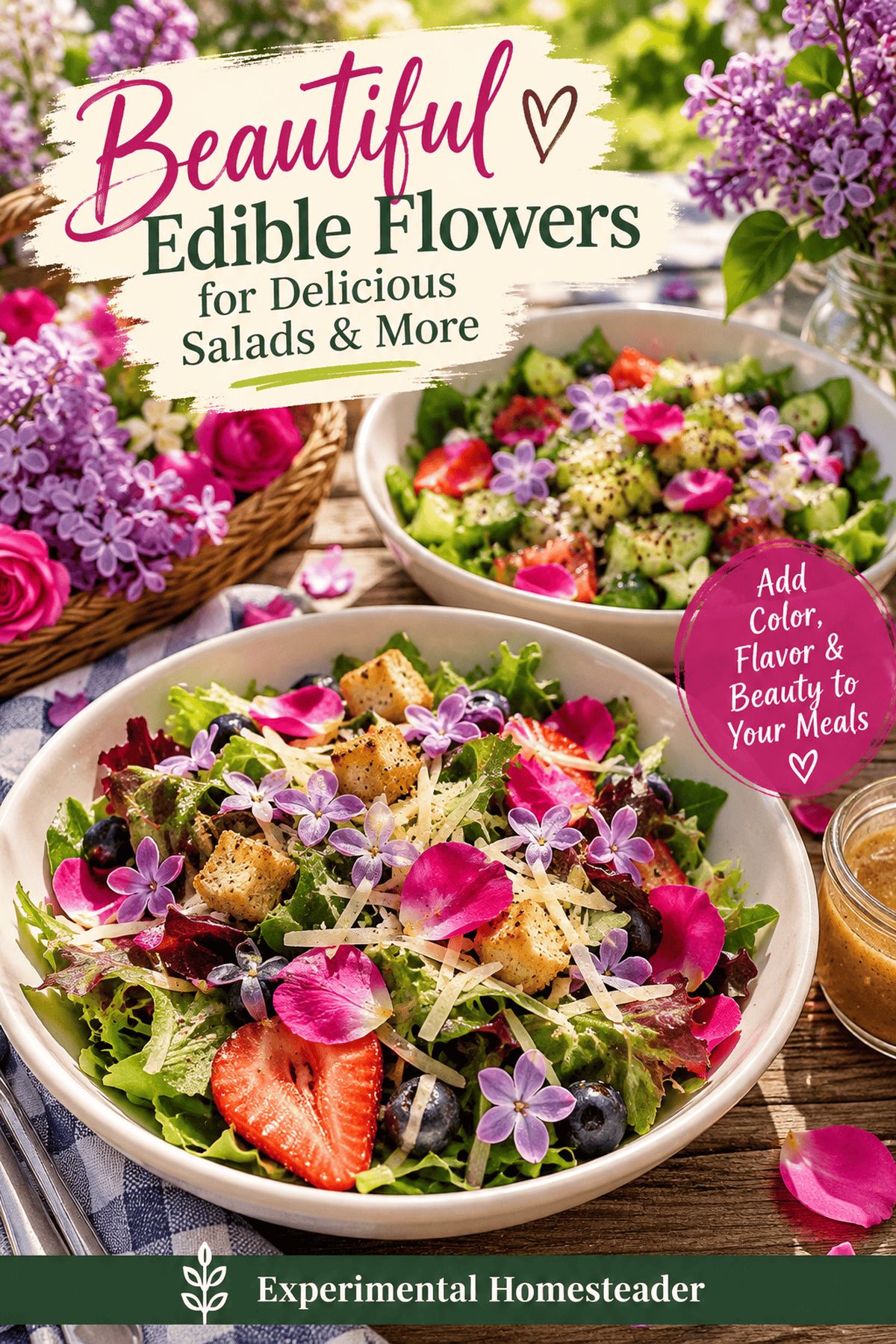
How Much Should Someone Try First?
Imagine you have grown an edible flower for the first time and want to see whether you enjoy its flavor. Start by confirming the exact plant and edible portion, then choose a familiar dish where you can use a very small amount. Do not serve a large floral salad or strong infusion as the first experiment. Taste thoughtfully, and make a note of the plant and preparation if you plan to use it again. Anyone with a known relevant allergy or previous severe reaction should not use this as a way to test their tolerance.
For someone without a known relevant allergy who wants to explore a correctly identified edible flower, begin with a small culinary serving in a familiar dish. A few suitable petals on a plate are easier to evaluate than a large bowl of unfamiliar flowers or a strong infusion. Tell everyone what you have used, and never pressure a guest to try it. If a food causes symptoms, stop serving it. This is supposed to make meals more enjoyable, not create a problem at the table.
When trying a new, correctly identified edible flower, start with a small culinary amount rather than a large serving or concentrated infusion. Pay attention to digestive upset, mouth irritation, itching or other symptoms. Do not continue eating something that causes a reaction.
Tell guests what is in the dish and offer an undecorated portion. Keeping a note of which species and preparation you tried can be useful if you discover a sensitivity.
Edible Flowers in Teas and Concentrated Preparations
Think about the difference between a few petals decorating a cupcake and a drink made by steeping a large quantity of the same plant. Those are not interchangeable uses. Before preparing a floral tea, syrup or concentrated infusion, look for guidance specific to the exact edible plant and the intended preparation. Do not assume that a flower suitable for an occasional garnish is automatically suitable in every strength or quantity. Keep the culinary experiment separate from claims about treating health conditions.
A few petals used as a garnish are not the same exposure as several cups of a strong herbal tea, a tincture or an extract. Some plants have traditional medicinal uses, but that does not make every preparation appropriate for everyone.
Use reliable, plant-specific guidance for herbal drinks and avoid making health claims for homemade mixtures. People taking medications, pregnant or breastfeeding people and those with medical conditions should seek individualized advice before using concentrated botanical preparations.
Drying, Storing and Serving Safely
Let's follow a small harvest from the garden to the pantry. Label the flower before drying, remove damaged material and spread the suitable edible parts on clean drying equipment so air can circulate. Check for complete dryness, let everything cool and store it in a clean, dry container marked with the plant name and date. Later, when you open that jar for a recipe, check for moisture, mold or an unusual odor before using it. If you are serving fresh petals instead, prepare them close to mealtime and keep the rest of the dish properly refrigerated or handled as needed.
Dry only properly identified edible material that is fresh and sound. Use clean equipment and a method that dries the ingredient thoroughly. Store in clean, dry, labeled containers, and discard anything that develops mold, moisture or off odors.
For fresh flowers, keep them cool and protected from crushing until use. Add delicate petals shortly before serving and follow normal food safety practices for any perishable dish they accompany.
If you plan to preserve your harvest, begin with the methods and storage considerations in my home food preservation guide. Drying flowers for culinary use is different from preparing a shelf-stable canned product, and each method needs its own instructions.
What About Canning and Homemade Jelly?
If you want to experiment with a new floral jelly, begin by deciding whether you are making something to refrigerate or something intended for pantry storage. Those are different projects. A tested shelf-stable recipe has specific ingredient amounts and processing instructions that should not be casually changed. For an untested flower combination, make a small refrigerator or freezer batch using an appropriate recipe and storage directions. You still get to explore the flavor without treating an experimental mixture as a tested canning formula.
Do not change the flower ingredients, acidity, sugar or processing time in a tested shelf-stable jelly or canning recipe. Adding extra petals or a new infusion can change a recipe in ways that have not been validated for safe storage.
If you want to experiment with an unfamiliar flower flavor, use a refrigerator or freezer preparation with appropriate handling and storage rather than assuming it is safe to put on a pantry shelf.
Want a handy starting point for growing and using edible flowers? Sign up for my free Edible Flowers Starter Guide. You will also receive my free 10-lesson homesteading email course. Use the safety checklist below whenever you prepare flowers for the table.
A Practical Checklist Before You Eat a Flower
Here is the kitchen habit I want you to take away from this article. Before a flower reaches the plate, ask yourself whether you know its botanical identity, the edible portion, how it was grown, whether it was exposed to unsuitable treatments and who will be eating it. Inspect and prepare the harvest carefully, then choose a dish that makes sense for the flower's flavor. If anything is uncertain, skip that ingredient. You can always grow or purchase a correctly identified edible flower for another meal.
Confirm the botanical name, verify the edible part, check the growing and pesticide history, inspect and clean the harvest, and consider who will eat it. Then use a small amount in a recipe that suits the flower's flavor.
If any one of those checks cannot be completed, do not serve the flower. There are plenty of good edible plants to choose from without guessing.
For a simple serving idea after you have identified and cleaned your flowers, see my herb and rose petal salad. For more ways to incorporate a small amount of edible flowers into everyday meals and drinks, explore different ways to use edible flowers in food, drinks and desserts.
Let's Prepare a Small Edible Flower Garnish Safely
If you are new to cooking with edible flowers, begin with a simple dish you already know how to make. Perhaps you are preparing a salad to go with roast chicken, potatoes, gravy and vegetables, or you want to add a few petals to a dessert. Choose a flower you have positively identified and grown or obtained from a source with a suitable food-harvest history. Check which part is edible, harvest a small amount using clean tools and keep it separate from other flowers. Inspect and prepare the petals as appropriate for that plant, then add them to one serving shortly before the food goes to the table.
Tell the people eating with you exactly what the flower is, and offer a plain portion to anyone who would rather skip it. Notice whether the petals add a flavor you enjoy or simply a touch of color. There is no need to turn your first attempt into a complicated recipe. Once you are comfortable identifying, harvesting and preparing one flower, you can explore other culinary uses with the same careful approach.
Ready to bring safely identified edible flowers into your kitchen? My Spicing Up Your Food With Edible Flowers Quick Guide shares practical ways to use them in everyday cooking.
Explore the Edible Flowers Quick Guide
Frequently Asked Questions About Edible Flower Safety
Can I eat flowers from a florist or garden center?
Do not assume that decorative flowers are grown for food. Florist bouquets and ornamental nursery plants may have been treated with products unsuitable for edible crops. Choose plants with a verified food-safe growing history, preferably from a garden you manage for edible harvests.
Are all parts of an edible flower safe to eat?
No. The edible portion depends on the particular plant. Some recipes use petals, while others use whole blossoms or different plant parts. Confirm the botanical identity and the specific edible portion before preparing it.
Does washing make a sprayed flower safe?
Washing can help remove dirt and some surface contaminants, but it does not reliably make an improperly treated ornamental flower suitable for food. Verify the plant's treatment history before harvesting.
Can I serve edible flowers to someone with allergies?
A flower that is edible for some people can still cause an allergic reaction in another person. Ask guests about relevant allergies, identify ingredients clearly and offer a serving without flowers. Anyone with a history of severe reactions should follow individualized medical advice rather than experimenting casually.
Is it safe to use more flowers in homemade jelly?
Do not alter the ingredients or processing instructions of a tested shelf-stable canning recipe. Adding flowers or changing an infusion may affect the recipe. For an untested flavor idea, choose a properly handled refrigerator or freezer preparation instead of assuming it is safe for pantry storage.
How should I store flowers before using them?
Handle fresh edible flowers gently, keep them cool and protected from crushing, and prepare them close to serving time. For dried flowers, remove moisture thoroughly, cool them and store them in clean, dry, labeled containers. Discard material that becomes moldy, damp or musty.
Once you are comfortable identifying and handling edible flowers, explore cooking with edible flowers and herbs and drying edible flowers and herbs for cooking and storage for practical kitchen uses.
Enjoy the Flowers You Know and Trust
Edible flowers can make everyday meals feel special, whether you are adding a few petals to a garden salad, preparing a floral dessert or saving a small harvest for later. The important part is knowing what you have grown, which portion belongs in food and how it has been handled. Start with one familiar flower and a simple recipe, share the ingredients with the people at your table and build your confidence from there. A beautiful plate should also be a plate you feel comfortable serving.