Survival Diary: Paper Chains - November 2
⚠️ Content Warning: This entry discusses childhood trauma, emotional and physical abuse, grief, and early contact with child-protection services. Reader discretion is advised.
📸 Image Disclaimer: Some photos show my real homestead and life; AI images represent memories and emotions that can't be photographed.

The story of Survival Diary: Paper Chains begins with the sound of paper.
Not the gentle rustle of pages in a book - but the heavy, hollow sound of documents that once held power over my life.
The pages are yellowed now, their edges curled and soft from time.
They smell faintly of dust and ink - the scent of official judgment.
I found them tucked in a box I hadn't opened in years: a stack of reports that once decided everything.
Where my children lived.
How I was seen.
Who I was allowed to be.
The title still makes my stomach turn - "Custody Evaluation."
Typed neatly at the top: John Whetsel. Sheri Whetsel. Audrey Whetsel. Amanda Whetsel. Justin Whetsel. Dustin Whetsel.
As if all our lives could be reduced to six names and a few dozen pages.
When I was younger, I believed that truth was enough.
I thought that if I told the truth - about the violence, the fear, the long nights of survival - it would matter.
But Survival Diary: Paper Chains exists because it didn't.
Because truth doesn't always live where it should.
Sometimes it hides beneath professional titles and official seals, smothered by polite language that makes cruelty sound clinical.
The Paper Ghosts
It begins with him.
They called John "a loyal employee," "a recovering alcoholic," "a man trying to do better."
They noted his prison time for kidnapping and armed robbery as if it were a character-building detour, a comma instead of a full stop.
He was described as honest about his flaws, struggling with temptation, attending church regularly.
Then they turned to me.
They said I was flat.
Difficult.
Lacking warmth.
Possibly delusional.
That my "tone" didn't show affection, that my calmness was evidence of emotional detachment.
I read those words now and think: Of course I was calm.
I had learned that too much emotion made people stop listening.
In their eyes, crying made me unstable, and composure made me cold.
There was no version of me they would ever find believable.
I can see now how they framed every reaction through their own comfort, not mine.
I was the story they wanted to tell.
How Systems Rewrite Women
The report treats his past violence like an unfortunate footnote - something to be understood, even excused.
He "struggled with anger," "showed remorse," "wanted to reconnect with his daughters."
Meanwhile, I was cross-examined for existing.
My "somatic complaints."
My "lack of energy."
My "difficulty bonding."
No one asked what exhaustion looks like in a woman holding her world together with one hand while defending herself with the other.
They said I was "co-dependent."
That I "argued too much."
That I "needed to learn to stop lying or exaggerating events."
But I wasn't lying.
I was screaming into a void where men with titles took notes instead of action.
Even reading the phrasing now - "Sheri demonstrates reliability in visitation but her personality and pattern of behaviors put the children's emotional development in jeopardy" - I feel my throat tighten.
The irony is unbearable.
I was the one protecting them.
I was the one who saw the bruises, who smelled the alcohol, who stood between the danger and the door.
But in their eyes, his sins were symptoms, and my strength was sickness.
The Weight of Their Words
One section talks about "occult practices," as if whispers and rumors could become evidence.
It says I was "afraid of ouija boards," "superstitious," and "prone to delusional thinking."
They even quoted my relatives - the same ones who once turned their backs on me - and treated their gossip as gospel.
Another part mentions "threats to Audrey's life through the occult," as if I were living in a horror story of their own invention.
She was the "chosen one."
She was "scheduled for sacrifice."
Reading that line today, I laughed at first, a bitter, hollow sound.
Then I cried.
Because while it reads like madness on paper, it was taken seriously enough to tear my family apart.
How do you fight words like that?
How do you argue with fiction dressed as fact?
Each paragraph was a paper chain, one link connecting to the next, until it bound me completely.
The Man They Believed
They documented his history:
Five years in prison.
Kidnapping. Armed robbery. Drug use.
A claim of military service in Vietnam that couldn't be verified.
They mentioned his temper - his assaults, his drunkenness, his violence - but every line bent toward redemption.
He was trying.
He was recovering.
He was getting help.
Even the lies were handled gently: "John's claim of serving in Vietnam could not be verified."
Not false.
Just unverified.
Meanwhile, every doubt about me became a diagnosis.
When I read the part about him "struggling with erectile dysfunction," I realized how far they'd gone to humanize him.
They made him vulnerable, pitiable, relatable.
That's what systems do - they protect the men who mirror them.
Calm, composed, explaining their violence like weather.
Women like me?
We become the storm.
The Children on Paper
My childrens' names were scattered through the report like fragile echoes.
Audrey.
Amanda.
Justin.
Dustin.
Little details about how they played with dolls, how they clung to me, how they whispered things no one wanted to believe.
They called my daughters "hyper-vigilant," "nervous," "affectionate."
They said Audrey "wet herself during visitation" and "rocked back and forth at night."
Instead of asking why, they treated it as proof that my presence made her unstable.
I remember how Audrey used to rock herself to sleep when we traveled and she missed home.
She didn't have the words yet to say "I'm scared."
But her little body said it for her.
And Amanda - gentle, observant Amanda - she didn't want to let go of her dolls because the dolls were her sense of control.
They wrote about that, too, twisting play therapy into pathology.
Reading those sections feels like being dissected in slow motion - every gesture, every word, every silence cataloged and misunderstood.
The Woman They Condemned
The final pages recommend that none of us - neither me nor him - should have the children.
They said the girls were "psychologically damaged," that our "pathological bonds" needed to be broken.
They accused me of "programming" my children, as if love itself were manipulation.
They wrote that "Sheri is dependent on the role of being a mother," as if that were a crime.
Of course I was.
Motherhood was the only identity I was allowed to have.
It was the thread that kept me alive when everything else fell apart.
They called it dependency.
I call it devotion.
And when they said I was "difficult to employ" and "walked off jobs," they didn't write about what it's like to show up at work while your children are in state custody, while strangers decide whether you're fit to love them.
They didn't tell the truth that visitation was at their convenience and if I refused to leave work to see my children, I simply lost that visit.
They didn't mention that back then time off work for visitation was not allowed by employers.
They didn't mention that I was surviving on little sleep, with panic eating through my insides, doing my best to look normal in a world that would rather not see.
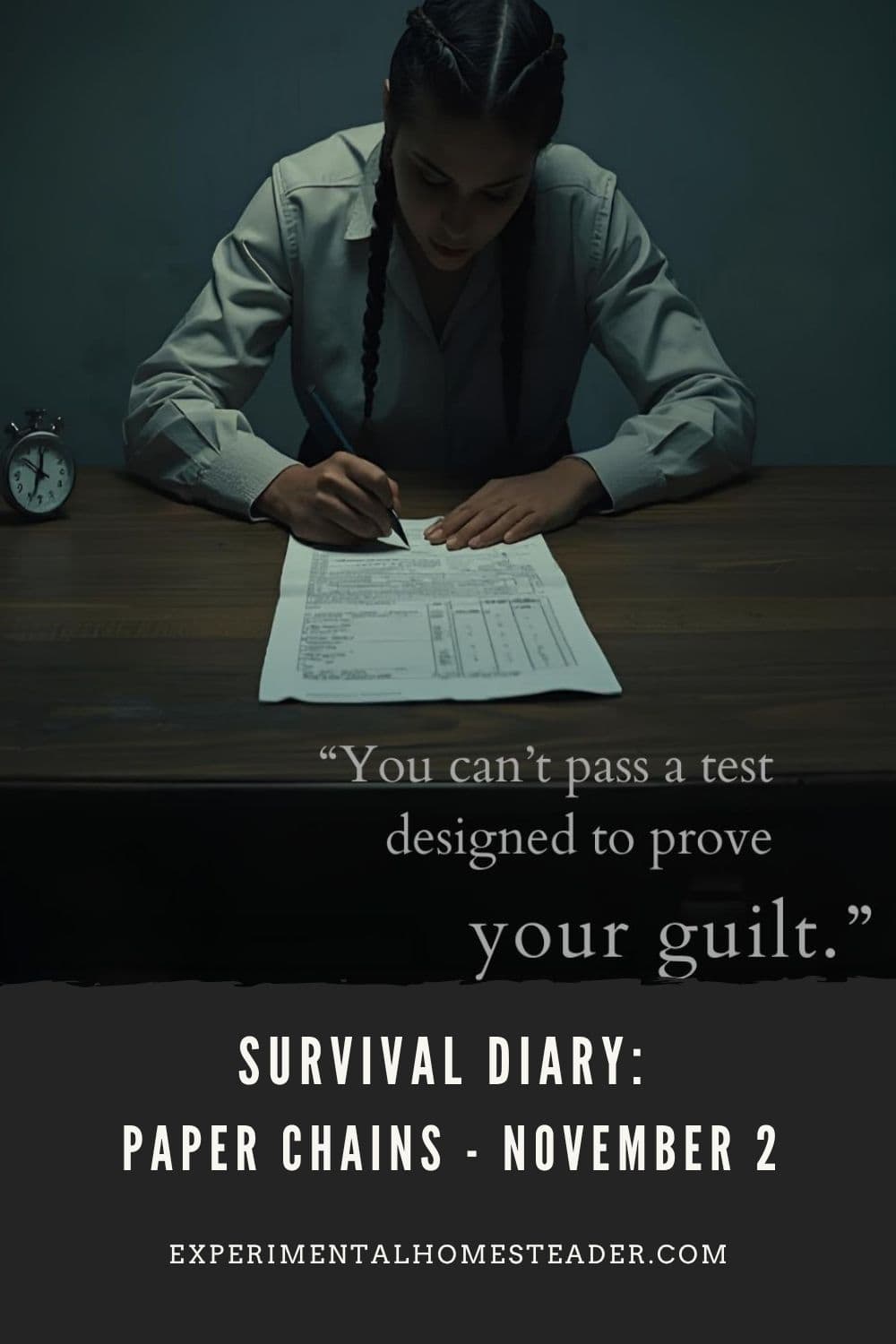
The Test That Was Never About Truth
They said the MMPI would show who I really was.
I remember sitting there in that room, filling in bubbles on page after page, trying to stay calm even though I already knew the outcome wasn't meant to help me - it was meant to measure me against their idea of what a "good mother" should look like.
When the first test results came back, they said I finished in 45 minutes - and that shocked them.
Apparently, that was "too fast" to be believable.
They didn't say it out loud, but I read about it in the report: they'd already decided I must have cheated the test somehow, even though the results showed I answered truthfully.
So they made me take it four more times.
Each time, a psychologist sat directly across the table from me, stopwatch in hand, timing my every move.
I was afraid to breathe wrong, shift in my seat, or think too long before answering.
Imagine trying to prove your sanity under that kind of microscope.
By the last test, I didn't even feel like a person anymore - just a project they were trying to break open.
Every bubble I filled in felt like another accusation waiting to be written down later in one of those yellowing pages.
They used that test to validate their bias - and then require me to go through additional testing including the Rorschach test.
I truly believe they made me take every known psychological assessment they could find.
To call me "flat," "guarded," "depressed" and "evasive."
But what they never addressed was how and why someone learns to be calm under pressure.
They never considered that composure is a survival instinct - not a symptom.
I passed all the tests, technically speaking.
But in the end you can't pass something designed to prove your guilt, so they simply looked for another loophole to find something wrong with me.

Paper Chains
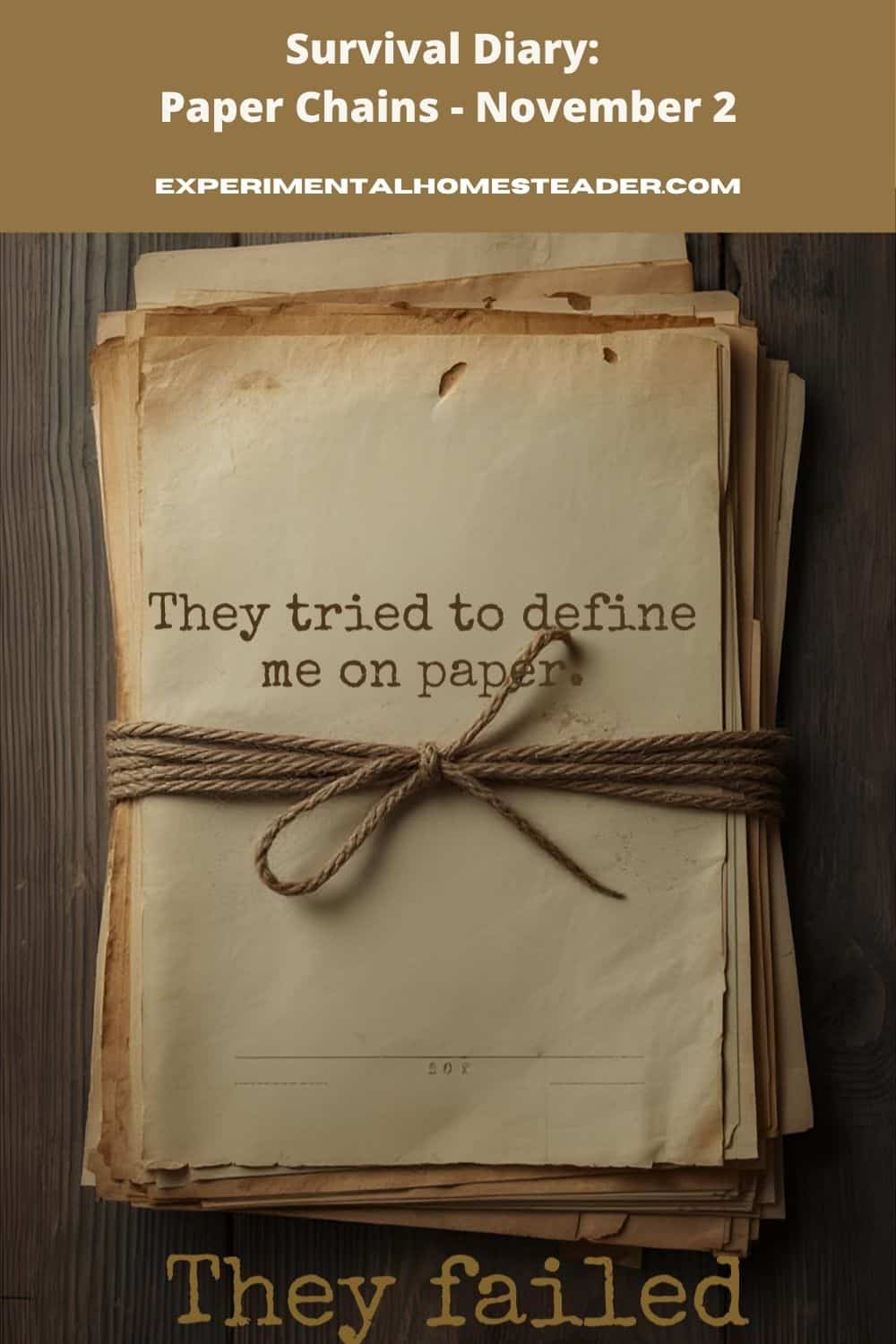
When I finished reading, I stacked the pages neatly and tied them with twine.
I didn't burn them - not yet.
There's something sacred about keeping the evidence of how far I've come.
Those pages no longer define me.
They only prove how broken the system was.
They say trauma repeats itself until it's heard.
Maybe that's why these ghosts keep showing up in my life - so I can finally give them a voice that isn't filtered through a therapist's report or a psychologist's opinion.
I'm not "flat."
I'm not "unstable."
I'm a woman who survived being rewritten and lived to tell the story in her own handwriting.
Tonight, as I sit at my kitchen table, I think about all the women who have been misdiagnosed, misunderstood, mislabeled.
The ones who were calm when they should have been screaming, who were punished for composure and disbelieved for pain.
We carry our paper chains quietly, until one day, we remember we're strong enough to break them.
And that's what I'm doing now - one page at a time.
The Letter I Was Never Meant to Find
When my mother died-shortly after my children were adopted out and their "satanic" names were changed - my stepdad told me she had written a letter to me.
But it was never found.
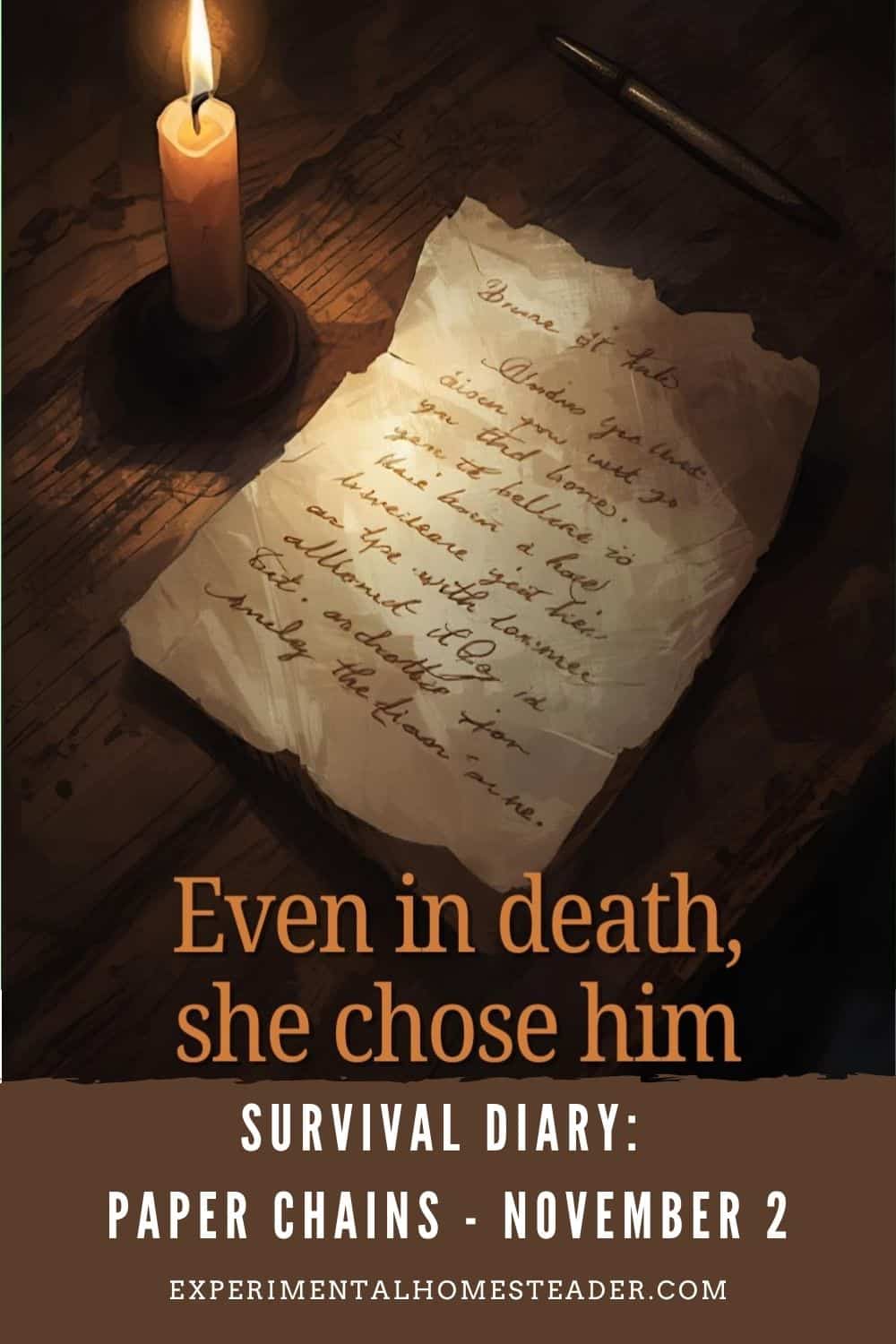
While searching for it, I came across something else: a letter she had written to John.
In it, she told him how wonderful he was.
How sorry she was that he had married me.
How good of a man he was.
I stood there holding that paper, realizing that even in death, she was still choosing him over me.
She had refused medical care, refused a heart transplant that could have saved her.
And when she finally died, I didn't even get a phone call.
Just a message - Larry's voice on my answering machine, flat and emotionless - telling me she was gone.
No one spoke to me.
No one comforted me.
Just silence.
And then came the blame.
They said I broke her heart.
They said losing my kids killed her.
As if every tragedy, every failure, every disappointment in her life could be traced back to me.
It was always my fault.
Her pain.
His temper.
Their choices.
Always me.
But I've stopped carrying their guilt like it's my inheritance.
I've stopped trying to make sense of people who could love monsters and condemn survivors.
Because I finally know the truth: sometimes the most dangerous lies are the ones written on paper and signed by the people who should have protected you.
And tonight, as I get closer to closing this chapter, I finally feel something I haven't felt in decades - peace.
Not the kind that's given.
The kind you make yourself, in the quiet aftermath of being broken and choosing to rebuild anyway.
The kind that turns paper chains into ashes.
Behind The Scenes Survival Diary
Survival Diary: The Story Behind the Struggle
Survival Diary The Story shares the raw truth of homesteading, resilience, and overcoming struggle in a life built from hardship.
Behind The Scenes Survival Diary January 15
This is the behind the scenes survival diary January 15. Learn about what is going on at our homestead, what has changed and what the future holds.

Behind The Scenes Survival Diary February 5
Welcome to the behind the scenes survival diary February 5 edition. Today we are talking about processing tomatoes, maple syrup and goats.
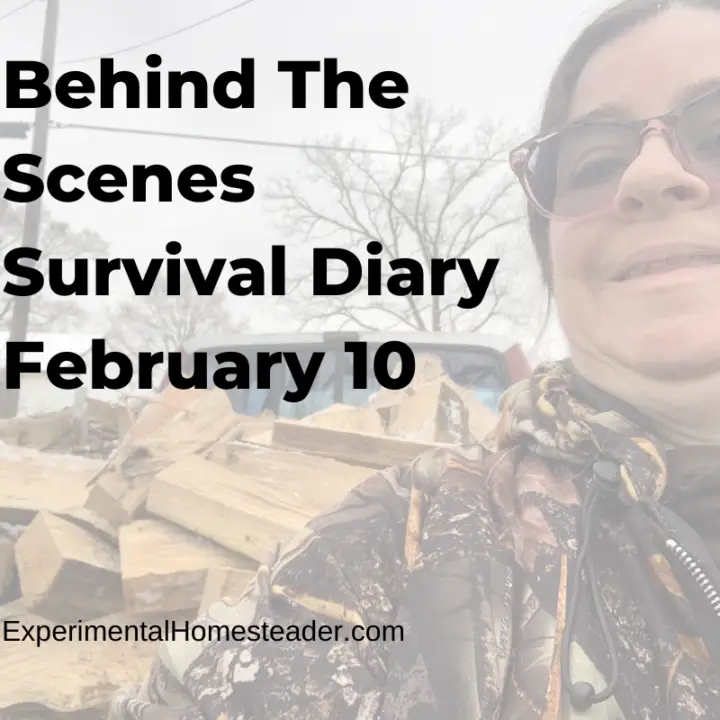
Behind The Scenes Survival Diary February 10
A lot happens behind the scenes on a homestead. The survival diary February 10 talks about what kinds of things happen this time of year on our homestead.
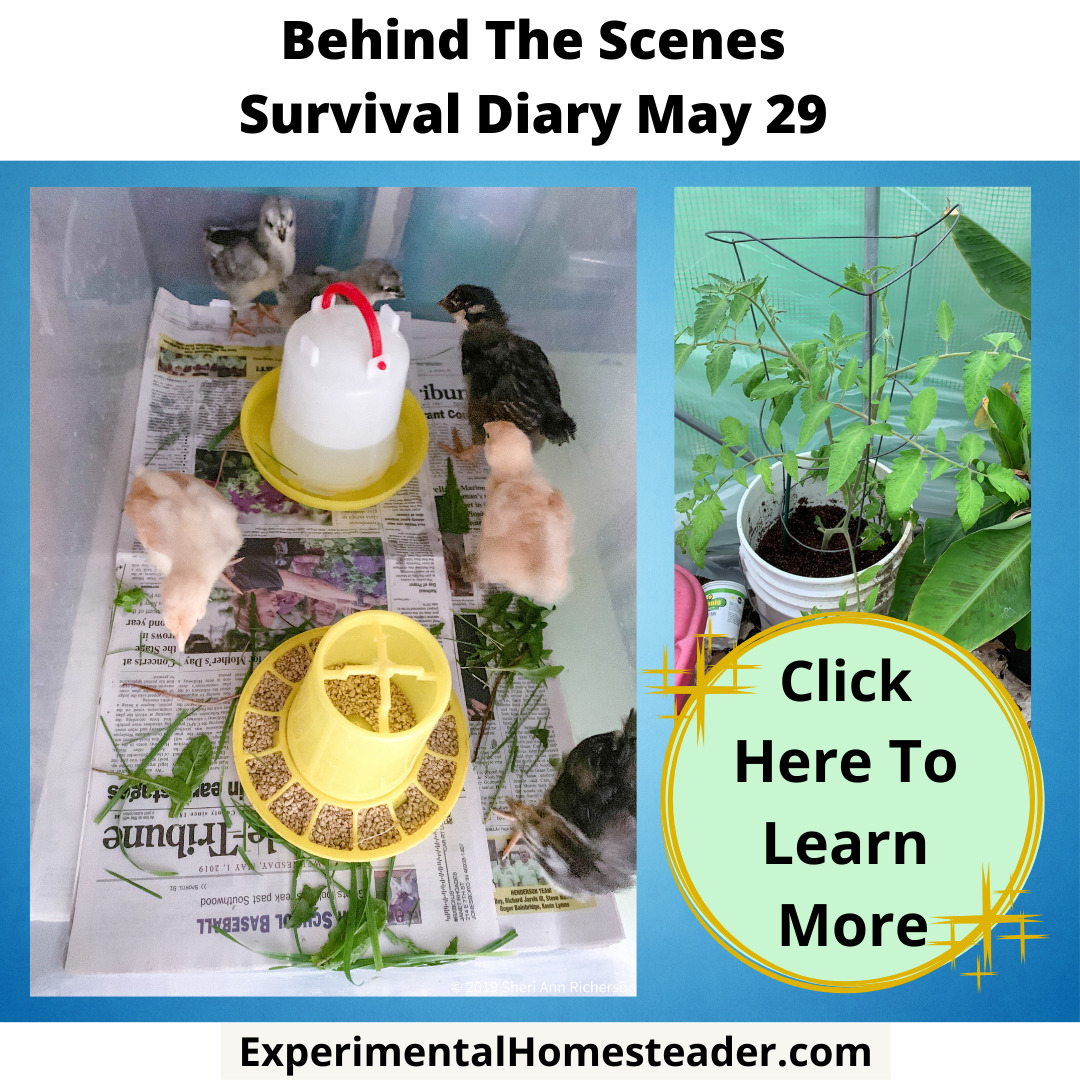
Behind The Scenes Survival Diary May 29
A lot happens behind the scenes on a homestead. The survival diary May 29 talks about what kinds of things happen this time of year on our homestead.
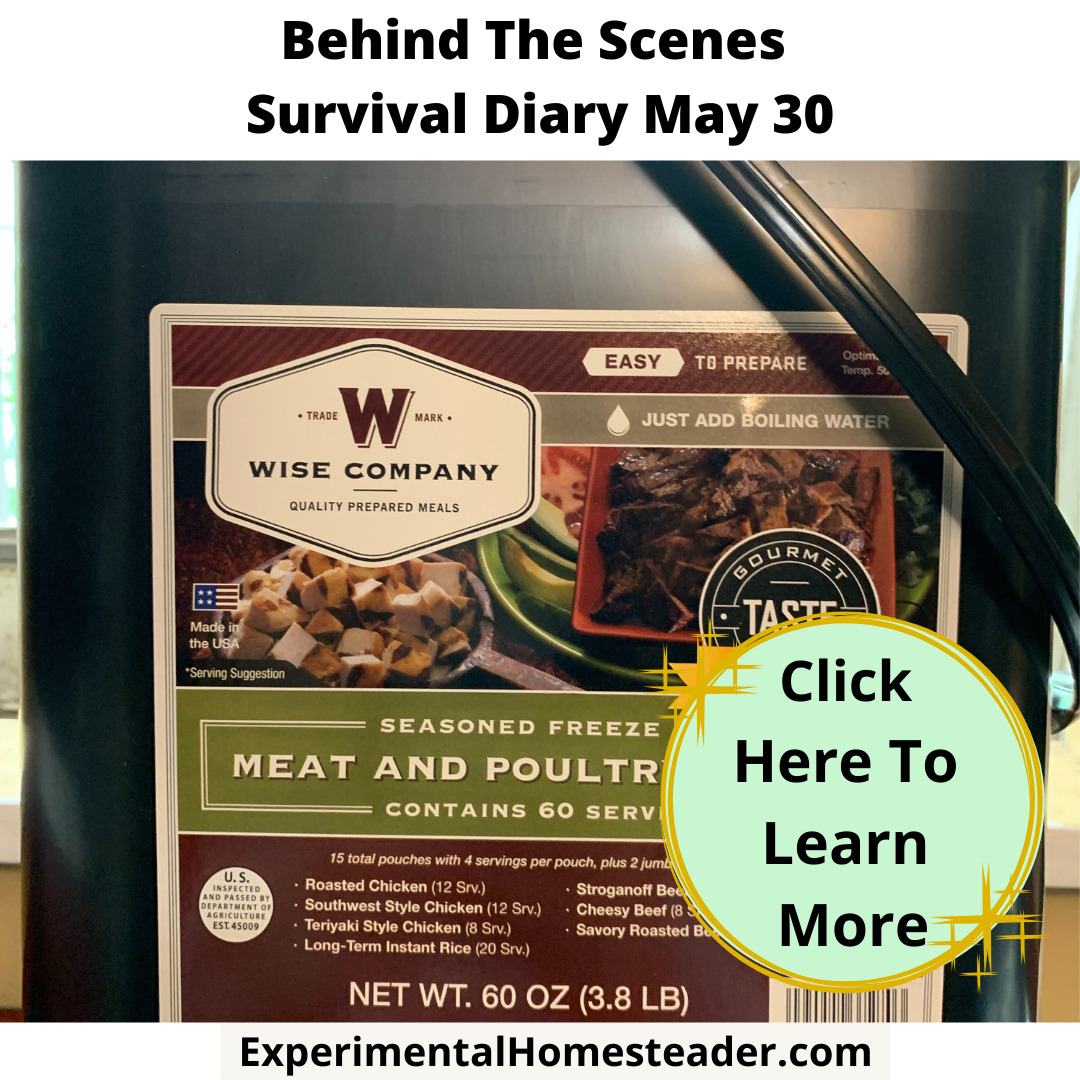
Behind The Scenes Survival Diary May 30
A lot happens behind the scenes on a homestead. The survival diary May 30 talks about what kinds of things happen this time of year on our homestead.
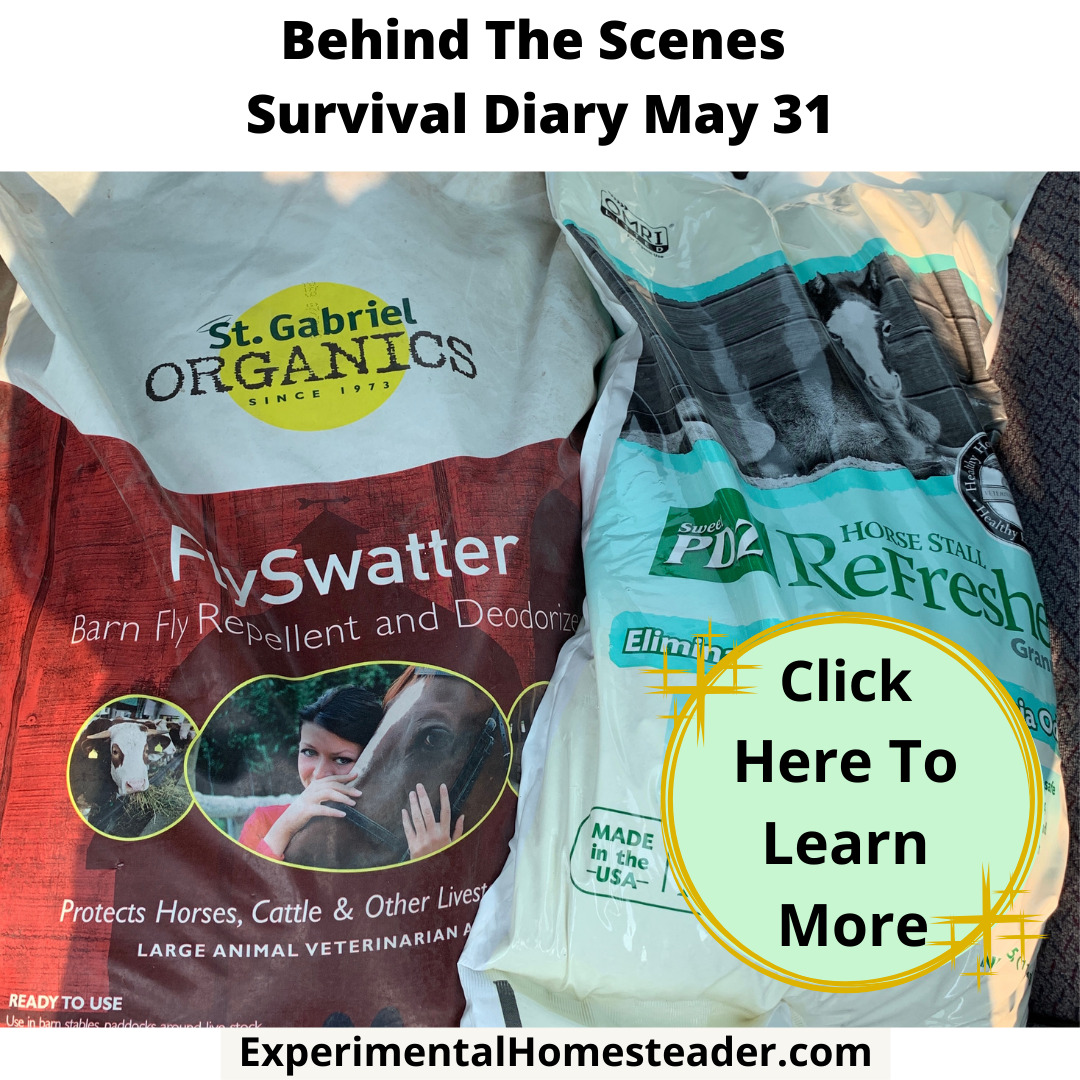
Behind The Scenes Survival Diary May 31
A lot happens behind the scenes on a homestead. The survival diary May 31 talks about what kinds of things happen this time of year on our homestead.
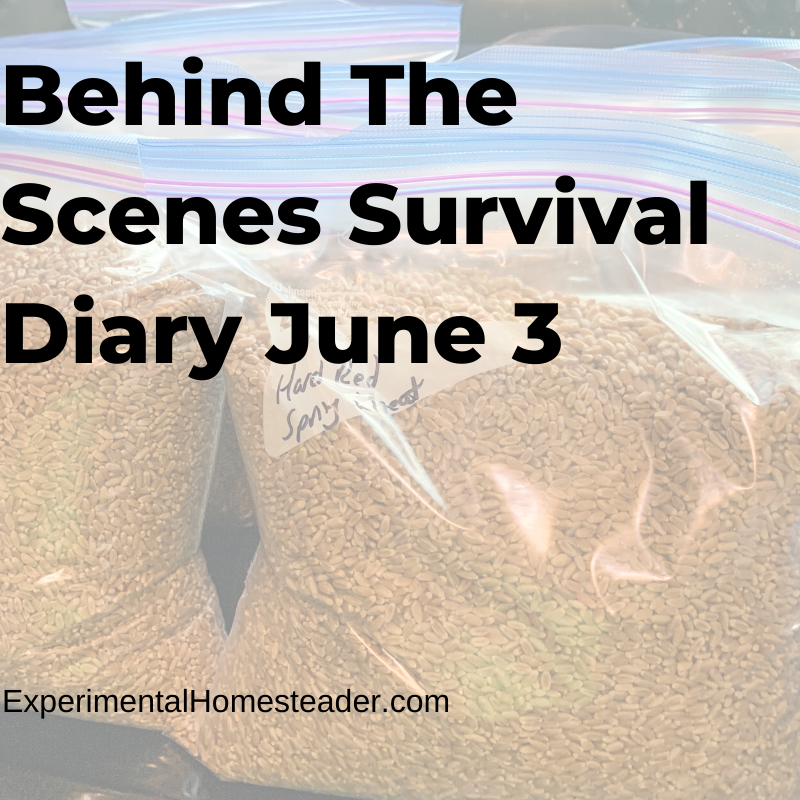
Behind The Scenes Survival Diary June 3
Our survival diary June 3 edition talks about what has been happening over the past few months with the Coronavirus, the hoarding and more.
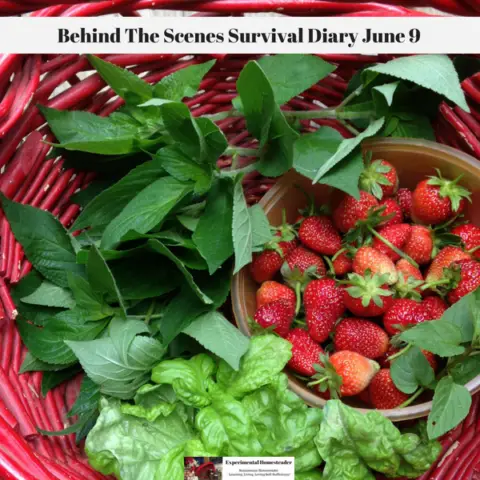
Behind The Scenes Survival Diary June 9
Welcome to the Experimental Homesteader homestead survival diary for June 9. This is where I share tidbits of what life on a homestead is really like.
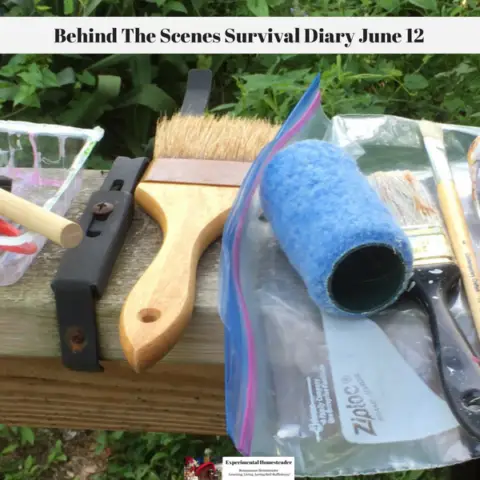
Behind The Scenes Survival Diary June 12
Welcome to the Experimental Homesteader homestead survival diary for June 12. This is where I share tidbits of what life on a homestead is really like.
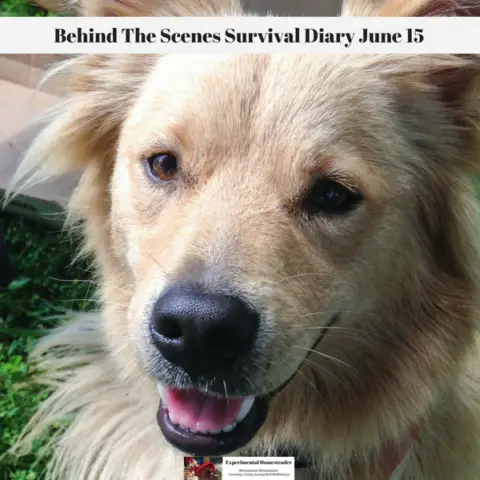
Behind The Scenes Survival Diary June 15
Welcome to the Experimental Homesteader homestead survival diary for June 15. This is where I share tidbits of what life on a homestead is really like.
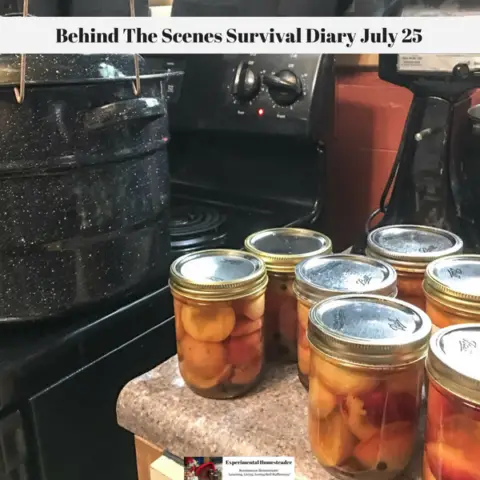
Behind The Scenes Survival Diary July 25
Welcome to the Experimental Homesteader homestead survival diary for July 25. This is where I share tidbits of what life on a homestead is really like.
Behind The Scenes Survival Diary August 23
Welcome to the Experimental Homesteader homestead survival diary for August 23. This is where I share tidbits of what life on a homestead is really like.
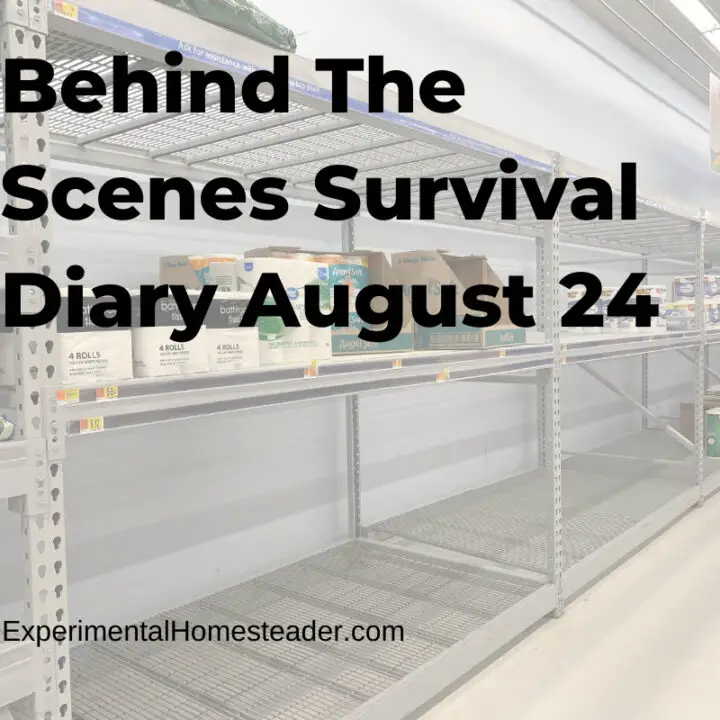
Behind The Scenes Survival Diary August 24
Today's survival diary is about how Covid-19 has put a damper on our lifestyle, caused shortages and ultimately affected our mental health.
Behind The Scenes Survival Diary October 9
Welcome to the Experimental Homesteader homestead survival diary for October 9. This is where I share tidbits of what life on a homestead is really like.
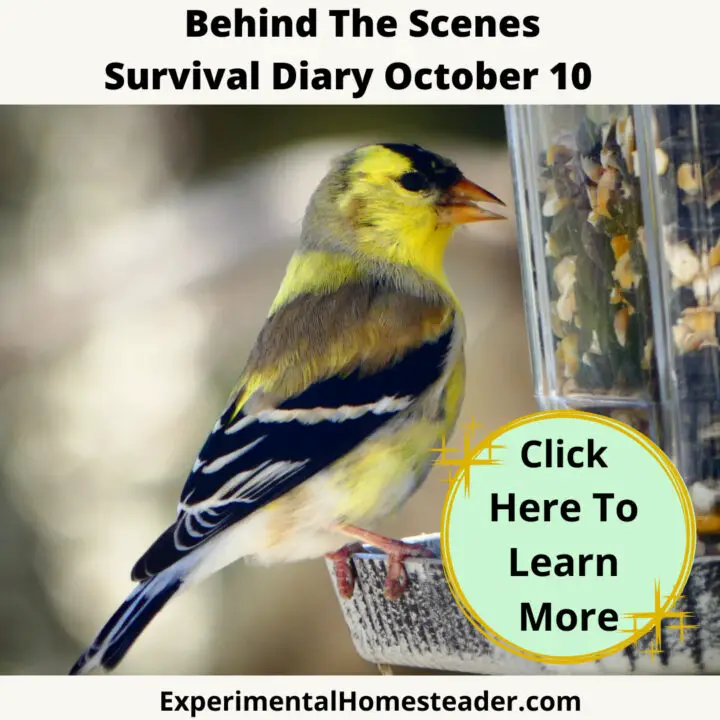
Behind The Scenes Survival Diary October 10
This is the behind the scenes survival diary October 10. Learn about what is going on at our homestead, what has changed and what the future holds.