Survival Diary: Haunted Beginnings - October 31
⚠️ Content Warning: This entry discusses childhood trauma, emotional and physical abuse, and early contact with child-protection services. Reader discretion is advised.
📸 Image Disclaimer: Some photos show my real homestead and life; AI images represent memories and emotions that can't be photographed.
Before there were gardens to tend and animals to feed, there was a girl learning how to stay small and quiet long enough to survive.
Survival Diary: Haunted Beginnings is the story of that girl - the one behind the woman I am today.
If you've read Survival Diary - The Story Behind The Struggle, you already know the outline: a hard childhood, a system that believed lies, and a mother who never wanted me to succeed.
This is where it started.
The haunted beginnings that shaped everything that came after.
This entry steps back into the beginning - the part most people don't see when they picture my life now.
I'm writing this on October 31st because it fits.
For years I avoided Halloween out of fear and accusation.
Today, I'm telling the truth out loud instead.
This isn't about blame or shock value.
It's about saying what happened in plain words so no one else gets to twist it.
I'm not asking for pity.
I'm laying down a record.
The woman I am on the homestead grew out of a kid who had to find peace anywhere she could find it - even if that place was the floor of a closet.
If this helps even one person feel less alone, it's worth it.
Grandpa King
My grandpa King was my safe person.
He didn't shout.
He didn't play power games.
He was steady in a way that made my nervous system settle the second he entered the room.
If he said he would do something, he did it.
If he told me I mattered, I believed him.
He had that calm voice that cuts through noise without getting louder.
We didn't need big talks.
Just being near him helped.
He'd let me sit with him while he played Solitaire or whittled wood with his hands, and I always felt like I was allowed to exist.
When he died, that kind of safety left with him.
People act like kids bounce back from loss because they're young.
I didn't bounce.
I sank.
The quiet around me wasn't peaceful anymore; it was heavy.
I remember walking through the house after his funeral, trying to listen for that calm that used to live in the corners.
It was gone.
It's strange how one person can be the difference between a home and a place you survive in.
After Grandpa King passed away, I survived.
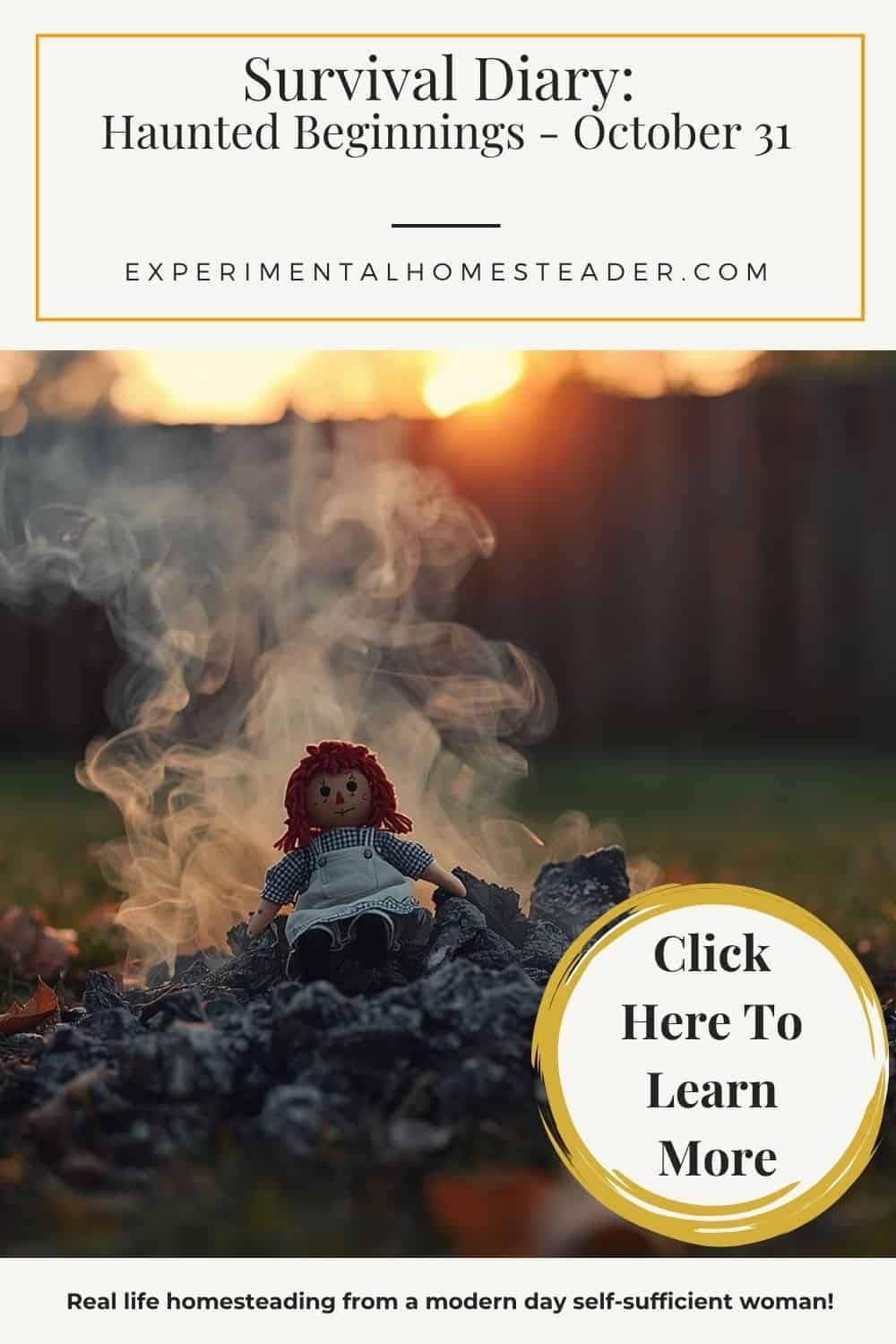
The Fire in the Backyard
Not long after Grandpa's funeral, my mother told me to stand at my bedroom window.
I knew what was coming as she had gathered all of my stuffed animals up and pulled my Raggedy Ann out of my arms even as I cried and begged her to let me keep just one.
I watched through tears as my step-dad piled my stuffed animals in the backyard, throwing my Raggedy Ann on top of the pile like she was a dirty old rag.
My mother made me watch.
She said I needed to "see what happens to evil things," and that I needed to "grow up."
I stood there because refusing never ended well.
People talk about big, dramatic moments, but this one was quiet, like someone turned down the sound on the world.
When the match touched the pile, the first thing I noticed was the way fabric burns - little pops, then a soft hiss, like air rushing out of something that used to be alive.
I didn't cry. I didn't beg - that reaction was over with when she pulled Raggedy Ann out of my arms and told me to quit crying or my dad would give me something to cry about - and I knew what that meant.
I knew any further reaction would be used against me.
So I watched the smoke rise and thought about how easily something loved can be destroyed.
I'd been told Raggedy Ann's black eyes kept aliens from eating my blue ones.
It sounds childish now, but back then I was a child.
Safety had rules in my head: her eyes, the bed, the pillow - I was safe at night as long as she was there.
Watching her burn was like watching the last rule disappear.
That day taught me two lessons I wish I never had to learn: love could be punished, and silence could keep you alive.
The Closet
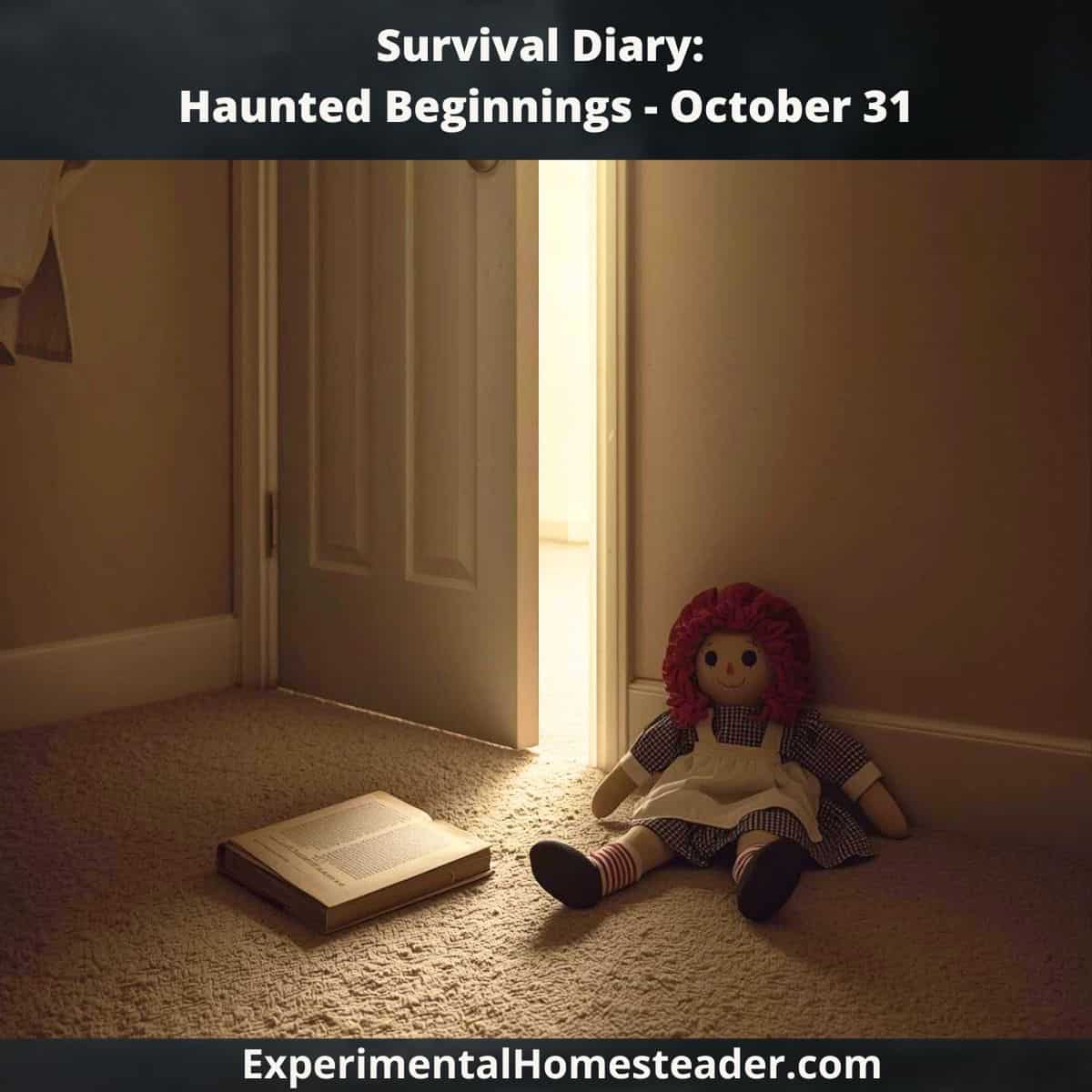
After the fire, I spent most of my time in my bedroom closet.
It wasn't big.
Carpet on the floor, no window, just enough space to sit cross-legged with a flashlight and a stack of books.
The closet smelled stuffy, and the thin line of light under the door told me what time of day it was.
It was the only place where the temperature of the house - hot anger, cold silence - couldn't find me as quickly.
I lined the space with library books, teen magazines, and my children's Bible.
I read that Bible until I could quote whole chapters without looking.
I didn't do it to impress anyone.
I did it because the words felt steady.
Predictable.
Memorizing something that didn't change helped me believe there was a shape to life besides chaos.
I'd sit there and breathe until the knot in my chest loosened enough to think again.
People think hiding means weakness.
Sometimes hiding is how you live long enough to grow strong.
Back then, it wasn't strategy.
It was instinct.
The closet was the only room in the house that didn't ask me to be more or less than I was.
And it felt like I was forgotten in that closet, so there was no being yelled at or accused of doing things I didn't do.
The Soundtrack and the Book I Knew by Heart
Music slipped under the door from the clock radio beside my bed.
That's how I first heard Boy George sing Do You Really Want to Hurt Me.
The question landed because the answer in my life was obvious.
But there was something in his voice that didn't sound defeated.
Different, honest, unapologetic.
People laughed at him for not fitting the mold.
I liked that he didn't apologize for it.
It gave me a picture of a life where difference wasn't a crime.
I also kept reading my children's Bible.
Between the verses and the radio, I found a rhythm I could trust - words that stayed the same, songs that said feelings out loud when I couldn't.
I wasn't trying to be holy or cool.
I was trying to survive.
Faith for me wasn't fancy.
It was simple: "God, please get me through today."
Some days the answer was a small mercy.
A quiet afternoon.
A teacher who didn't raise an eyebrow when I looked tired.
A song showing up right when I needed it.
People want big miracles.
I collected small ones like seeds.
I didn't know it yet, but planting small things that grow is going to be the theme of my whole life.
Trying to Belong (Fifth Grade)
In fifth grade, I tried to have friends.
That was the Barbie year.
Girls traded outfits and secrets and sleepover plans.
I asked a few to come over, and my mother always had a reason to say no.
"She's not good enough."
"That family is trash."
If she did allow someone through the door, they saw the tension and never came back.
I don't blame them.
Kids can feel when a house isn't safe even if they can't say why.
After a while, invitations stopped on both sides.
At school I tried to blend in and not give anyone a reason to look too close.
Teachers told me to smile more.
I stopped trying to explain that smiling at the wrong time in my house could get you hurt.
It was called a smirk and considered a sign of disrespect.
When you're little, you think belonging is an event, like one big moment when people finally accept you.
The truth is, belonging is made out of small, ordinary yeses.
"Yes, you can come over."
"Yes, you can be yourself."
My life was a stack of no's.
It took me years to realize I could say yes to myself.
Monopoly and Control (Seventh Grade)
By seventh grade, I was almost done asking anyone over - except for the Halloween and Birthday parties my mother had where she made the guest list and sent the invitations.
It didn't matter who I wanted to invite - or not invite - she was in charge and made the choices herself.
I was setting up Monopoly on the bedroom floor and playing every side by myself.
Banker, buyer, seller.
I'd move the pieces and talk under my breath, not because I was crazy, but because it gave shape to an afternoon that could otherwise dissolve into dread.
It sounds sad when I write it out, but at the time it helped.
The dice didn't lie.
The rules didn't change because someone was in a mood.
You rolled.
You moved.
You paid or you got paid.
Real life didn't work that way.
Real life was a door opening too fast, a voice changing tone mid-sentence, a punishment that didn't fit anything.
Monopoly helped me believe in a world where choices and consequences made sense.
People who've never lived in chaos don't understand the comfort of predictable rules.
That's part of why I love gardening now.
Plants tell the truth.
If you water, they drink.
If you feed them, they grow.
If you neglect them, they let you know.
No guessing, no games.
Back then it was a board game.
Now it's soil and seeds.
Either way, I've always been looking for honest systems.
Rumors Begin (Still at Home)
The rumors started before I left home.
My mother told people I was "into dark things."
She said I had no right choosing to get baptized (I did it anyway), I read the wrong books, and listened to the wrong music (MTV was awesome).
In a small town, that's enough to make a story.
I didn't drink or use drugs, didn't run around, didn't do bad things with boys - although she constantly accused me of doing those things.
I was quiet.
I read.
I kept to myself.
Apparently that was suspicious.
At first I thought if I ignored it, it would dry up.
It got louder.
Whispered comments in the grocery store, a teacher's face going from neutral to "concerned," church ladies deciding I needed extra prayer for problems I didn't have.
When people decide who you are, truth becomes optional.
I wish I could say I fought back hard and shut it down.
What I did was survive it.
Survival looks like going to class anyway.
Doing chores anyway.
Breathing through the knot in your stomach anyway.
People say, "Don't let it get to you."
It got to me.
I just learned how to function while it did.
That's a skill no one celebrates because it doesn't look brave.
It is.
The First Knock (Clipboard at the Door)
One afternoon three days after my daughter was born, a woman from the county knocked on our door.
I was 19, but had moved back home because of being raped and ending up pregnant.
I had no friends, no other family who would take me in and no where to go but back home.
Clipboard in hand, polite voice, eyes already measuring.
That was when the accusations of abuse by my mother began and it escalated from there.
She eventually asked about Halloween.
She asked about "rituals."
She asked whether any animals were being kept for sacrifice.
I remember staring at her like she'd dropped into the wrong house by mistake.
My mother stood beside me, nodding, feeding the story like she was doing a civic duty.
The visit didn't take long, but the feeling stuck.
I'd crossed an invisible line from being a kid who people gossiped about to being an adult with a file.
After the woman left, I asked my mother why she did it.
She said, "Everything my mother did to me, I am going to do to you."
That sentence tells you everything about my life in that house.
My existence was the problem, and any damage done to me was my fault for having the nerve to exist like that.
People ask me later why I'm so careful with words.
Because I've watched a sentence get turned into a weapon.
Because I've watched nods turn into reports.
Learning to Document
After that visit, I started writing everything down.
Dates.
Names.
Questions.
Answers.
What I wore.
Who stood where.
Not because I planned to take anyone to court, but because I needed proof for myself that it was real and I hadn't imagined it.
When you grow up being told your experience is wrong, paper becomes a kind of anchor.
I kept a notebook hidden where no one looked.
Every time the phone rang and the conversation felt loaded, I wrote it down.
That habit never left.
Later on, when everything exploded and strangers were making decisions about my life and my children based on rumors, I had a record.
It didn't always save me from what came next, but it saved my mind.
If you've ever been gaslit, you understand.
Documentation is a survival tool.
It's not paranoia - even though that is what they said I was - paranoid.
It's self-respect.
It's a way to tell yourself: I saw what I saw.
I heard what I heard.
It happened, and I'm not crazy for saying so.
Coping and Faith
My faith wasn't fancy.
It was small and stubborn.
I prayed simple prayers: Please help.
Please protect.
Please make today quiet.
Sometimes I felt heard in small ways - an unexpected kindness, a day without chaos, a song landing on the radio at the exact right second.
I held onto those moments as tightly as I could.
I also worked.
Chores, a job, crafts, whatever was in front of me.
Work gave me a way to move forward when emotions wanted to pin me to the floor.
When I finally moved out of state, I thought the rumors would stay behind with the house.
I was wrong.
My mother didn't stop.
She found new people to tell, new rooms to poison.
Years later, when the state got involved again after I had four children, those old stories were sitting in a file waiting for me.
That's when I learned that fear can be written down and stamped official.
Once it's on paper, people treat it as truth even if there's no proof.
I kept praying.
I kept working.
I kept records.
Those three things didn't make me a saint or a victim.
They made me a person trying to keep a life from falling apart in slow motion.
What “Calm” Really Means
People have asked me how I can tell these stories calmly.
The answer is that calm is a language I learned early.
In my house, too happy meant I was "showing off."
Too sad meant I was "dramatic."
Too angry meant I was "disrespectful."
Silence and a steady face were the only things that didn't get me in deeper trouble.
Later, professionals called that "flat affect" and treated it like a flaw.
They didn't recognize it as a trauma response.
They thought visible emotion meant honesty and a calm tone meant indifference.
I understand why they got it wrong, but it still cost me.
The very skill that kept me safe as a child was used as evidence against me when I was an adult.
That's a hard knot to untie.
If you've lived anything like this, you know the tension: how do you let your emotions tell the truth again when you learned not to show emotion because it was a sign of weakness?
When you were told over and over and over again that emotions were for babies and you were not a baby, you were a tiny adult.
When the words "do not speak unless you are spoken to" and "be seen, not heard," were pounded into your head - it changes your perspective and responses.
I'm still learning.
Writing helps.
The homestead helps.
Animals don't require you to hide your feelings - but do respond to your feelings.
Plants don't punish you for crying or not crying.
They just ask for their needs to be met.
I can do that.
Closing - Where This Story Goes Next
This is where my survival started.
Not with a big speech or a dramatic turning point, but with a girl figuring out how to live in a house that didn't want her to.
The closet, the Bible verses I could say by heart, the radio songs, the notebooks full of dates and names - those were my tools.
Later, when rumors turned into files and files turned into hearings, I used those same tools: faith, work, and a record of the truth.
People like to tell neat stories where the good are believed and the bad are exposed.
My life didn't work that way.
Lies were louder than I was.
Systems took their side.
But I'm still here.
I still build things.
I still believe truth has weight, even when it takes a long time to tip the scale.
If you've read this far, thank you.
The next entry is harder.
It's where the whispers become paperwork and the paperwork tries to erase me.
I won't let it.
Silence might have kept me safe once.
It won't save me now.
Telling the truth is the work I'm doing today.
Behind The Scenes Survival Diary
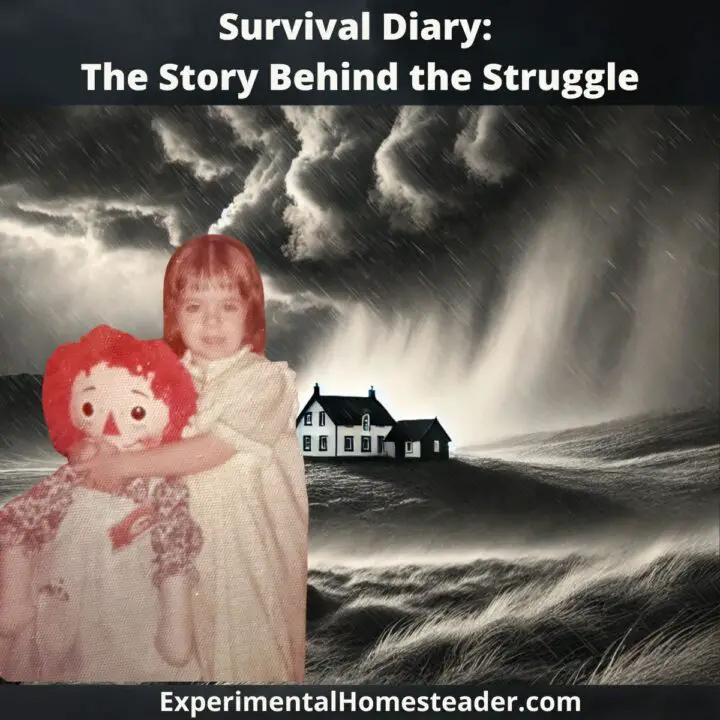
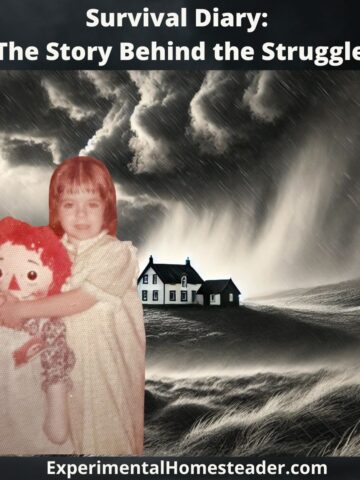
Survival Diary: The Story Behind the Struggle
Survival Diary The Story shares the raw truth of homesteading, resilience, and overcoming struggle in a life built from hardship.
Behind The Scenes Survival Diary January 15
This is the behind the scenes survival diary January 15. Learn about what is going on at our homestead, what has changed and what the future holds.
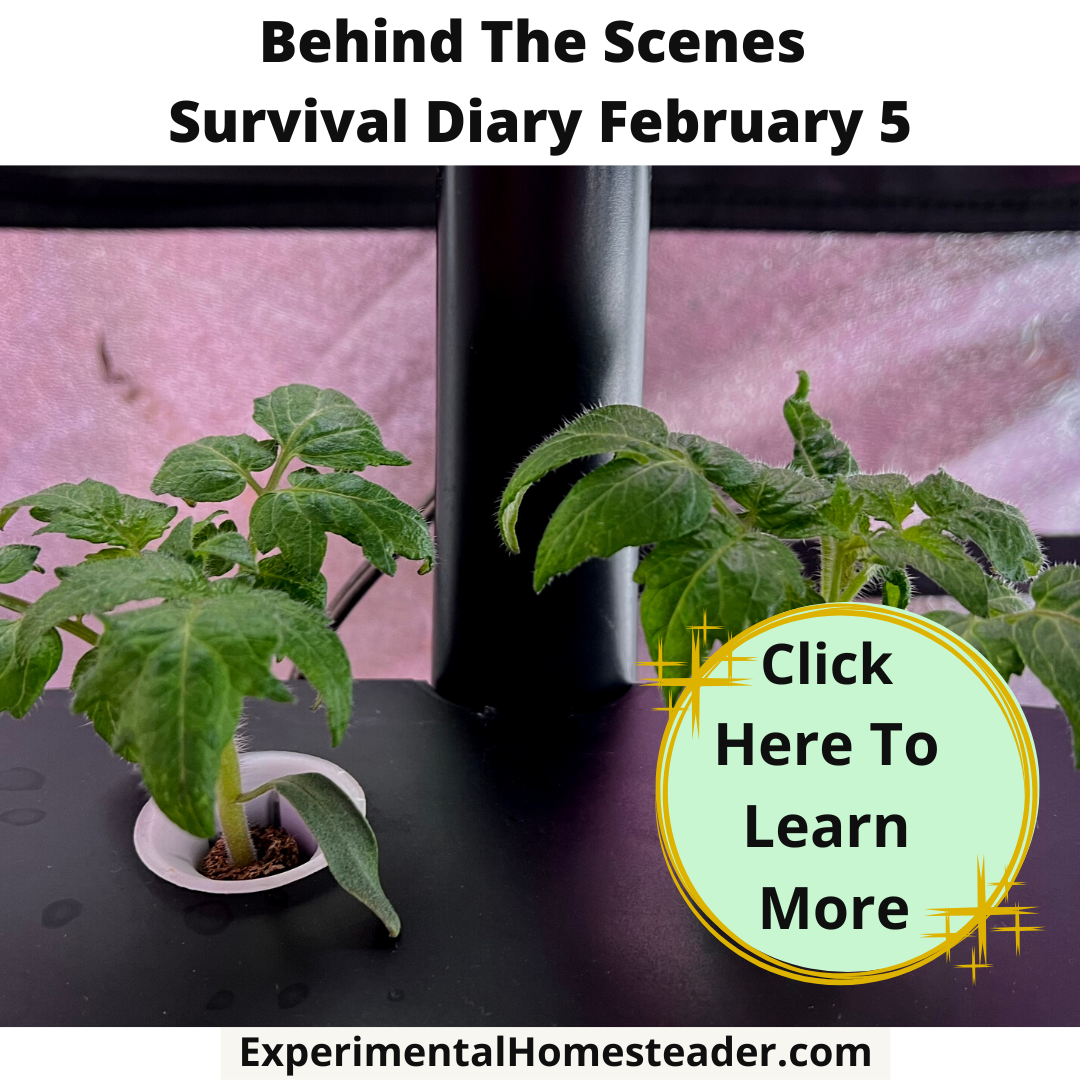
Behind The Scenes Survival Diary February 5
Welcome to the behind the scenes survival diary February 5 edition. Today we are talking about processing tomatoes, maple syrup and goats.
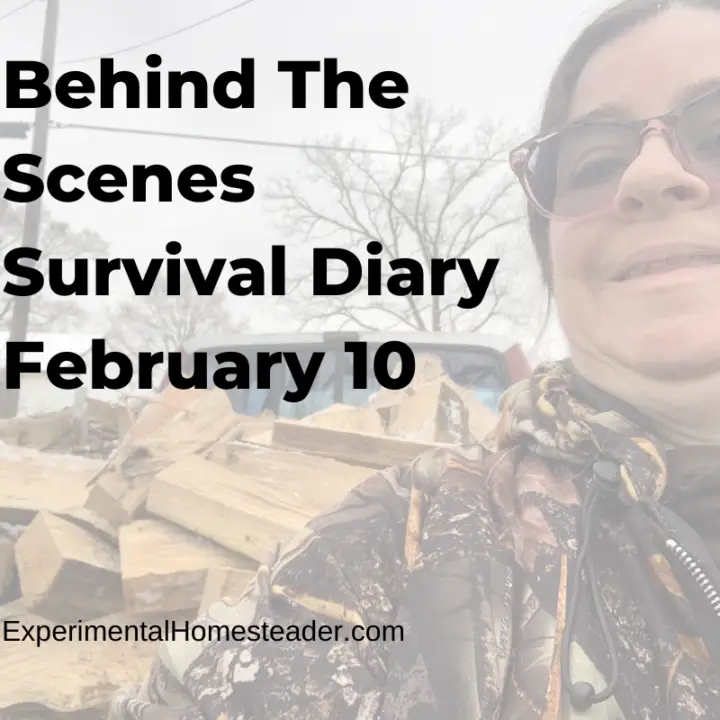
Behind The Scenes Survival Diary February 10
A lot happens behind the scenes on a homestead. The survival diary February 10 talks about what kinds of things happen this time of year on our homestead.
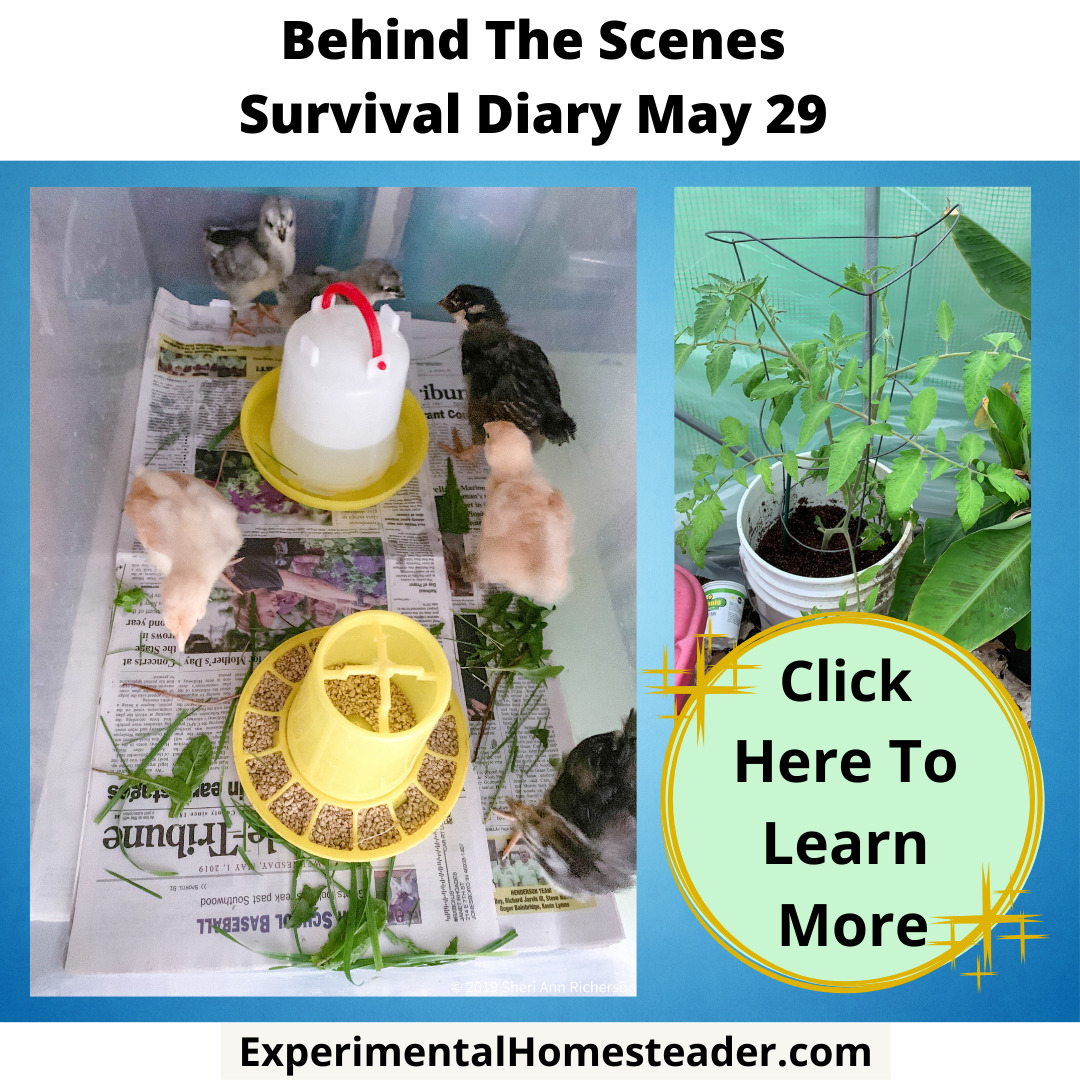
Behind The Scenes Survival Diary May 29
A lot happens behind the scenes on a homestead. The survival diary May 29 talks about what kinds of things happen this time of year on our homestead.
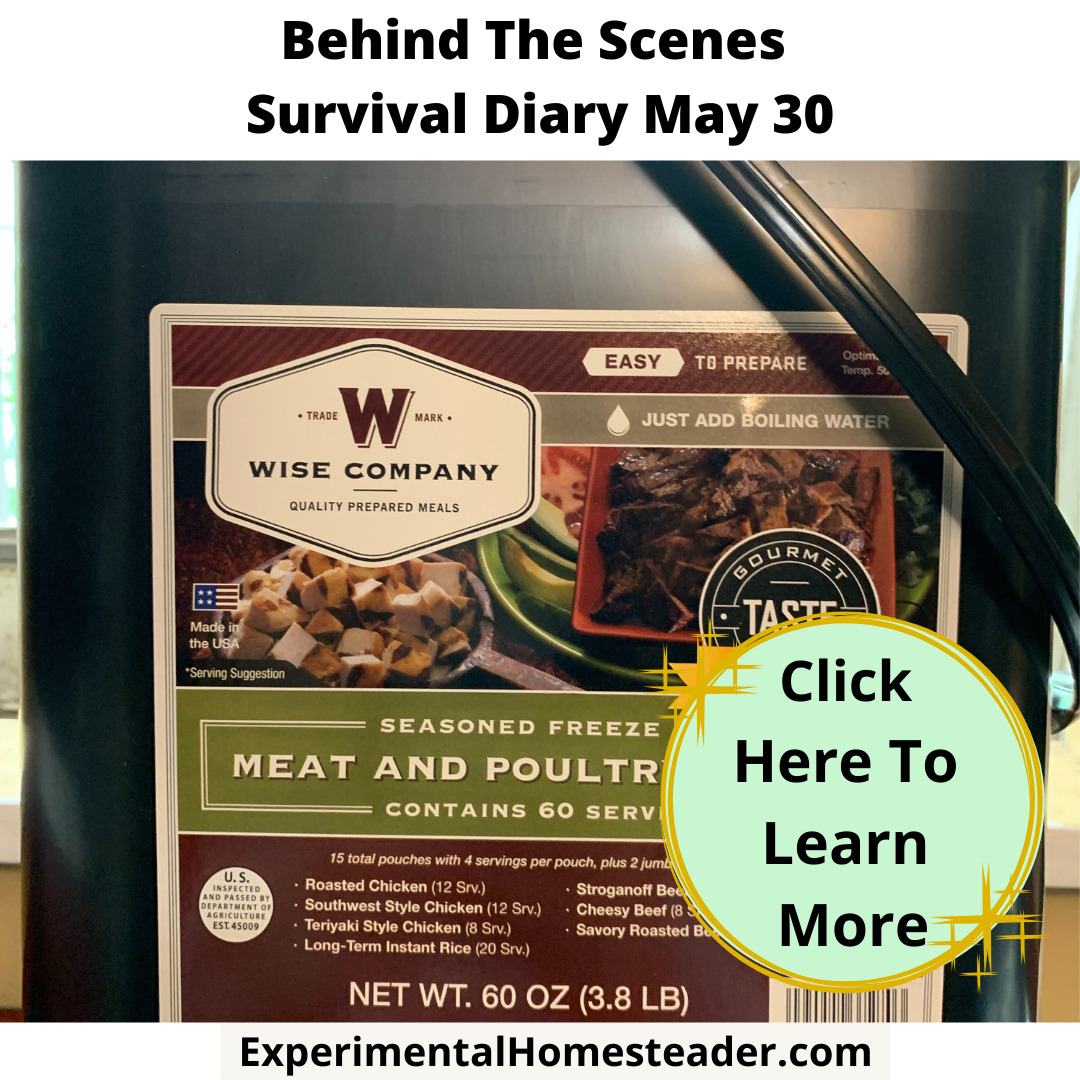
Behind The Scenes Survival Diary May 30
A lot happens behind the scenes on a homestead. The survival diary May 30 talks about what kinds of things happen this time of year on our homestead.
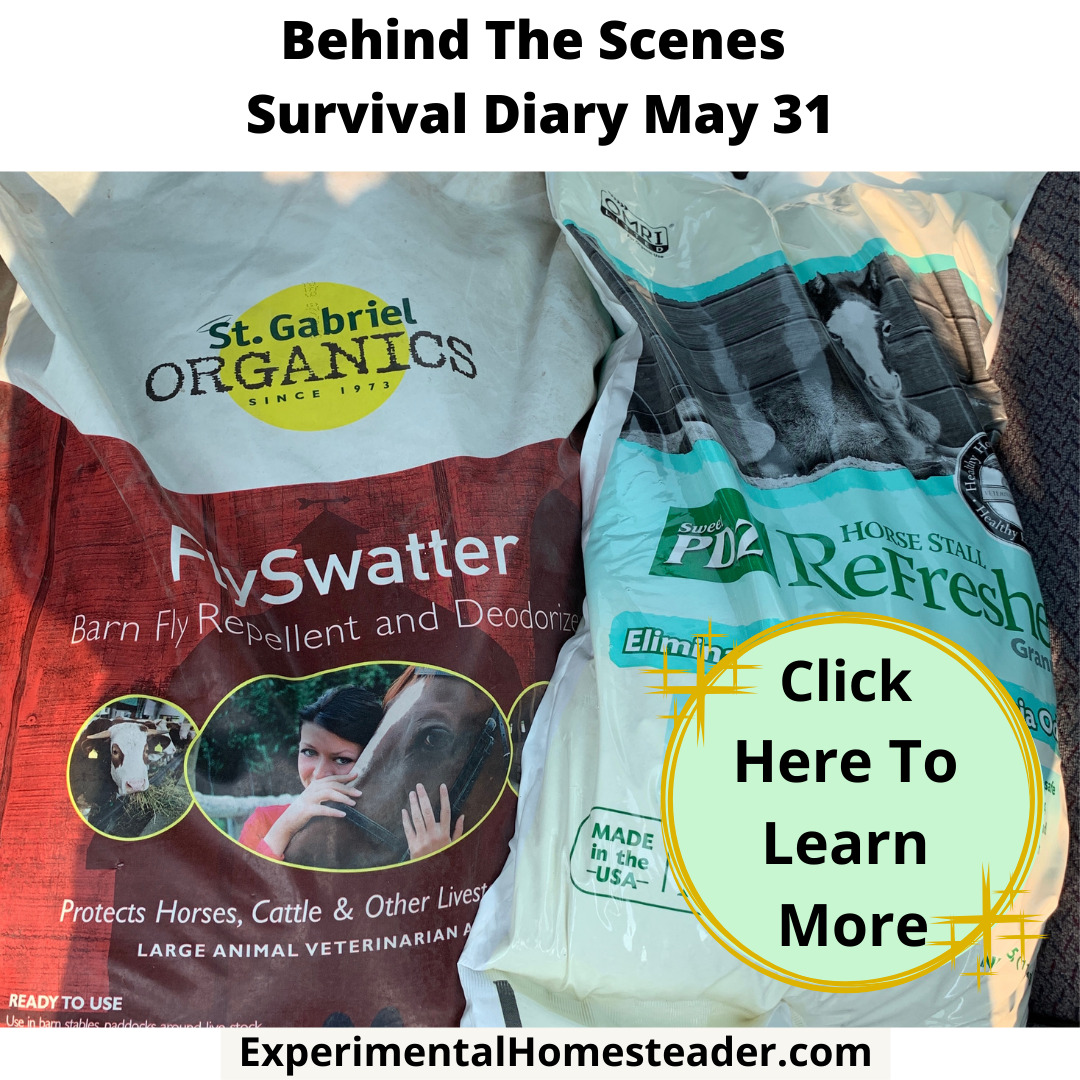
Behind The Scenes Survival Diary May 31
A lot happens behind the scenes on a homestead. The survival diary May 31 talks about what kinds of things happen this time of year on our homestead.
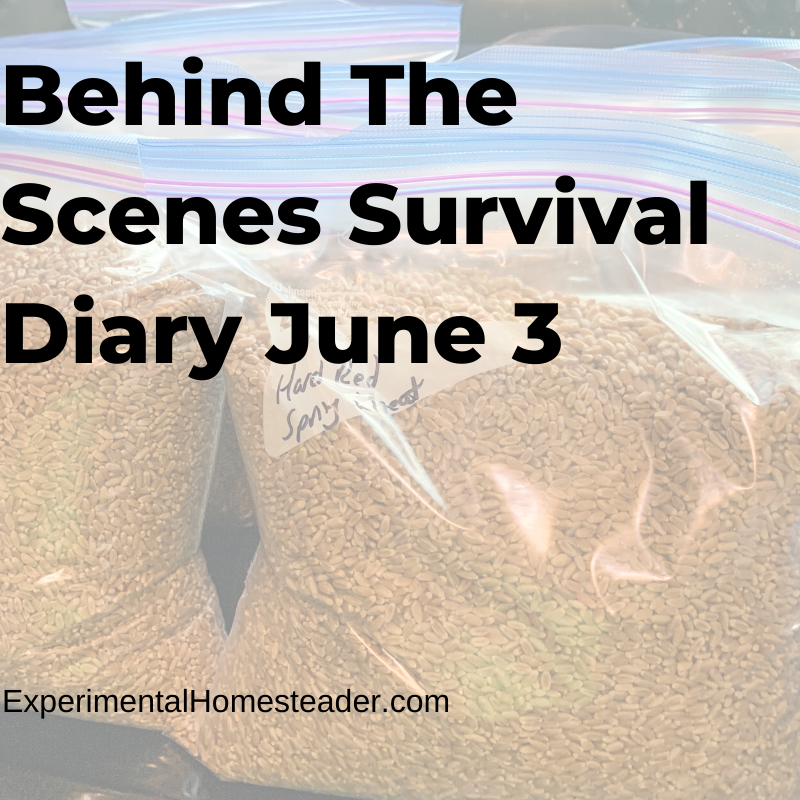
Behind The Scenes Survival Diary June 3
Our survival diary June 3 edition talks about what has been happening over the past few months with the Coronavirus, the hoarding and more.
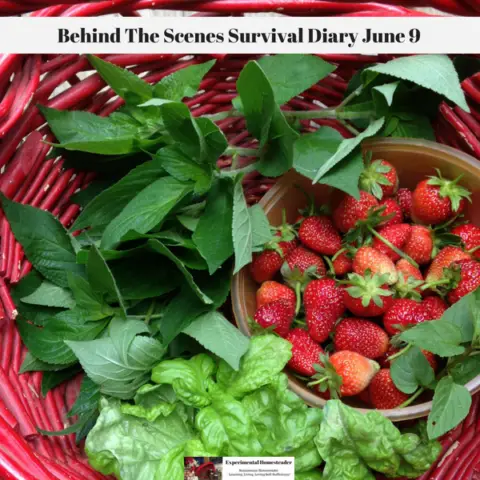
Behind The Scenes Survival Diary June 9
Welcome to the Experimental Homesteader homestead survival diary for June 9. This is where I share tidbits of what life on a homestead is really like.
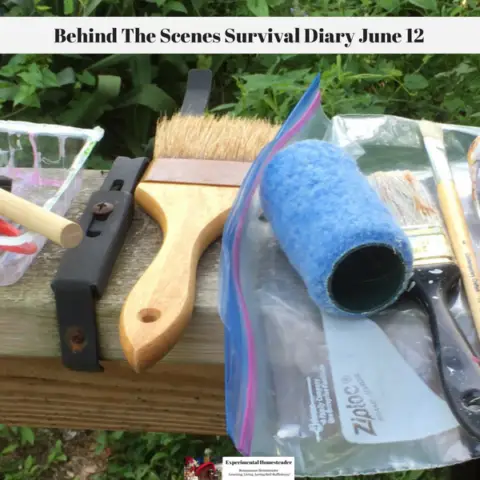
Behind The Scenes Survival Diary June 12
Welcome to the Experimental Homesteader homestead survival diary for June 12. This is where I share tidbits of what life on a homestead is really like.
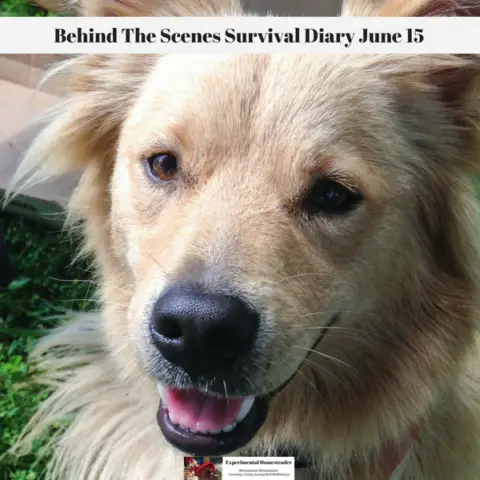
Behind The Scenes Survival Diary June 15
Welcome to the Experimental Homesteader homestead survival diary for June 15. This is where I share tidbits of what life on a homestead is really like.
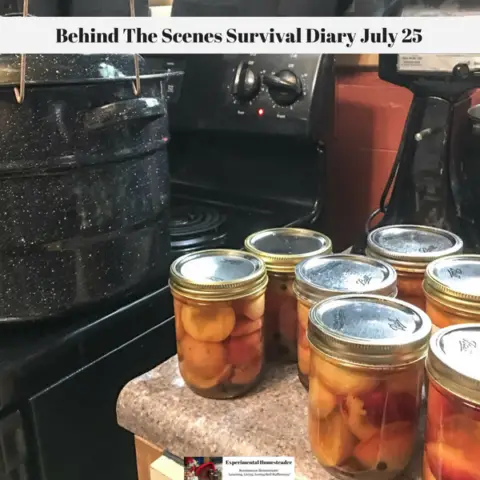
Behind The Scenes Survival Diary July 25
Welcome to the Experimental Homesteader homestead survival diary for July 25. This is where I share tidbits of what life on a homestead is really like.
Behind The Scenes Survival Diary August 23
Welcome to the Experimental Homesteader homestead survival diary for August 23. This is where I share tidbits of what life on a homestead is really like.
Behind The Scenes Survival Diary August 24
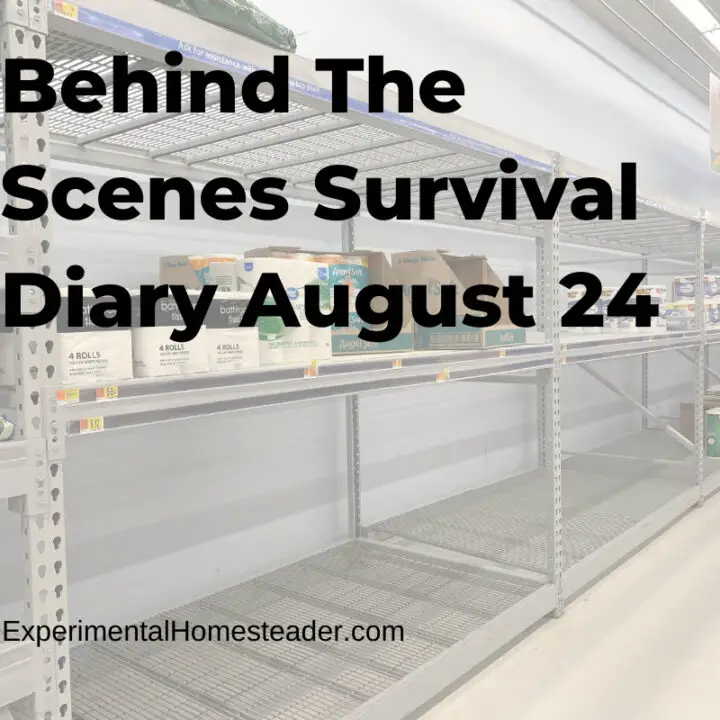
Today's survival diary is about how Covid-19 has put a damper on our lifestyle, caused shortages and ultimately affected our mental health.
Behind The Scenes Survival Diary October 9
Welcome to the Experimental Homesteader homestead survival diary for October 9. This is where I share tidbits of what life on a homestead is really like.
Behind The Scenes Survival Diary October 10
This is the behind the scenes survival diary October 10. Learn about what is going on at our homestead, what has changed and what the future holds.