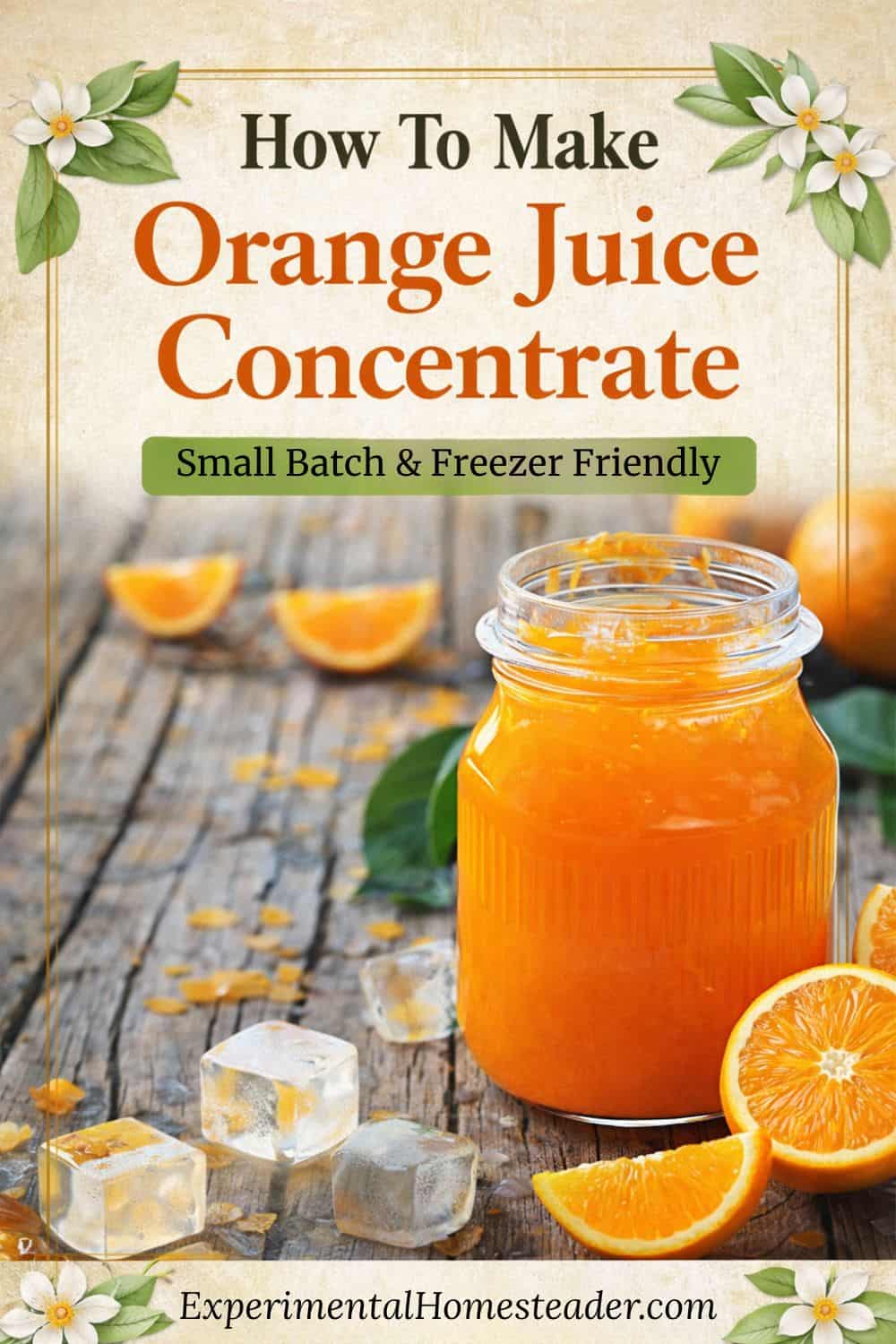
How to Make Orange Juice Concentrate
Orange juice concentrate is one of those kitchen skills you don't realize you need until you've poured out one glass too many of fresh juice that never quite got used. When you cook from scratch and try to use food thoughtfully, it's frustrating to watch something so good disappear so quickly - or worse, get wasted. Concentrating orange juice changes that by turning a fleeting ingredient into something you can actually plan around.

On the homestead, food needs to be flexible. Orange juice concentrate gives you that flexibility by letting you store flavor instead of water. It can be frozen, portioned, and pulled out when it makes sense - whether that's for a glass of juice, a batch of muffins, or a glaze for supper. It's a small shift in how you use oranges, but it makes a noticeable difference in how your kitchen runs.
To really see why this works, it helps to start with a clear understanding of what orange juice concentrate is and how it fits into everyday food preservation.
If you want to go a little deeper, I've put together a short juicing video playlist that walks through the basics, storage, and everyday uses from a homestead perspective.
Understanding Orange Juice Concentrate
Homemade orange juice concentrate offers a delightful way to capture the essence of fresh oranges, significantly extending their shelf life and intensifying their naturally bright flavors. This DIY approach eliminates the concerns of added sugars, preservatives, and artificial flavors often found in store-bought versions, making it a more wholesome and customizable option.
Preparing orange juice concentrate at home involves removing most of the water content from fresh orange juice. This process concentrates the flavor and natural sugars, resulting in a syrupy liquid that can be easily reconstituted with water for a refreshing drink or used as a potent ingredient in various recipes.
One of the primary benefits of orange juice concentrate is its extended shelf life. When stored properly, it can last much longer in your freezer than fresh juice in your refrigerator. This means you can enjoy the taste of fresh oranges even when they're out of season. The space-saving nature of concentrate also makes it more practical for limited freezer space.
In contrast to store-bought concentrates, making orange juice concentrate at home allows for greater control over the process. You can ensure that the juice retains its natural sweetness and nutritional value without the need for additives. One effective method is using a slow juicer followed by a freeze-concentration process. By freezing the juice and then slowly thawing it, the water separates as ice, leaving behind a concentrated syrup. This method avoids the heat that could compromise the flavor and nutritional integrity.
Another practical method involves simmering the juice over low heat until it reduces to a thicker consistency. Although this method introduces some heat, doing it slowly and at a low temperature helps retain more of the orange's natural characteristics.
Using the zest from the orange peel can also enhance the concentrated flavor. Adding zest to the reducing juice intensifies the orange essence and contributes additional aromatic oils without the bitterness that can come from overcooking.
Homemade orange juice concentrate is incredibly versatile. It can be reconstituted with water for a classic glass of orange juice or used in cooking and baking. Its concentrated nature means a little goes a long way, lending a potent orange flavor without significantly affecting the dish's consistency.
By opting for homemade concentrate, you bypass the commercial additives and enjoy a purer, richer flavor profile. This DIY approach enhances your culinary endeavors and aligns with more health-conscious living.
Equipment and Ingredients Needed
Making homemade orange juice concentrate doesn't require specialized equipment or a long list of supplies. Most homesteaders already have everything they need in their kitchen, and the rest can be easily adapted based on what you own and how you prefer to work.
Tools:
- Citrus Juicer: A citrus juicer, whether manual or electric, will efficiently extract juice from your oranges. Manual juicers are perfect for a hands-on approach, while electric juicers speed up the process for larger batches.
- Saucepan: For the low-heat reduction method, a sturdy, heavy-bottomed saucepan will ensure even heating and prevent the juice from scorching.
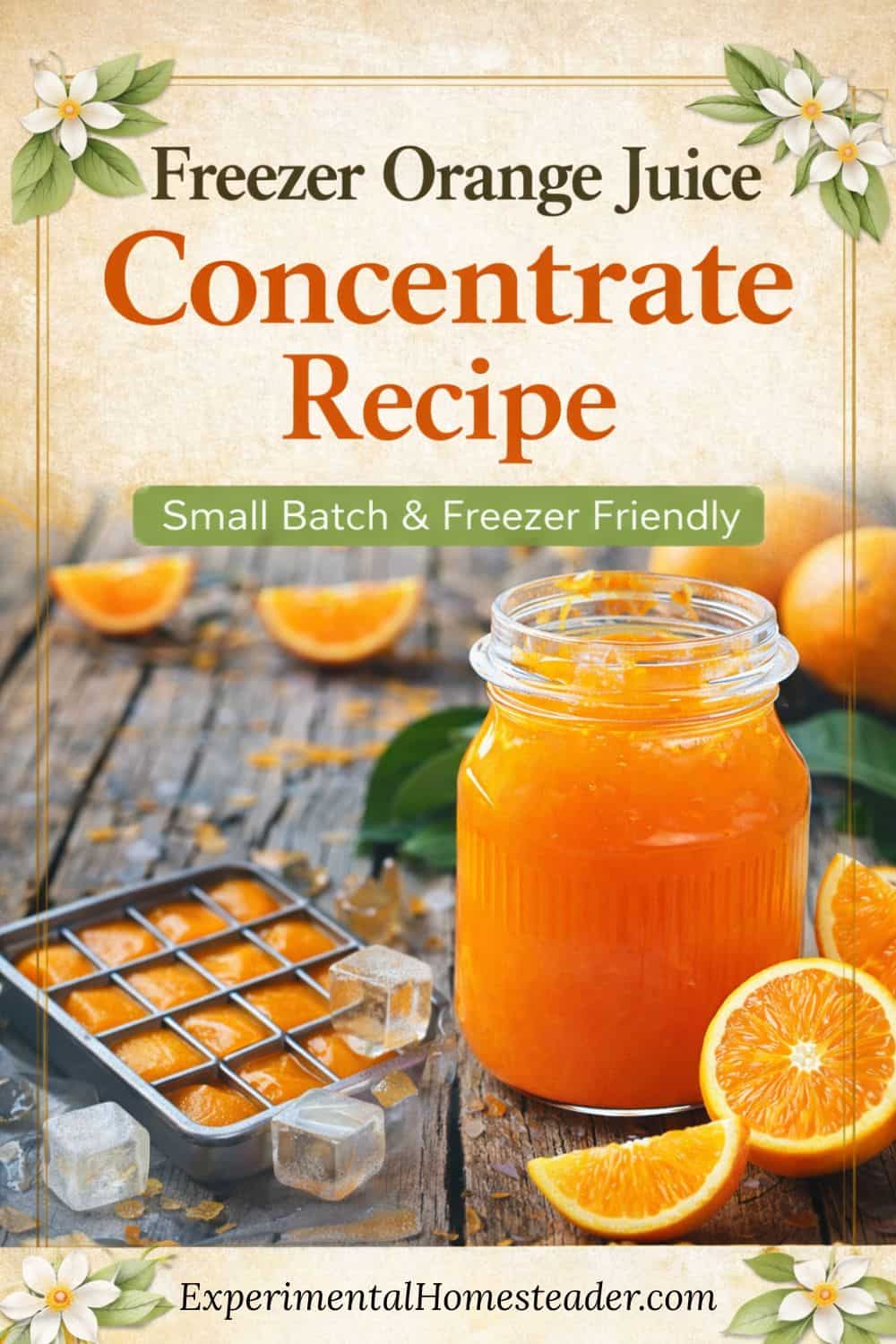
- Freezer-Safe Containers: Ice cube trays or freezer-safe containers with tight-fitting lids, such as Souper Cubes, are ideal for storing your finished concentrate, allowing for easy portioning and long-term storage.
- Fine Mesh Strainer (Optional): If you prefer a completely smooth concentrate, a fine mesh strainer will be useful for straining the juice before reducing it.
Ingredients:
- Fresh Oranges: The quality and type of oranges you choose will significantly impact the flavor of your concentrate.
- Valencia Oranges: Known for their sweet and balanced flavor, Valencia oranges have a high juice content and are available almost year-round.
- Navel Oranges: Sweet, seedless, and easy to peel, Navel oranges are generally available from November to June and produce a lovely, fresh juice.
- Blood Oranges: These oranges offer a unique, slightly tangy flavor and yield a beautifully colored juice. They are seasonal, generally from December to May.
- Optional Sweeteners: Depending on the natural sweetness of your oranges and how you plan to use the concentrate, you may choose to add a natural sweetener such as honey, maple syrup, or agave nectar. This is entirely optional and best added gradually so you can adjust to taste.
Before juicing, wash all oranges thoroughly under running water to remove any surface dirt or residue. This ensures that nothing unwanted makes its way into your juice, especially if you plan to use zest later in the process.
Prepping Your Oranges
Begin by thoroughly washing your oranges under running water to remove any surface dirt or residues, then pat them dry with a clean kitchen towel.
Next, peel the oranges using a sharp knife, carefully cutting away the outer skin while removing the least amount of the white pith possible. The white pith can impart a bitter taste to your juice.
After peeling, slice each orange in half and inspect for seeds. Remove all seeds to ensure a smooth and enjoyable juice.
For maximum juice yield, roll each orange on the countertop while applying firm pressure with your palm. This helps break down the internal membranes and makes juicing easier.
If using a manual juicer, apply steady pressure while twisting the orange halves back and forth. For electric juicers, press steadily but firmly to ensure all juice is extracted.
If choosing to use a blender, remove as much of the white pith as possible before blending, then strain the juice through a fine mesh strainer to remove any remaining pulp and achieve a smooth consistency.
These steps will ensure your oranges are well-prepared for the most flavorful and fresh juice, free from bitterness and seeds.
Three Methods for Making Orange Juice Concentrate
Traditional Simmering Method
- Juice fresh oranges using a citrus juicer, then strain the juice through a fine mesh strainer to remove any pulp or seeds.
- Pour the strained juice into a heavy-bottomed saucepan and place it on the stove over low to medium heat.
- Allow the juice to simmer gently, stirring occasionally to prevent scorching. Do not bring it to a boil, as higher temperatures can alter the flavor profile and reduce vitamin C content.
- Continue simmering until the juice has reduced by about half, which typically takes 1 to 2 hours, depending on the volume of juice and the heat level.
- Taste the reduced juice and add a small amount of natural sweetener like honey or maple syrup if it's too tart.
- Once reduced, allow the concentrate to cool, then pour it into ice cube trays or freezer-safe containers and freeze for future use.
Using a Slow Juicer
- Peel the oranges, remove as much of the white pith as possible, and slice the oranges into smaller segments.
- Run the orange segments through a slow juicer to minimize heat build-up and preserve the maximum amount of nutrients and flavor.
- Pour the freshly extracted juice into a shallow container and freeze it. Once frozen, transfer the frozen juice cubes into a fine mesh strainer set over a bowl and allow them to thaw slowly in the refrigerator. This method causes the water to separate as ice, leaving a concentrated syrup in the bowl.
- For a more intense flavor, zest one or two oranges and mix the zest into the concentrate during the initial juicing step.
- Store the resulting concentrate in ice cube trays or other freezer-safe containers for long-term use.
Employing a Vacuum Distiller or Freeze Dryer
- Juice the oranges as described in the previous methods, ensuring you strain out any pulp and seeds for a smooth starting liquid.
- Set up your vacuum distiller according to the manufacturer's instructions, ensuring all components are clean and properly connected to avoid contamination.
- Pour the fresh orange juice into the distillation chamber. The vacuum distiller will lower the boiling point of water to room temperature, allowing water to evaporate without using heat, thus preserving the flavor and nutrition.
- Collect the residual concentrated liquid from the distillation chamber. This concentrated juice will be syrupy in texture and rich in flavor.
- If the concentrate is too thick, adjust it by mixing in a small amount of fresh juice or water. If it's too thin, consider using a small amount of agar agar to achieve the desired thickness without altering the flavor.
- Alternatively, pour the juice into a freeze dryer and follow the manufacturer's instructions. This method also removes water without heat, maintaining the juice's integrity.
- Transfer the concentrated juice to ice cube trays or freezer-safe containers, ensuring they are sealed tightly to prevent freezer burn.
Optional Tips for All Methods:
- If additional sweetness is required, consider natural sweeteners such as honey or agave nectar. Add these sweeteners gradually and mix thoroughly for an even flavor.
- For an extra burst of citrus flavor, incorporate orange zest. Be cautious not to over-zest, as this can introduce bitterness.
- For a thicker consistency, use agar agar. Dissolve an appropriate amount in warm juice and mix well before reducing or freezing.
By adapting these methods to your preferences and available equipment, you can enjoy the fresh taste of homemade orange juice concentrate throughout the year.
Storage and Shelf-Life
Proper storage is key to maintaining the flavor and quality of homemade orange juice concentrate. Because it contains no preservatives, how you store it directly affects how long it will last and how well it performs when you're ready to use it.
For the most efficient storage, use ice cube trays, silicone molds, or small freezer-safe containers such as Souper Cubes. Ice cube trays work especially well because they allow you to portion the concentrate into small, usable amounts. Once frozen solid, the cubes can be transferred to labeled, freezer-safe bags to save space and keep your freezer organized. If you prefer containers, choose airtight, freezer-safe options and clearly label them with the date.
Freezing is the fastest and easiest method, but canning is the best method for long-term storage. Before freezing, allow the concentrate to cool completely to room temperature. This helps prevent excess condensation and ice crystals from forming. Seal containers tightly or cover ice cube trays well to protect the concentrate from absorbing freezer odors. Store the trays flat until frozen, then consolidate as needed.
When you're ready to use the concentrate, thaw only the amount you need. Thawing can be done slowly in the refrigerator or gently in the microwave using a low-power setting. To reconstitute, mix one part orange juice concentrate with three parts water, adjusting the ratio to suit your taste. Once reconstituted, store the juice in the refrigerator and use it within a few days for best flavor.
Homemade orange juice concentrate will keep well in the freezer for up to six months without noticeable loss of quality. If stored in the refrigerator, it should be used within three to five days, since there are no preservatives to extend its shelf life. With proper storage, you'll always have bright, citrus flavor on hand - ready whenever you need it.

Creative Uses for Orange Juice Concentrate
Orange juice concentrate is one of those ingredients that earns its keep in a from-scratch kitchen because it works across so many different types of recipes. Its concentrated sweetness and natural acidity make it useful in both savory and sweet dishes, allowing you to add bright citrus flavor without watering anything down. Once you start keeping it on hand, you'll find yourself reaching for it far more often than you expect.
For marinades, orange juice concentrate pairs especially well with meats and hearty vegetables. The natural acids help tenderize while the sweetness balances herbs and spices. A simple citrus herb marinade for chicken can be made by combining orange juice concentrate with olive oil, minced garlic, chopped rosemary, salt, and pepper. This works beautifully for grilling, roasting, or even slow cooking and is an easy way to add depth without relying on bottled marinades.
In sauces and glazes, orange juice concentrate adds richness and complexity. A spicy orange glaze for pork can be made by gently cooking orange juice concentrate with soy sauce, a touch of honey, and crushed red pepper flakes until slightly thickened. Brushed onto pork chops or tenderloin during cooking, it creates a glossy finish and a balanced sweet-savory flavor that feels far more intentional than a last-minute sauce.
Desserts benefit just as much from concentrated citrus. Orange juice concentrate can be mixed into frostings, fillings, and batters to add brightness without excess liquid. An orange cream cheese frosting made with butter, cream cheese, powdered sugar, and a small amount of concentrate brings a fresh citrus note to cakes and cupcakes without overpowering them.
Beverages are another natural fit. Orange juice concentrate works well in smoothies, especially when paired with tropical fruits. An orange mango smoothie made with concentrate, frozen mango, yogurt, milk, and a bit of honey is quick, filling, and flavorful. It also works well as a cocktail or punch mixer, adding a tangy sweetness that balances spirits without the need for additional syrups.
Salad dressings are an often-overlooked use, but orange juice concentrate shines here. A simple citrus vinaigrette can be made by whisking together concentrate, apple cider vinegar, olive oil, Dijon mustard, salt, and pepper. This dressing pairs well with leafy greens, grain salads, or even roasted vegetables served cold.
Finally, orange juice concentrate can be used to create glazes and drizzles for baked goods. An orange almond drizzle made with powdered sugar, a small amount of concentrate, and almond extract adds a bright finishing touch to cakes, muffins, or scones without making them overly sweet.
By keeping orange juice concentrate on hand, you gain a flexible ingredient that enhances everyday cooking and baking. It's a simple way to add citrus flavor wherever it's needed, making meals and treats feel more intentional while using ingredients you've already prepared yourself.

Orange Juice Concentrate Recipe
Equipment:
- Citrus juicer (manual or electric)
- Fine mesh strainer (optional)
- Heavy-bottomed saucepan
- Ice cube trays, Souper Cubes, or freezer-safe containers
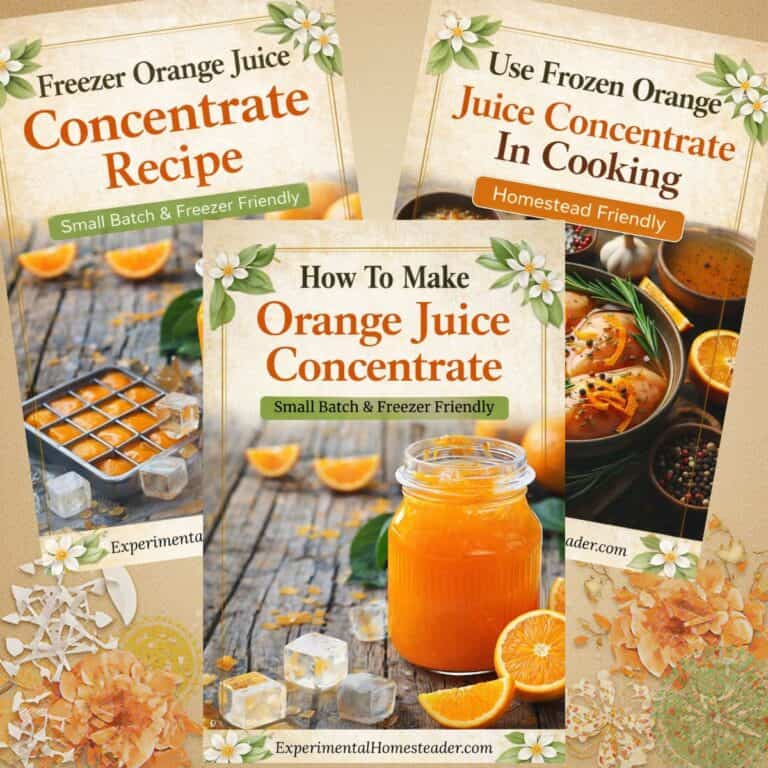
How to Make Orange Juice Concentrate
This recipe ensures that your homemade orange juice concentrate retains its fresh, natural flavors without the need for preservatives or added sugars. Enjoy it in a variety of culinary applications throughout the year.
- Total Time: 2 hours 25 minutes
- Yield: 16 ice cube sized portions 1x
Ingredients
- 10 large fresh oranges (preferably Valencia or Navel)
- ¼ cup orange zest (optional, for enhanced flavor)
- ¼ cup natural sweetener (optional, for added sweetness)
Instructions
- Thoroughly wash the oranges, pat them dry, and remove the peel with minimal white pith to prevent bitterness. Slice each orange in half and remove any seeds.
- Use a citrus juicer to extract the juice from the oranges. If a smoother concentrate is preferred, strain the juice through a fine mesh strainer to remove pulp or seeds.
- Pour the strained juice into a heavy-bottomed saucepan and place it on the stove over low to medium heat. Allow the juice to simmer gently, stirring occasionally, until it reduces by about half, which should take approximately 1 to 2 hours.
- If using, add the orange zest to the juice during the last 15 minutes of simmering. Taste the reduced juice and, if desired, add a natural sweetener, stirring well to incorporate.
- Once the juice has reached the desired consistency, remove it from heat and allow it to cool to room temperature. Pour the concentrate into ice cube trays or freezer-safe containers and freeze until solid. Once froze
Notes
- Store the concentrate in the freezer for up to six months.
- When reconstituting, mix one part orange juice concentrate with about three parts water. Taste and adjust as needed, since homemade concentrates can vary in strength.
- Frozen concentrate cubes can be used directly in recipes to add a burst of citrus flavor.
- Prep Time: 25 minutes
- Cook Time: 2 hours
- Category: Beverage