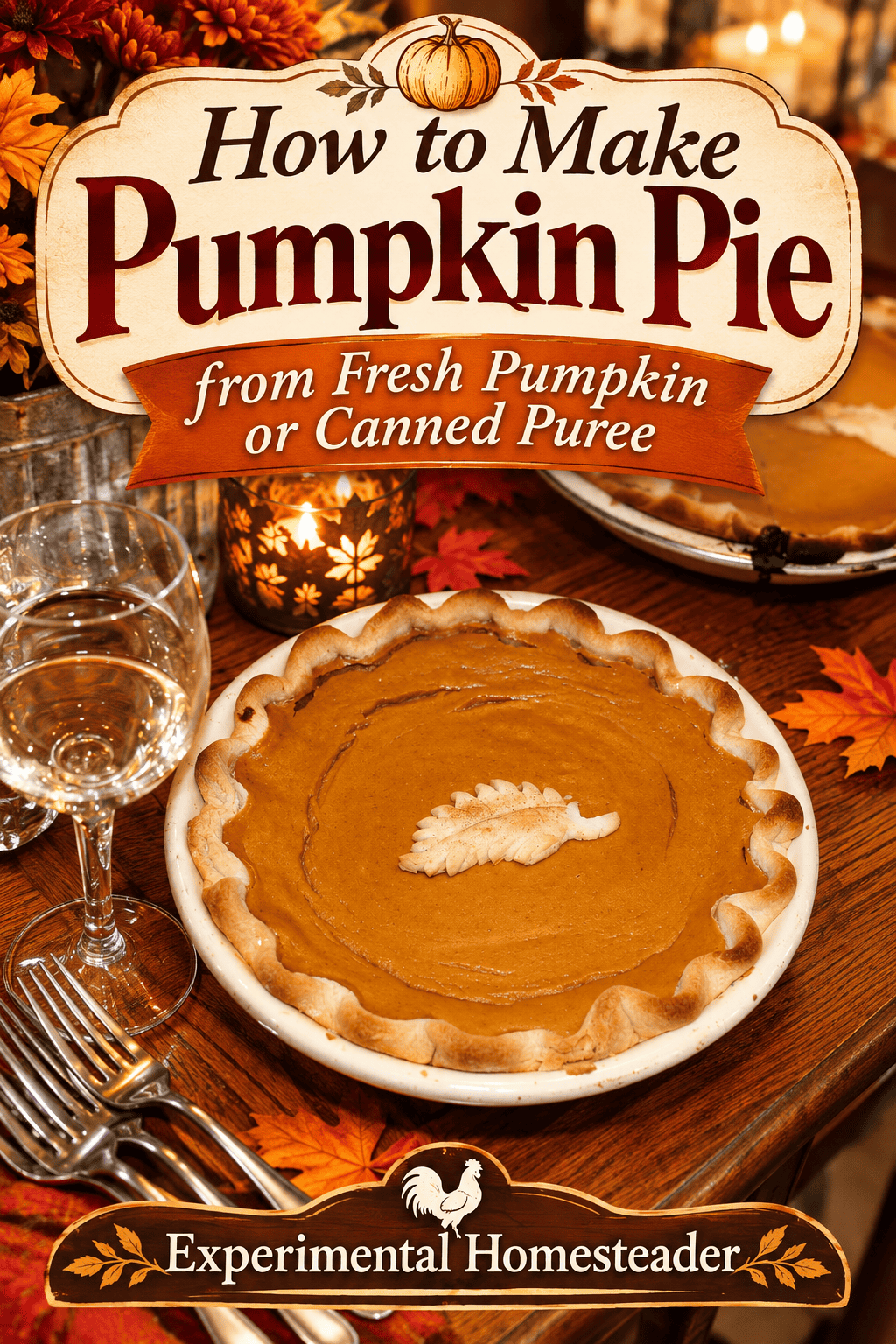
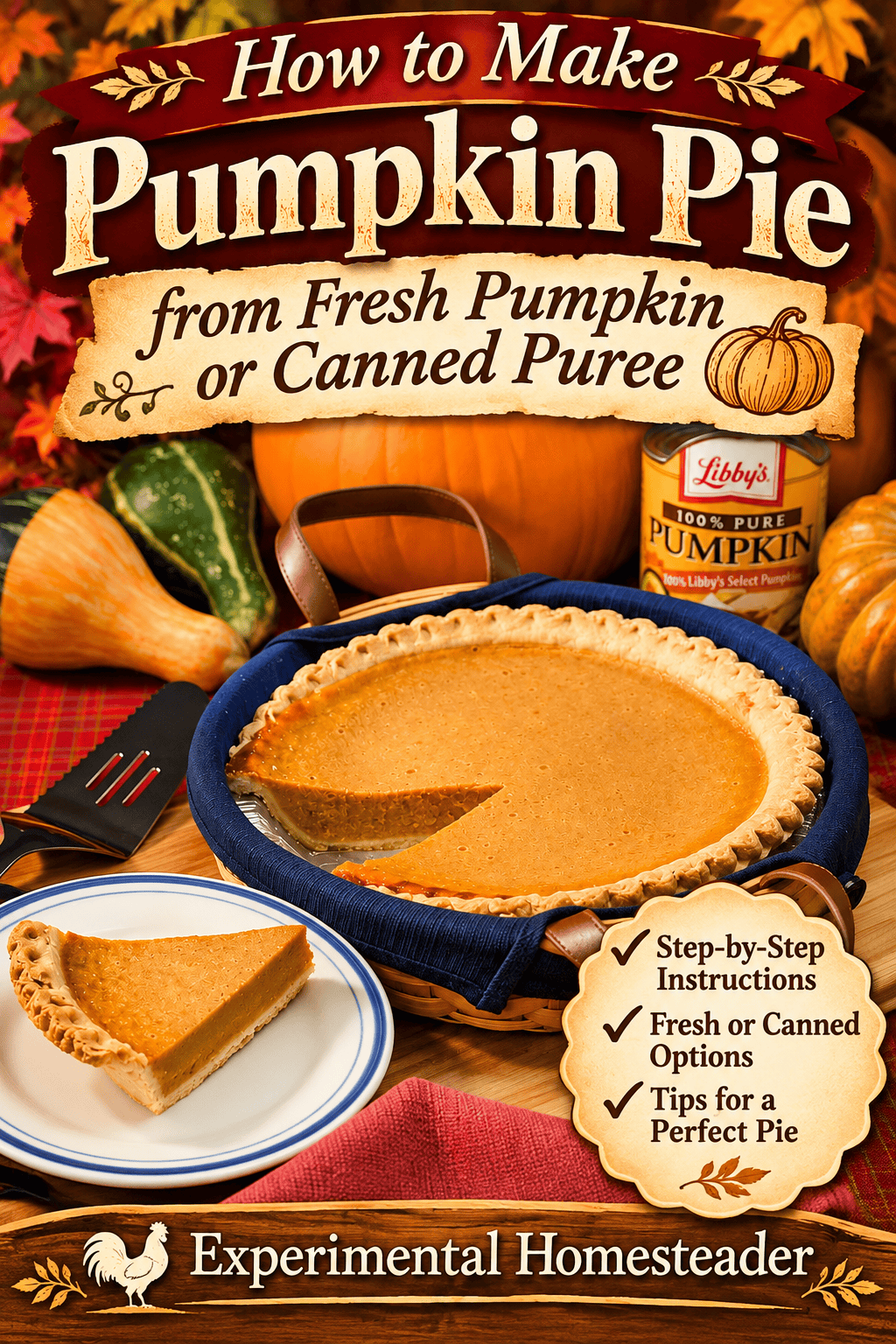
How to Make Pumpkin Pie from Fresh Pumpkin or Canned Puree
How to make pumpkin pie is a useful skill to have when Thanksgiving approaches, especially if the pumpkin came from your own garden instead of a grocery-store can. A homemade pumpkin pie does not need complicated decorations or a shelf full of specialty ingredients. It needs a dependable crust, a well-seasoned filling, and enough oven time to set without drying out or cracking. The important distinction is that fresh pumpkin puree can contain much more water than the canned version, so preparation matters.
This guide includes my nine-inch pumpkin pie recipe using either cooked fresh pumpkin or plain canned pumpkin. I'll walk through preparing a cooking pumpkin, mixing the spiced custard filling, baking it, recognizing when the center is set, and cooling and refrigerating it. If you raise your own eggs or produce milk on the homestead, you can bring those ingredients into your kitchen while keeping the recipe's measurements and proportions in mind.
In This Article
Fresh Pumpkin Versus Canned Pumpkin for Pie
Plain canned pumpkin is already cooked and usually has a thick, consistent texture. Fresh pumpkin needs to be cooked, pureed and often drained before it behaves the same way. The goal is not to use a certain number of fresh pumpkin pieces but to finish with the measured amount of smooth, thick puree the recipe calls for.
Use a named edible cooking pumpkin or winter squash suited to baking. A large field pumpkin may have more watery, stringy flesh than a small pie pumpkin, though varieties differ. Never use a carved pumpkin that has sat outdoors as a food ingredient. Wash the whole pumpkin before cutting so surface dirt does not travel into the flesh.
Print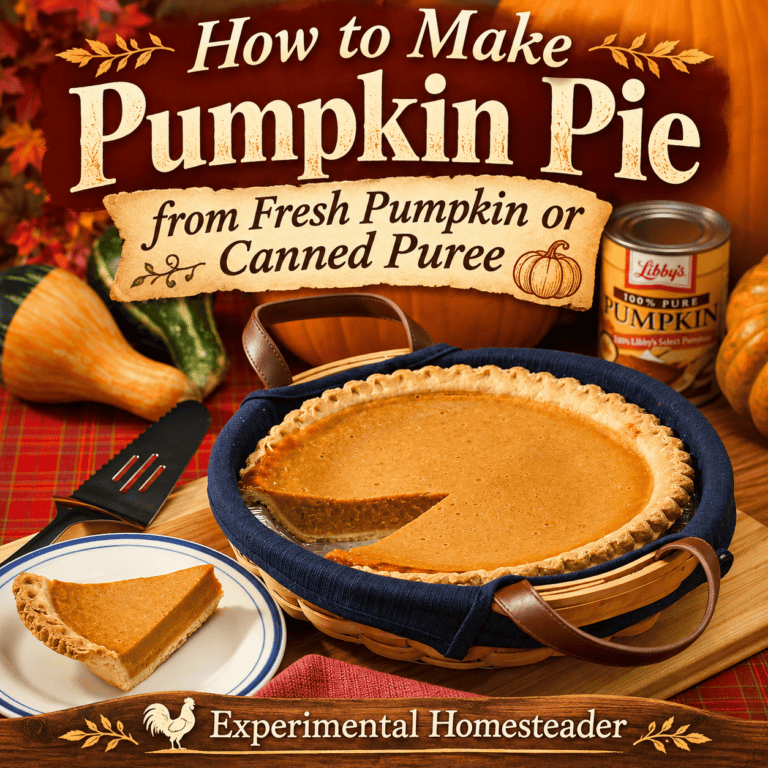
How to Make a Delicious Pumpkin Pie
A homemade nine-inch pumpkin pie made with fresh cooked pumpkin or an equivalent amount of thick canned pumpkin puree, brown sugar, warm spices, eggs and evaporated milk.
- Total Time: 140
- Yield: 1 pie (8 slices) 1x
Ingredients
- 1 pie pumpkin, 6 to 8 inches in diameter (you can substitute a butternut squash if you can't find a pie pumpkin or use 2 cups of premade pumpkin filling)
- ½ cup brown sugar
- 1 teaspoon ground cinnamon
- ½ teaspoon each of ground cloves and allspice
- ¼ teaspoon ground ginger
- 1 teaspoon vanilla extract
- ¼ teaspoon salt
- 2 large eggs
- 1 12-ounce can of nonfat evaporated milk
- 1 9-inch pie crust, unbaked
Instructions
- Cut the pumpkin in half and scoop out the seeds and insides. (Save the seeds! Dry them and feed them to the birds, or roast them and eat them yourself.)
- Place the pumpkin halves cut-side-down onto a casserole dish with a cover (you can use 2 casserole dishes, one for each half, if you need to).
- Poke the skins of each half with a fork several times.
- Cover and bake uncovered at 350 degrees for about an hour.
- When the pumpkin is baked and cool, pour off any excess water and set it aside. Then scoop out the soft flesh and puree in a blender or food processor.
- Add any pumpkin water as necessary to get a smooth, creamy texture. Alternatively, you could use a food mill.
- In a mixer at medium-high speed, mix 2 cups of pumpkin with the evaporated milk, vanilla, and sugar.
- Add the eggs and mix well.
- Then add the spices and salt and mix.
- Pour into unbaked pie shell and bake at 350 degrees for 45 minutes to an hour.
- When the pie is done, a knife inserted in the middle will come out clean.
Notes
Makes one 9-inch pie, cut into 8 slices. For canned pumpkin, use 2 cups plain thick pumpkin puree and skip the fresh-pumpkin roasting steps. Allow additional cooling and refrigeration time before slicing. Baking time varies with the pie dish and oven.
- Prep Time: 20
- Cook Time: 120
Nutrition
- Serving Size: 1 slice (⅛ pie)

Optional Homemade Pie Crust
For one nine-inch crust, combine 1 ¼ cups all-purpose flour with ½ teaspoon salt. Cut in ½ cup cold butter or a suitable baking fat until the mixture resembles coarse crumbs. Sprinkle in approximately 3 to 5 tablespoons ice water, a tablespoon at a time, just until the dough holds together when pressed. Shape a disc, chill about 30 minutes, and roll it large enough to fit the pie plate. Keep the dough cold so the crust is less likely to turn tough or greasy.
A purchased crust is fine if that makes the holiday workload more manageable. The filling is the focus of the recipe, not a test of how many tasks someone can fit into one Thanksgiving morning. A sturdy metal pie plate or a traditional ceramic dish will work, although bake timing can vary by material and thickness.
Making Smooth Pumpkin Puree from a Homegrown Pumpkin
- Wash a sound edible cooking pumpkin and place it on a clean stable cutting board.
- Cut it carefully, remove the stem section, scoop out the seeds and stringy center, and divide it into pieces that fit a roasting pan.
- Roast the cut pieces at approximately 375°F until the flesh is fork-tender, often 45 to 75 minutes depending on size. Steaming is also possible, but adds more water.
- Let the pumpkin cool enough to handle safely, then scoop the edible flesh away from the rind and blend or mash until smooth.
- Drain the puree in a fine sieve or clean cloth if it is much thinner than canned pumpkin. Keep it refrigerated while preparing the pie.
- Measure 2 cups of cooked pumpkin puree for the filling. Freeze extra measured portions promptly for another baking day.
Pumpkin puree is not safe for home canning using ordinary canning directions; its thickness prevents reliable heat penetration. If you preserve extra pumpkin yourself, use a tested pressure-canning process for cubes or freeze cooked puree. This matters for anyone producing a large pumpkin harvest who wants to save time for holiday pies.
How to Tell When Pumpkin Pie Is Done
A pumpkin custard is not supposed to be dry like cake. The outer portion of the filling should look set, and the middle can have a small gentle movement when the pan is carefully nudged. A clean food thermometer is the best way to verify a safe egg-based filling; aim for at least 160°F in the custard. Insert the probe without striking the hot pan bottom, and clean it between uses.
If the filling is still flowing like liquid, it needs more oven time. If the pie cracks badly or pulls away from the crust, it may have been overbaked. Remember that the custard continues to settle as it cools; give it time rather than slicing immediately.
What If You Have Eggs or Milk from Your Homestead?
Freshly collected eggs still need clean handling and safe refrigeration, and their freshness does not change the safe cooking temperature of the pie. Use eggs of a size equivalent to the recipe's large eggs. Extremely small or unusually large home-raised eggs can shift the custard consistency, so weigh or measure if you are trying to reproduce the same result.
If you have milk from dairy goats or cows, you may want to use it in the filling. But whole milk is thinner than evaporated milk, and the mixture is not an automatic direct substitution. Use a recipe formulated and tested for the dairy you intend to use or test your variation before Thanksgiving. A rich milk-based pie may require a different ratio of eggs and liquid.
Make-Ahead and Safe Pumpkin Pie Storage
Pumpkin pie contains eggs and dairy and needs refrigeration. Move it into the refrigerator within two hours after baking and cooling; you do not need to leave it on the counter until completely cold. Cover it once sufficiently cool to avoid condensation on the surface. Store at 40°F or colder and use within three to four days for best safety and quality.
If you bake several pies for a gathering, hold them in the refrigerator and put one out at a time rather than leaving the whole dessert table at room temperature all afternoon. Leftover slices can be frozen if properly wrapped, although the texture may change after thawing. Frozen pie is best thawed in the refrigerator, not on a warm countertop overnight.

Pumpkin Pie Troubleshooting
Why is my fresh-pumpkin pie watery?
Homemade puree may contain excess water, or a milk substitution may have changed the custard. Drain the puree until thick, measure accurately, and follow the milk quantity listed in the recipe card.
Why did the filling crack?
Cracks can result from overbaking or temperature changes. Stop baking when the filling is safely set, let it cool gradually, and avoid taking it straight from a hot oven to a cold surface.
Why is the crust soggy?
Very wet pumpkin, a thin crust, or an underbaked bottom can cause sogginess. Roll the dough evenly and bake on a lower-middle rack. If you prefer blind-baking, use a pie recipe designed for a partially baked shell to avoid overbaking the edges.
Why is my pie bland?
Pumpkin has a mild flavor. Measure spices and salt, use fresh ground spices if possible, and remember that homemade puree can differ in sweetness. Adjust the next test batch rather than dumping extra spice into an already baked pie.
Frequently Asked Questions
Can I use fresh pumpkin instead of canned?
Yes, as long as it is fully cooked and thick enough to behave like plain canned puree. Measure the finished puree after draining.
Can you make pumpkin pie without evaporated milk?
Yes, but use a recipe formulated for the replacement dairy. Swapping the same volume of whole milk into this exact formula changes the amount of water and may affect setting.
Does pumpkin pie need to be refrigerated?
Yes. This is an egg-and-dairy custard pie, so keep it refrigerated after prompt cooling and do not leave it at room temperature for more than two hours.
Can I use a pumpkin I grew myself?
Absolutely, if it is an edible cooking variety handled safely. Cook it, puree it, drain excess moisture, and freeze extras rather than trying to home-can pumpkin puree.
More Recipes for Your Thanksgiving Table
For more holiday meals and desserts, see Thanksgiving Recipes and DIY Decorating Ideas for the Homestead, homemade pie recipes and desserts, and my cinnamon roasted pumpkin seeds for another way to use the pumpkin harvest. If you want to keep baking with pumpkin, try mini pumpkin cheesecakes with salted-caramel crunch or pumpkin whoopie pies.
One Pumpkin Harvest, More Than One Holiday
For a homesteader who grows cooking pumpkins, the pleasure of pie starts long before Thanksgiving. Preparing pumpkin from the garden gives you a chance to make enough plain puree for several baked goods. I like the idea of setting some aside for Christmas while everything is already out on the counter. Freezing measured portions means one pumpkin harvest can become pie today and other treats weeks later.
In my older holiday-leftovers radio episode, I talked about making extra pie dough while already preparing holiday pies. That is still a practical time-saving idea. Portion the dough for the pans you use, protect it in the freezer so the edges don't get broken, and label it for the next occasion. You can also freeze suitable baked pie portions for another day rather than feeling you have to finish every dessert immediately.
A homemade pumpkin pie is especially satisfying when you know where the pumpkin came from, but a good result still depends on the details. Cook and drain the puree properly, mix a smooth custard, bake until it is safely set, and let it chill before slicing. Do you prefer to make pie from a garden pumpkin or from plain canned puree?
Get More Homesteading Recipes and Seasonal Ideas
If you enjoy making food from scratch, growing and preserving your own harvest, and finding practical ways to live more self-sufficiently, the Experimental Homesteader newsletter is for you. I share seasonal recipes, food preservation ideas, hands-on homesteading projects, and useful resources from the website so you can discover what to make, grow, or try next. Sign up below to have those ideas delivered to your inbox. In the meantime, explore my homemade pie recipes for more baking inspiration.
Making pumpkin pie from a homegrown pumpkin? Save the seeds for my roasted pumpkin seed recipe. For another homemade holiday flavor, you can also prepare homemade vanilla extract for future baking.
Have some pumpkin puree left after making pie? Bake my cranberry pumpkin bread with fresh or canned pumpkin for another seasonal treat.