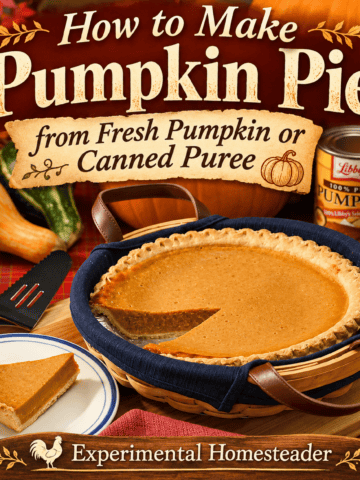
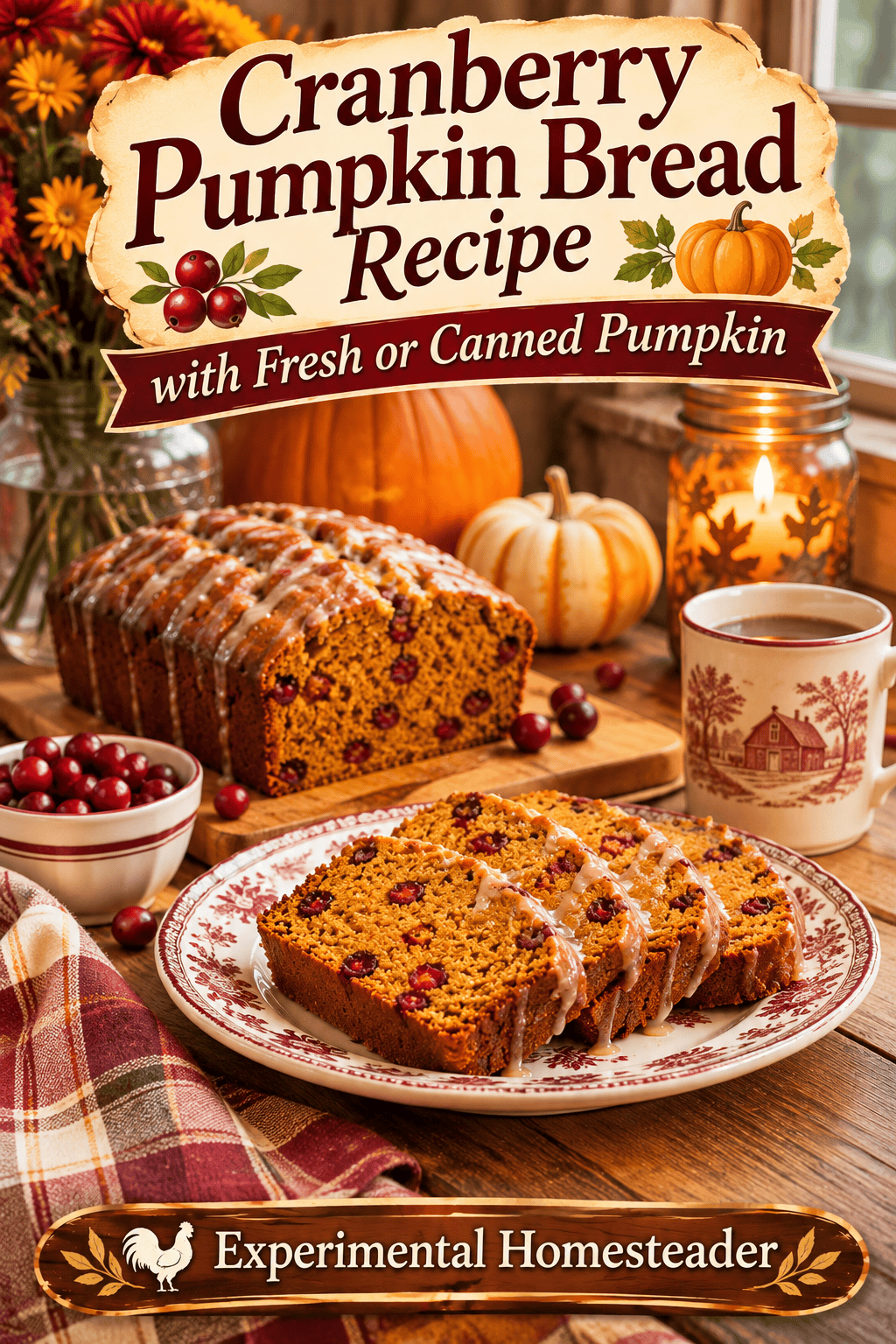
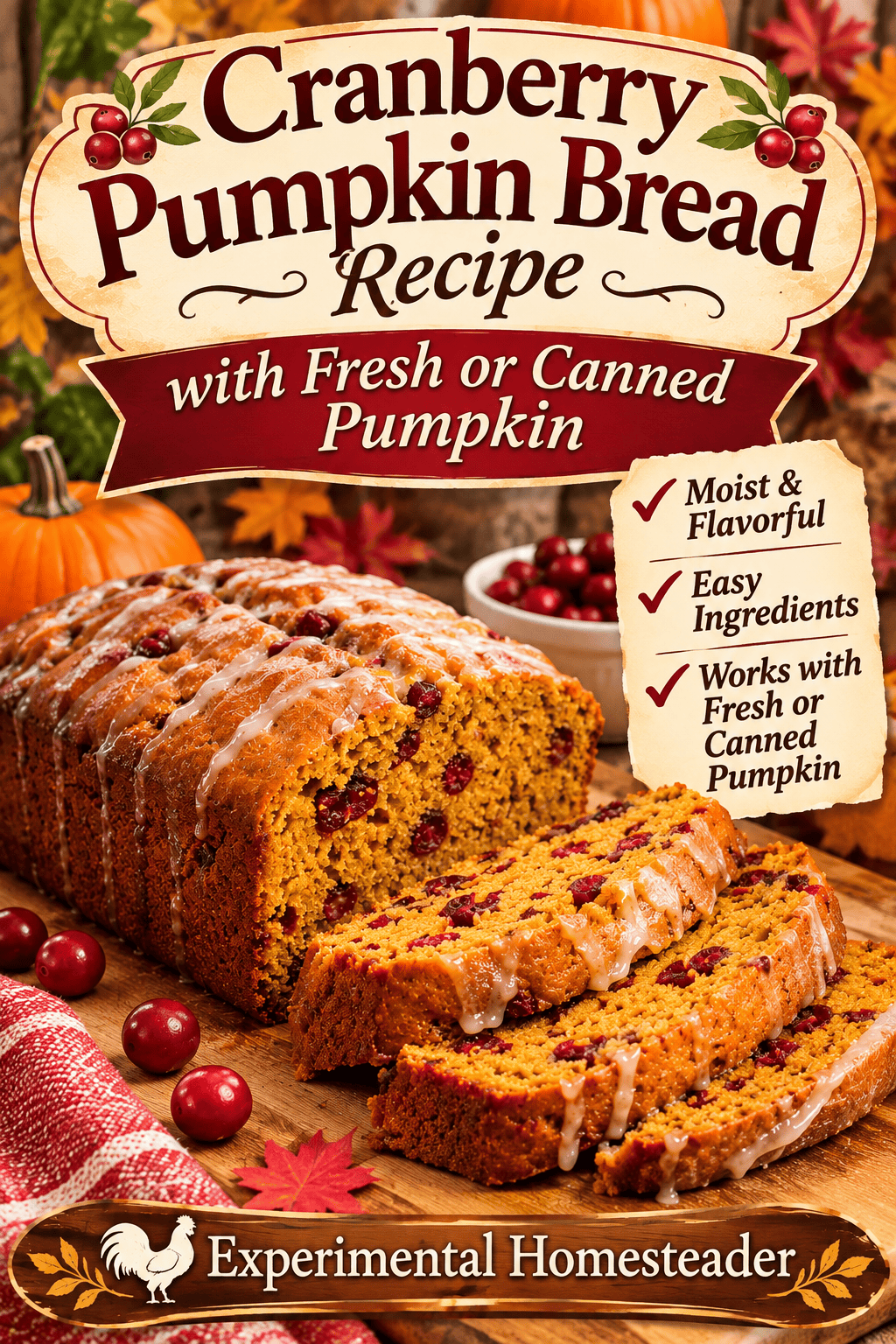
Cranberry Pumpkin Bread Recipe with Fresh or Canned Pumpkin
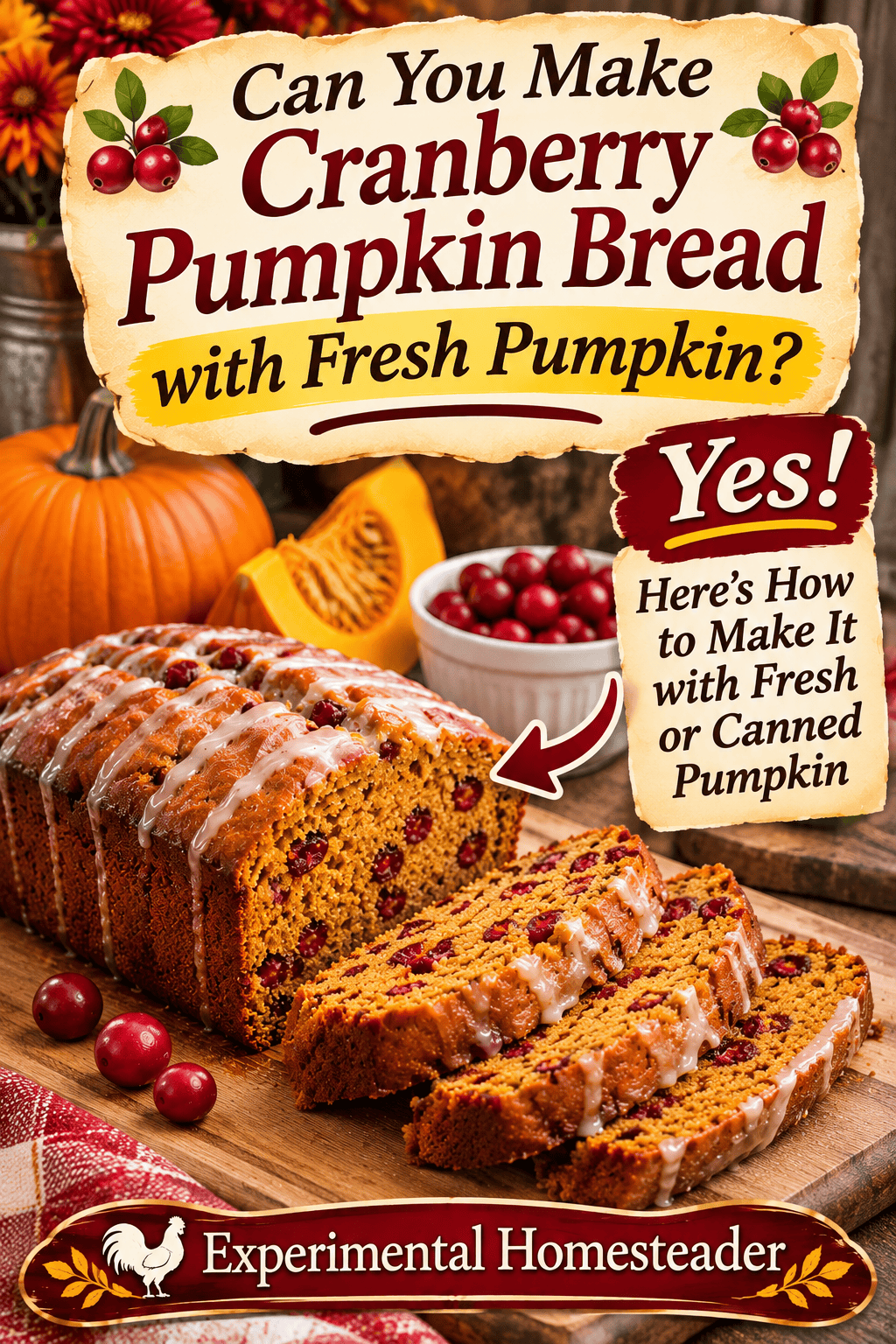
Cranberry pumpkin bread is a useful way to bring two familiar fall flavors into one homemade loaf, especially when you have cooked pumpkin waiting in the refrigerator or cranberries left from holiday shopping. The pumpkin keeps this quick bread moist, while the cranberries add little pockets of tartness that balance the sweetness. It is the kind of bake that fits Thanksgiving morning, a fall gathering, or a quiet afternoon when the oven is already running for another dish.
For a homestead kitchen, this recipe is also about using what you have. Your pumpkin might come from your own harvest rather than a can, and the cranberries might be fresh, frozen, or dried. Those ingredients behave differently, so I'll explain the adjustments instead of pretending every substitution gives an identical loaf. The original two-loaf recipe is in the Tasty Recipe card below, with optional vanilla and chopped pecans for anyone who would like to add them.
In This Article
What Makes Pumpkin and Cranberries Work Together?
Pumpkin puree contributes moisture, body, and a mild flavor that accepts cinnamon, ginger, and nutmeg without overpowering the fruit. Cranberries are much sharper, so they interrupt the sweetness in a pleasant way. A quick bread also requires less handling than a yeast loaf, which makes it practical when the rest of the holiday meal demands attention. Unlike bread dough, the batter should not be kneaded; too much mixing can create a dense, tough loaf.
You can slice the finished bread for breakfast, serve it with a holiday brunch, or wrap portions for the freezer. A loaf also makes good use of a modest amount of pumpkin puree, without requiring you to commit to a whole pie. If you grow pumpkins for cooking, reserve measured portions of puree before seasoning the remainder for soup, muffins, or dessert.
Print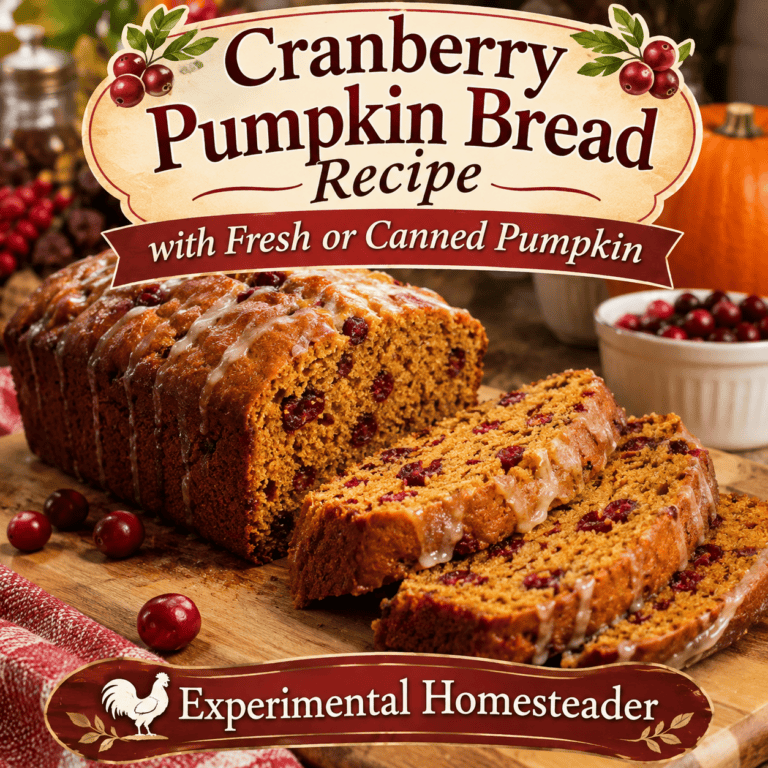
Cranberry Pumpkin Bread
A moist cranberry pumpkin quick bread made with pumpkin puree, brown sugar, pumpkin pie spice, and fresh or dried cranberries. Makes two loaves.
- Total Time: 70
- Yield: 2 loaves (12 slices total) 1x
Ingredients
- 2 ¼ cups flour
- 2 teaspoons baking powder
- 1 tablespoon pumpkin pie spice
- ½ teaspoon salt
- 2 eggs (beaten)
- 1 cups brown sugar
- 1 (15 ounce) can pumpkin puree
- ½ cup vegetable oil
- 2 teaspoons vanilla extract
- 1 cup fresh or dried cranberries
- Optional: 1 cup chopped pecans
Instructions
- In a large bowl combine flour, baking powder, sugar, pumpkin pie spice and salt. Mix well.
- In a separate bowl, combine pumpkin, eggs, oil and vanilla extract. Mix well.
- Add pumpkin mixture to flour mixture and stir well.
- Fold in the cranberries and optional chopped pecans.
- Transfer mixture to two lightly greased loaf pans.
- Bake in a preheated oven at 350F for approximately 45 to 55 minutes or until golden and baked through.
- Cool for 5 minutes in pan before removing to wire rack to cool completely.
Notes
Makes two loaves. Use one 15-ounce can of plain pumpkin puree or an equivalent amount of thick, drained cooked pumpkin. Fresh or dried cranberries both work; dried berries make a sweeter loaf. Pecans are optional. Cool completely before wrapping or freezing.
- Prep Time: 15
- Cook Time: 55
Nutrition
- Serving Size: 1 slice (1/12 recipe)

Using Pumpkin From Your Own Homestead
For homemade puree, start with an edible cooking pumpkin rather than a carved pumpkin that has been sitting on display. Wash, cut, remove seeds and stringy centers, and roast or steam the pumpkin until tender. Scoop out the flesh and puree it until smooth. If the puree seems watery, drain it through a fine sieve or clean cloth until it resembles thick canned puree. Measure the puree after draining, not before.
An especially wet pumpkin can produce a gummy center even when the bread has been in the oven for a long time. If your harvest includes more pumpkin than you can use at once, freeze measured portions of plain puree. Do not attempt to home-can pumpkin puree, which does not have a recommended safe home canning process. Cubed pumpkin can be pressure canned using tested directions, but puree belongs in the refrigerator or freezer unless processed commercially.
Fresh, Frozen, or Dried Cranberries: Which Should You Use?
Fresh cranberries add tartness and hold their shape reasonably well when folded into the batter. Rinse and discard damaged fruit, then chop them if you want more even distribution rather than a few large tart berries. Frozen cranberries can also work; keep them frozen while folding them in, and allow a little more baking time if the loaf needs it.
Dried sweetened cranberries bring a sweeter flavor and chewy texture, and they contribute less free moisture. The original recipe calls for 1 cup of fresh or dried cranberries; dried cranberries will make the loaf sweeter and chewier. If you harvest berries or buy them at a seasonal price, freezing some plain cranberries is often a convenient way to keep the option open without changing the recipe.
How to Prevent a Dense or Soggy Loaf
- Measure flour with a light hand rather than packing it firmly into the cup.
- Use thick plain pumpkin puree. Watery homemade puree is a common reason a center stays gummy.
- Mix only until combined after adding the flour; overmixing develops gluten.
- Choose the appropriate pan size so the batter does not form an unusually deep layer.
- Check the center before removing the loaf, and let it cool enough to finish setting.
- If the top browns faster than the center cooks, loosely tent with foil rather than turning the oven temperature too high.
Serving Cranberry Pumpkin Bread at Thanksgiving
Slices are especially good at a holiday breakfast, when you want something ready before the oven is needed for turkey, rolls, or sides. You can also serve it as part of a small dessert table, though a tart quick bread is different from a frosted cake. For a homestead holiday, put out softened butter, a homemade fruit spread, or a simple hot drink rather than buying a collection of specialty toppings.
If you are planning a full meal, visit Thanksgiving Recipes and DIY Decorating Ideas for the Homestead and Best Thanksgiving Side Dishes for the rest of the table. This bread can also complement homemade pumpkin pie, mini pumpkin cheesecakes, or cinnamon roasted pumpkin seeds without replacing a traditional pie.
Make-Ahead, Freezing, and Storage
Cool the loaf completely before wrapping. For short-term storage, keep it wrapped in a cool kitchen for a day or two if your conditions are suitable, or refrigerate for longer quality. A moist loaf will develop condensation if sealed while warm. For longer storage, slice the cooled bread, wrap individual pieces or the whole loaf in freezer-safe packaging, label it, and freeze. Thaw slices in the refrigerator or on a clean surface for prompt consumption, depending on the food and conditions.
If you are baking for a potluck, bring the loaf with clean utensils and let the host know about ingredients such as eggs, wheat, or nuts. The optional nuts can be left out altogether. Keep any dairy-rich frosting or topping refrigerated separately rather than treating it like a shelf-stable quick bread.
Frequently Asked Questions
Can I use canned pumpkin?
Yes. Choose plain canned pumpkin puree, not pre-sweetened pie filling. Use one 15-ounce can of plain pumpkin puree, or an equivalent amount of thick, well-drained homemade pumpkin puree, for the full two-loaf recipe.
Why is my cranberry pumpkin bread wet in the middle?
Watery puree, an overfilled pan, an oven that runs cool, or removing the loaf too soon can all contribute. Test the center and adjust baking time rather than assuming the browned top means it is finished.
Can I use dried cranberries?
Yes. The original recipe uses 1 cup of fresh or dried cranberries. Dried cranberries will give a sweeter flavor and chewier texture than fresh fruit.
Can I make the bread ahead of Thanksgiving?
Yes. Bake it in advance, cool fully, wrap well, and freeze if you need to hold it more than a short time. This frees oven space when the main holiday dishes need attention.
Make the Recipe Your Own
Every pumpkin variety produces a slightly different puree. After trying the loaf, note the bake time your oven required, whether you enjoyed the tart cranberries, and whether the optional nuts belong in your next batch. Those small details help you create a version that works reliably with ingredients from your own kitchen.
Making the Most of the Pumpkin Harvest
One reason I enjoy this kind of holiday baking is that it gives us another way to use food we've grown and stored. A pumpkin doesn't have to become just one pie. Plain cooked pumpkin can be divided into portions for breads, muffins, pies and other recipes, with the extras frozen for another baking day. When I'm already preparing food for Thanksgiving, it makes sense to think ahead to Christmas, too.
That same approach came up in my holiday-leftovers radio show: when you already have the ingredients out and are doing the work, consider what can be prepared now and enjoyed later. Extra quick bread can be frozen in individual slices, making it easy to take out only what you want. It is a simple way to make holiday baking work for the household beyond the holiday itself.
There is a lot to like about a loaf that uses the pumpkin harvest and the cranberries already on hand. Once you try it, decide whether you want it more tart or more warmly spiced and make that adjustment your own. Would you serve cranberry pumpkin bread at Thanksgiving breakfast or save it for an afternoon snack?
Get More From-Scratch Recipes and Homesteading Ideas
Looking for more ways to use pumpkin? Try my pumpkin pecan muffins for another seasonal breakfast or explore homemade pie recipes for a holiday dessert.
If you enjoy baking with ingredients from your garden, preserving the harvest and finding practical ways to make more at home, join the Experimental Homesteader email newsletter. I share seasonal recipes, food preservation ideas, hands-on homesteading projects and useful resources so you can discover something new to make or try. Sign up below to get those ideas in your inbox.